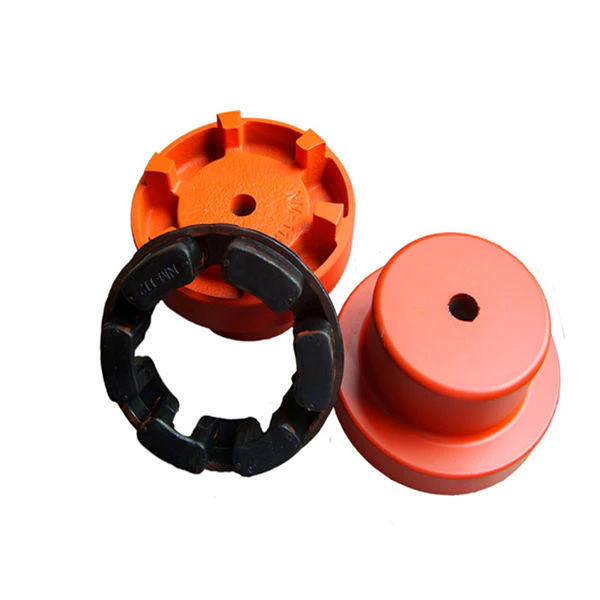
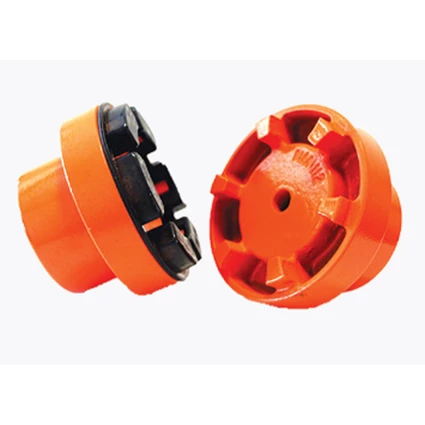
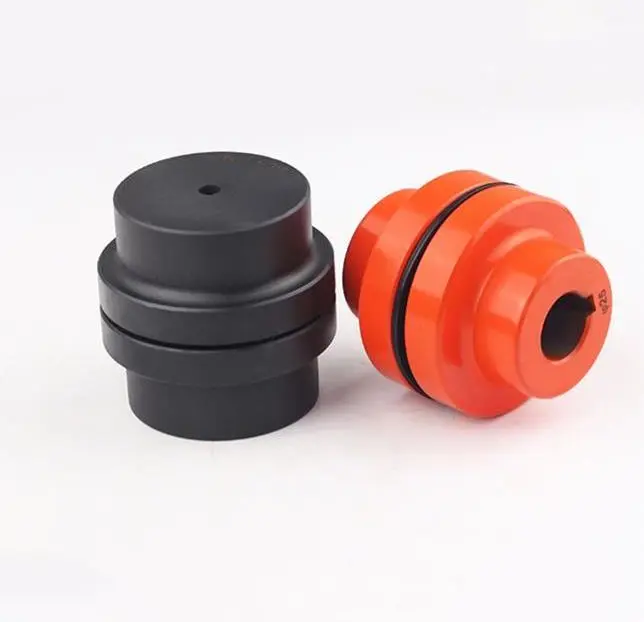
We are the leading top Chinese coupling manufacturer, and are specializing in various high quality NM coupling.
1. Material: Cast iron, Rubber. 2. OEM and ODM are available 3. High efficient in transmission 4. Finishing: Painted. 5. คุณภาพสูงในราคาที่แข่งขันได้ 6. Different models suitable for your different demands 7. Stock for different bore size on both sides available. 8. Application in wide range of environment. 9. Quick and easy mounting and disassembly. 10. Resistant to oil and electrical insulation. 11. Identical clockwise and anticlockwise rotational characteristics. 12. Small dimension, low weight, high transmitted torque. 13. It has good performance on compensating the misalignment.
How does a flexible coupling handle angular, parallel, and axial misalignment?
A flexible coupling is designed to accommodate various types of misalignment between two rotating shafts: angular misalignment, parallel misalignment, and axial misalignment. The flexibility of the coupling allows it to maintain a connection between the shafts while compensating for these misalignment types. Here’s how a flexible coupling handles each type of misalignment:
การจัดเรียงเชิงมุมที่ไม่ตรงกัน: Angular misalignment occurs when the axes of the two shafts are not collinear and form an angle with each other. Flexible couplings can handle angular misalignment by incorporating an element that can flex and bend. One common design is the “spider” or “jaw” element, which consists of elastomeric materials. As the shafts are misaligned, the elastomeric element can deform slightly, allowing the coupling to accommodate the angular offset between the shafts while still transmitting torque.
การเยื้องแนวขนานที่ไม่ตรงกัน: Parallel misalignment, also known as offset misalignment, occurs when the axes of the two shafts are parallel but not perfectly aligned with each other. Flexible couplings can handle parallel misalignment through the same elastomeric element. The flexible nature of the element enables it to shift and adjust to the offset between the shafts, ensuring continuous power transmission while minimizing additional stresses on the machinery.
การเบี่ยงเบนตามแนวแกน: Axial misalignment, also called end-play misalignment, occurs when the two shafts move closer together or farther apart along their common axis. Flexible couplings can handle axial misalignment through specific designs that allow limited axial movement. For instance, some couplings use slotted holes or a floating member that permits axial displacement while maintaining the connection between the shafts.
By providing the capability to handle angular, parallel, and axial misalignment, flexible couplings offer several advantages for power transmission systems:
They help to prevent premature wear and damage to the connected equipment, reducing maintenance and replacement costs.
They minimize vibration and shock loads, enhancing the overall smoothness and reliability of the machinery.
They reduce the risk of equipment failure due to misalignment-induced stresses, improving the system’s operational life.
They allow for easier installation and alignment adjustments, saving time and effort during setup and maintenance.
Overall, flexible couplings play a crucial role in handling misalignment and ensuring efficient power transmission in various industrial applications.