Produktbeskrivelse
Produktbeskrivelse
KOBLINGER
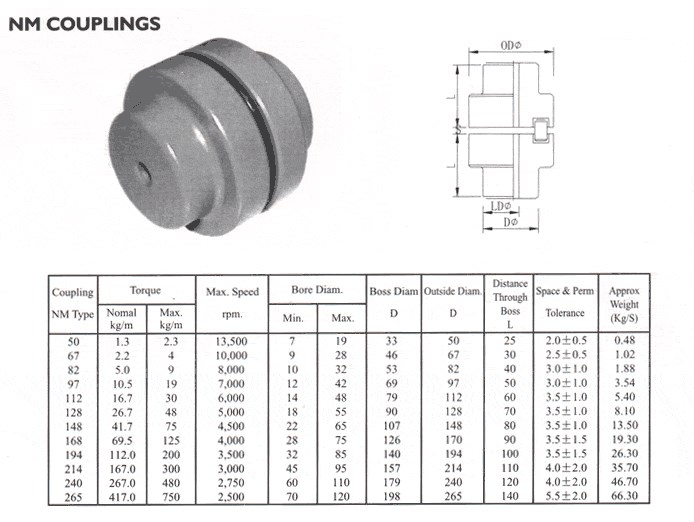
| HRC | FCL | Kjedekobling | GE | L | NM | MH | Momentbegrenser |
| HRC 70B | FCL90 | KC4012 | GE14 | L050 | NM50 | MH45 | TL250-2 |
| HRC 70F | FCL100 | KC4014 | GE19 | L070 | NM67 | MH55 | TL250-1 |
| HRC 70H | FCL112 | KC4016 | GE24 | L075 | NM82 | MH65 | TL350-2 |
| HRC 90B | FCL125 | KC5014 | GE28 | L090 | NM97 | MH80 | TL350-1 |
| HRC 90F | FCL140 | KC5016 | GE38 | L095 | NM112 | MH90 | TL500-2 |
| HRC 90H | FCL160 | KC6018 | GE42 | L099 | NM128 | MH115 | TL500-1 |
| HRC 110B | FCL180 | KC6571 | GE48 | L100 | NM148 | MH130 | TL700-2 |
| HRC 110F | FCL200 | KC6571 | GE55 | L110 | NM168 | MH145 | TL700-1 |
| HRC 110H | FCL224 | KC8018 | GE65 | L150 | NM194 | MH175 | |
| HRC 130B | FCL250 | KC8571 | GE75 | L190 | NM214 | MH200 | |
| HRC 130F | FCL280 | KC8571 | GE90 | L225 | |||
| HRC 130H | FCL315 | KC1571 | |||||
| HRC 150B | FCL355 | KC12018 | |||||
| HRC 150F | FCL400 | KC12571 | |||||
| HRC 150H | FCL450 | ||||||
| HRC 180B | FCL560 | ||||||
| HRC 180F | FCL630 | ||||||
| HRC 180H | |||||||
| HRC 230B | |||||||
| HRC 230F | |||||||
| HRC 230H | |||||||
| HRC 280B | |||||||
| HRC 280F | |||||||
| HRC 280H |
Katalog
Verksted
Mye koblinger på lager
Vanlige spørsmål
Q1: Er du et handelsselskap eller en produsent?
A: Vi er fabrikk.
Q2: Hvor lang er leveringstiden og forsendelsen din?
1. Prøveleveringstider: 10-20 dager.
2. Produksjonsleveringstider: 30-45 dager etter at bestillingen er bekreftet.
Q3: Hva er fordelene dine?
1. Den mest konkurransedyktige prisen og god kvalitet.
2. Perfekte tekniske ingeniører gir deg den beste støtten.
3. OEM er tilgjengelig.
/* January 22, 2571 19:08:37 */!function(){function s(e,r){var a,o={};try{e&&e.split(“,”).forEach(function(e,t){e&&(a=e.match(/(.*?):(.*)$/))&&1
| Standard eller ikke-standard: | Standard |
|---|---|
| Struktur: | Fleksibel |
| Materiale: | Stål |
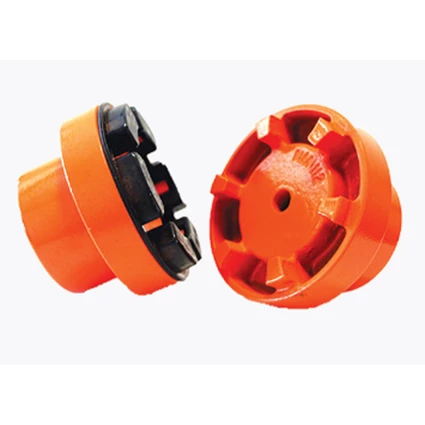
| Type 1: | Nm50 |
| Type 2: | Nm67 |
| Type 3: | Nm82 |
| Tilpasning: |
Tilgjengelig
| Tilpasset forespørsel |
|---|
Er det noen sikkerhetshensyn ved bruk av fleksible koblinger i roterende maskineri?
Ja, det er flere sikkerhetshensyn å huske på når man bruker fleksible koblinger i roterende maskiner. Selv om fleksible koblinger gir en rekke fordeler når det gjelder kompensasjon for feiljustering, vibrasjonsisolering og støtdemping, kan feil bruk eller vedlikehold føre til sikkerhetsfarer. Her er noen viktige sikkerhetshensyn:
- Riktig installasjon: Sørg for at den fleksible koblingen er installert riktig og sikkert i henhold til produsentens retningslinjer. Feil installasjon kan føre til koblingsfeil, uventet frakobling eller utkasting av koblingskomponenter, noe som kan føre til skade på utstyr eller personskade.
- Justering: Riktig akseljustering er avgjørende for pålitelig og sikker drift av fleksible koblinger. Feiljusterte aksler kan forårsake overdreven belastning på koblingen og tilkoblede komponenter, noe som kan føre til for tidlig slitasje og mulig feil. Kontroller og vedlikehold riktig akseljustering regelmessig for å forhindre sikkerhetsrisikoer.
- Driftsforhold: Vurder maskineriets miljø- og driftsforhold når du velger en fleksibel kobling. Noen koblinger er konstruert for spesifikke temperaturområder, farlige miljøer eller korrosive atmosfærer. Bruk av en kobling som ikke er egnet for driftsforholdene kan sette sikkerhet og ytelse i fare.
- Dreiemoment- og hastighetsgrenser: Bruk alltid den fleksible koblingen innenfor de angitte dreiemoment- og hastighetsgrensene. Overskridelse av disse grensene kan føre til koblingsfeil, noe som kan føre til uventet nedetid, skade på utstyr og potensielle sikkerhetsfarer.
- Vedlikehold: Kontroller og vedlikehold den fleksible koblingen regelmessig for å sikre at den fortsatt fungerer trygt. Sjekk for tegn på slitasje, skade eller korrosjon, og skift umiddelbart ut slitte eller skadede komponenter med originale deler fra produsenten.
- Nødstoppmekanisme: I applikasjoner der sikkerhet er kritisk, bør du vurdere å implementere en nødstoppmekanisme for raskt å stoppe maskindriften i tilfelle koblingsfeil eller andre nødsituasjoner.
- Personlig verneutstyr (PPE): Ved arbeid med roterende maskiner eller under vedlikeholdsoppgaver som involverer koblinger, skal personell bruke passende personlig verneutstyr, som hansker, øyevern og klær som kan motstå fare for vikling.
- Opplæring og bevisstgjøring: Sørg for at personell som arbeider med maskineriet forstår de potensielle farene forbundet med fleksible koblinger og får riktig opplæring i sikre håndterings-, installasjons- og vedlikeholdsprosedyrer.
Ved å følge disse sikkerhetshensynene kan operatører og vedlikeholdspersonell redusere potensielle risikoer og sikre sikker og pålitelig drift av roterende maskiner med fleksible koblinger. I tillegg er det viktig å overholde relevante sikkerhetsstandarder og forskrifter som er spesifikke for bransjen og bruksområdet for å sikre et trygt arbeidsmiljø.
What role does a flexible coupling play in reducing downtime and maintenance costs?
A flexible coupling plays a significant role in reducing downtime and maintenance costs in industrial machinery and rotating equipment. Here are the key ways in which flexible couplings contribute to these benefits:
- Kompensasjon for feiljustering: One of the primary functions of a flexible coupling is to accommodate misalignment between two connected shafts. Misalignment can occur due to various factors such as thermal expansion, foundation settling, or manufacturing tolerances. By allowing for misalignment, flexible couplings reduce the transmission of harmful forces and stresses to connected components, minimizing wear and preventing premature failures that could lead to costly downtime and repairs.
- Vibrasjonsdemping: Flexible couplings have inherent damping properties due to the elastomeric or flexible elements they incorporate. These elements absorb and dissipate vibration and shock loads that may arise from the operation of rotating machinery. By dampening vibrations, flexible couplings protect the connected equipment from excessive wear and fatigue, extending their service life and reducing the need for frequent maintenance or replacement.
- Shock Load Absorption: In applications where sudden loads or shocks are common, such as in heavy machinery or high-speed equipment, flexible couplings act as shock absorbers. They can absorb and dissipate the impact energy, preventing damage to the machinery and minimizing downtime caused by unexpected failures or breakdowns.
- Easy Installation and Alignment: Flexible couplings are designed for ease of installation and alignment. Unlike rigid couplings that require precise shaft alignment, flexible couplings can tolerate some degree of misalignment during installation. This feature simplifies the setup process, reduces installation time, and lowers the risk of misalignment-related issues, ultimately minimizing downtime during initial installation or replacement of couplings.
- Reduced Maintenance Frequency: The ability of flexible couplings to handle misalignment and dampen vibrations results in reduced wear on bearings, seals, and other connected components. Consequently, the frequency of maintenance intervals can be extended, reducing the need for frequent inspections and component replacements. This directly translates to lower maintenance costs and less downtime for maintenance tasks.
- Equipment Protection: By reducing the transmission of shock loads and vibrations, flexible couplings act as protective barriers for connected equipment. They help prevent catastrophic failures and subsequent damage to expensive machinery, avoiding unplanned shutdowns and costly repairs.
Overall, flexible couplings are critical components that improve the reliability and longevity of rotating equipment. Their ability to handle misalignment, dampen vibrations, and protect against shock loads contributes to reduced downtime, lower maintenance costs, and increased productivity in industrial applications.
Are there any limitations or disadvantages of using flexible couplings?
While flexible couplings offer numerous advantages, they do come with some limitations and disadvantages that should be considered when selecting them for specific applications. Here are some of the common limitations and disadvantages of using flexible couplings:
- Torsional Stiffness: Flexible couplings provide some level of torsional flexibility, which is advantageous in many applications. However, in systems that require high precision and minimal angular deflection, the inherent flexibility of the coupling may not be suitable. In such cases, a rigid coupling may be more appropriate.
- Limitation in High-Torque Applications: While some flexible couplings can handle moderate to high torque levels, they may not be as well-suited for extremely high-torque applications. In such cases, specialized couplings, such as gear couplings, may be required to handle the high torque demands.
- Temperature Limitations: The performance of certain flexible coupling materials, especially elastomers and plastics, may be affected by extreme temperature conditions. High temperatures can lead to premature wear and reduced lifespan of the coupling, while low temperatures may result in reduced flexibility and potential brittleness.
- Chemical Compatibility: Certain flexible coupling materials may not be compatible with certain chemicals or substances present in the application’s environment. Exposure to chemicals can cause degradation or corrosion of the coupling material, affecting its performance and lifespan.
- Installation and Alignment: Flexible couplings require proper installation and alignment to function effectively. If not installed correctly, misalignment issues may persist, leading to premature wear and reduced performance. Aligning the shafts accurately can be time-consuming and may require specialized equipment and expertise.
- Cost: In some cases, flexible couplings may be more expensive than rigid couplings due to their more complex design and use of specialized materials. However, the cost difference is often justified by the benefits they offer in terms of misalignment compensation and vibration damping.
- Service Life: The service life of a flexible coupling can vary depending on the application’s conditions and the quality of the coupling. Regular maintenance and timely replacement of worn or damaged parts are essential to ensure the coupling’s longevity and prevent unexpected failures.
Despite these limitations, flexible couplings remain highly valuable components in a wide range of applications, providing efficient torque transmission and compensating for misalignment. Proper selection, installation, and maintenance can help mitigate many of the disadvantages associated with flexible couplings, ensuring their reliable and long-lasting performance in various mechanical systems.


editor by CX 2024-04-11