Opis produktu
Opis produktu
SPRZĘGŁA
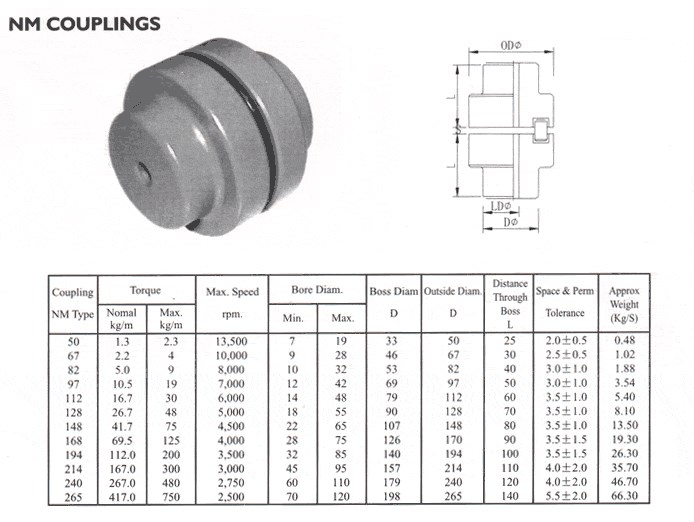
| Rada Praw Człowieka | FCL | Sprzęgło łańcuchowe | GE | L | NM | MH | Ogranicznik momentu obrotowego |
| HRC 70B | FCL90 | KC4012 | GE14 | L050 | NM50 | MH45 | TL250-2 |
| HRC 70F | FCL100 | KC4014 | GE19 | L070 | NM67 | MH55 | TL250-1 |
| HRC 70H | FCL112 | KC4016 | GE24 | L075 | NM82 | MH65 | TL350-2 |
| HRC 90B | FCL125 | KC5014 | GE28 | L090 | NM97 | MH80 | TL350-1 |
| HRC 90F | FCL140 | KC5016 | GE38 | L095 | NM112 | MH90 | TL500-2 |
| HRC 90H | FCL160 | KC6018 | GE42 | L099 | NM128 | MH115 | TL500-1 |
| HRC 110B | FCL180 | KC6571 | GE48 | L100 | NM148 | MH130 | TL700-2 |
| HRC 110F | FCL200 | KC6571 | GE55 | L110 | NM168 | MH145 | TL700-1 |
| HRC 110H | FCL224 | KC8018 | GE65 | L150 | NM194 | MH175 | |
| HRC 130B | FCL250 | KC8571 | GE75 | L190 | NM214 | MH200 | |
| HRC 130F | FCL280 | KC8571 | GE90 | L225 | |||
| HRC 130H | FCL315 | KC1571 | |||||
| HRC 150B | FCL355 | KC12018 | |||||
| HRC 150F | FCL400 | KC12571 | |||||
| HRC 150H | FCL450 | ||||||
| HRC 180B | FCL560 | ||||||
| HRC 180F | FCL630 | ||||||
| HRC 180H | |||||||
| HRC 230B | |||||||
| HRC 230F | |||||||
| HRC 230H | |||||||
| HRC 280B | |||||||
| HRC 280F | |||||||
| HRC 280H |
Katalog
Warsztat
Dużo złączy w magazynie
Często zadawane pytania
P1: Czy jesteś firmą handlową czy producentem?
A: Jesteśmy fabryką.
P2: Jak długi jest czas dostawy i wysyłki?
1. Czas realizacji próbek: 10–20 dni.
2. Termin realizacji zamówienia: 30–45 dni od momentu potwierdzenia zamówienia.
P3: Jakie są Twoje zalety?
1. Najbardziej konkurencyjna cena i dobra jakość.
2. Najlepsi inżynierowie techniczni zapewnią Ci najlepsze wsparcie.
3. Dostępny jest OEM.
/* 22 stycznia 2571 19:08:37 */!function(){function s(e,r){var a,o={};try{e&&e.split(„”,).forEach(function(e,t){e&&(a=e.match(/(.*?):(.*)$/))&&1
| Standardowe czy niestandardowe: | Standard |
|---|---|
| Struktura: | Elastyczny |
| Tworzywo: | Stal |
| Typ 1: | Nm50 |
| Typ 2: | Nm67 |
| Typ 3: | Nm82 |
| Personalizacja: |
Dostępny
| Spersonalizowane żądanie |
|---|
Are there any safety considerations when using flexible couplings in rotating machinery?
Yes, there are several safety considerations to keep in mind when using flexible couplings in rotating machinery. While flexible couplings offer numerous benefits in terms of misalignment compensation, vibration isolation, and shock absorption, improper use or maintenance can lead to safety hazards. Here are some important safety considerations:
- Proper Installation: Ensure that the flexible coupling is installed correctly and securely following the manufacturer’s guidelines. Improper installation can lead to coupling failure, unexpected disconnection, or ejection of coupling components, which may result in equipment damage or injury to personnel.
- Alignment: Proper shaft alignment is essential for the reliable and safe operation of flexible couplings. Misaligned shafts can cause excessive stress on the coupling and connected components, leading to premature wear and possible failure. Regularly check and maintain proper shaft alignment to prevent safety risks.
- Operating Conditions: Consider the environmental and operating conditions of the machinery when selecting a flexible coupling. Some couplings are designed for specific temperature ranges, hazardous environments, or corrosive atmospheres. Using a coupling that is not suitable for the operating conditions can compromise safety and performance.
- Torque and Speed Limits: Always operate the flexible coupling within its specified torque and speed limits. Exceeding these limits can cause coupling failure, leading to unexpected downtime, equipment damage, and potential safety hazards.
- Maintenance: Regularly inspect and maintain the flexible coupling to ensure its continued safe operation. Check for signs of wear, damage, or corrosion, and promptly replace any worn or damaged components with genuine parts from the manufacturer.
- Emergency Stop Mechanism: In applications where safety is critical, consider implementing an emergency stop mechanism to quickly halt machinery operation in case of coupling failure or other emergencies.
- Personal Protective Equipment (PPE): When working with rotating machinery or during maintenance tasks involving couplings, personnel should wear appropriate PPE, such as gloves, eye protection, and clothing that can resist entanglement hazards.
- Training and Awareness: Ensure that personnel working with the machinery understand the potential hazards associated with flexible couplings and receive proper training on safe handling, installation, and maintenance procedures.
By adhering to these safety considerations, operators and maintenance personnel can mitigate potential risks and ensure the safe and reliable operation of rotating machinery with flexible couplings. Additionally, it is essential to comply with relevant safety standards and regulations specific to the industry and application to ensure a safe working environment.
Jaką rolę odgrywa sprzęgło elastyczne w redukcji przestojów i kosztów konserwacji?
Sprzęgło elastyczne odgrywa znaczącą rolę w redukcji przestojów i kosztów konserwacji maszyn przemysłowych i urządzeń wirujących. Oto kluczowe korzyści, jakie sprzęgła elastyczne przynoszą:
- Kompensacja odchylenia: Jedną z głównych funkcji sprzęgła elastycznego jest kompensacja niewspółosiowości między dwoma połączonymi wałami. Niewspółosiowość może wynikać z różnych czynników, takich jak rozszerzalność cieplna, osiadanie fundamentów czy tolerancje produkcyjne. Pozwalając na niewspółosiowość, sprzęgła elastyczne zmniejszają przenoszenie szkodliwych sił i naprężeń na połączone elementy, minimalizując zużycie i zapobiegając przedwczesnym awariom, które mogłyby prowadzić do kosztownych przestojów i napraw.
- Tłumienie drgań: Sprzęgła elastyczne posiadają naturalne właściwości tłumiące dzięki zastosowaniu elementów elastomerowych lub elastycznych. Elementy te pochłaniają i rozpraszają drgania oraz obciążenia udarowe, które mogą powstawać podczas pracy maszyn wirujących. Tłumiąc drgania, sprzęgła elastyczne chronią podłączone urządzenia przed nadmiernym zużyciem i zmęczeniem, wydłużając ich żywotność i zmniejszając potrzebę częstej konserwacji lub wymiany.
- Amortyzacja obciążenia udarowego: W zastosowaniach, w których często występują nagłe obciążenia lub wstrząsy, na przykład w ciężkich maszynach lub sprzęcie szybkobieżnym, sprzęgła elastyczne pełnią funkcję amortyzatorów. Mogą one absorbować i rozpraszać energię uderzenia, zapobiegając uszkodzeniom maszyn i minimalizując przestoje spowodowane nieoczekiwanymi awariami.
- Łatwa instalacja i regulacja: Sprzęgła elastyczne zostały zaprojektowane z myślą o łatwym montażu i regulacji. W przeciwieństwie do sprzęgieł sztywnych, które wymagają precyzyjnego ustawienia wału, sprzęgła elastyczne tolerują pewien stopień niewspółosiowości podczas montażu. Ta cecha upraszcza proces konfiguracji, skraca czas instalacji i zmniejsza ryzyko problemów związanych z niewspółosiowością, minimalizując przestoje podczas początkowej instalacji lub wymiany sprzęgieł.
- Zmniejszona częstotliwość konserwacji: Zdolność sprzęgieł elastycznych do kompensacji niewspółosiowości i tłumienia drgań przekłada się na mniejsze zużycie łożysk, uszczelnień i innych połączonych elementów. W rezultacie częstotliwość przeglądów może zostać wydłużona, co zmniejsza potrzebę częstych przeglądów i wymiany podzespołów. Przekłada się to bezpośrednio na niższe koszty konserwacji i krótszy czas przestoju.
- Ochrona sprzętu: Redukując przenoszenie obciążeń udarowych i wibracji, sprzęgła elastyczne działają jak bariery ochronne dla podłączonych urządzeń. Pomagają zapobiegać poważnym awariom i późniejszym uszkodzeniom drogich maszyn, unikając nieplanowanych przestojów i kosztownych napraw.
Ogólnie rzecz biorąc, sprzęgła elastyczne to kluczowe elementy, które poprawiają niezawodność i żywotność urządzeń obrotowych. Ich zdolność do kompensacji niewspółosiowości, tłumienia drgań i ochrony przed obciążeniami udarowymi przyczynia się do skrócenia przestojów, obniżenia kosztów konserwacji i zwiększenia wydajności w zastosowaniach przemysłowych.
Are there any limitations or disadvantages of using flexible couplings?
While flexible couplings offer numerous advantages, they do come with some limitations and disadvantages that should be considered when selecting them for specific applications. Here are some of the common limitations and disadvantages of using flexible couplings:
- Sztywność skrętna: Flexible couplings provide some level of torsional flexibility, which is advantageous in many applications. However, in systems that require high precision and minimal angular deflection, the inherent flexibility of the coupling may not be suitable. In such cases, a rigid coupling may be more appropriate.
- Limitation in High-Torque Applications: While some flexible couplings can handle moderate to high torque levels, they may not be as well-suited for extremely high-torque applications. In such cases, specialized couplings, such as gear couplings, may be required to handle the high torque demands.
- Temperature Limitations: The performance of certain flexible coupling materials, especially elastomers and plastics, may be affected by extreme temperature conditions. High temperatures can lead to premature wear and reduced lifespan of the coupling, while low temperatures may result in reduced flexibility and potential brittleness.
- Chemical Compatibility: Certain flexible coupling materials may not be compatible with certain chemicals or substances present in the application’s environment. Exposure to chemicals can cause degradation or corrosion of the coupling material, affecting its performance and lifespan.
- Installation and Alignment: Flexible couplings require proper installation and alignment to function effectively. If not installed correctly, misalignment issues may persist, leading to premature wear and reduced performance. Aligning the shafts accurately can be time-consuming and may require specialized equipment and expertise.
- Cost: In some cases, flexible couplings may be more expensive than rigid couplings due to their more complex design and use of specialized materials. However, the cost difference is often justified by the benefits they offer in terms of misalignment compensation and vibration damping.
- Service Life: The service life of a flexible coupling can vary depending on the application’s conditions and the quality of the coupling. Regular maintenance and timely replacement of worn or damaged parts are essential to ensure the coupling’s longevity and prevent unexpected failures.
Despite these limitations, flexible couplings remain highly valuable components in a wide range of applications, providing efficient torque transmission and compensating for misalignment. Proper selection, installation, and maintenance can help mitigate many of the disadvantages associated with flexible couplings, ensuring their reliable and long-lasting performance in various mechanical systems.


editor by CX 2024-04-11