Mô tả sản phẩm
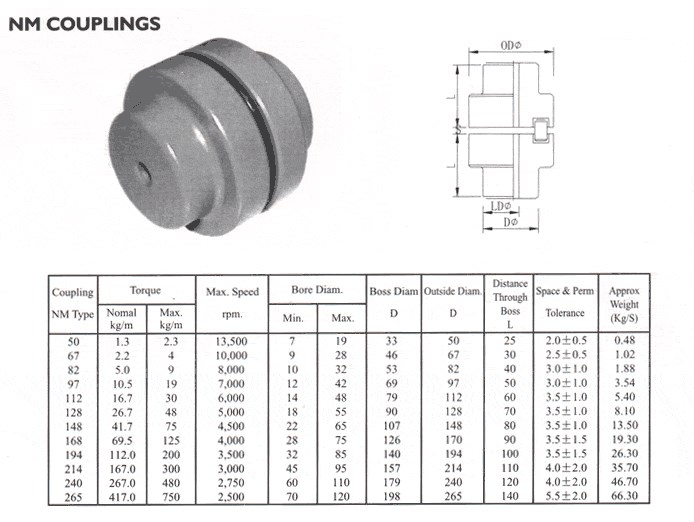
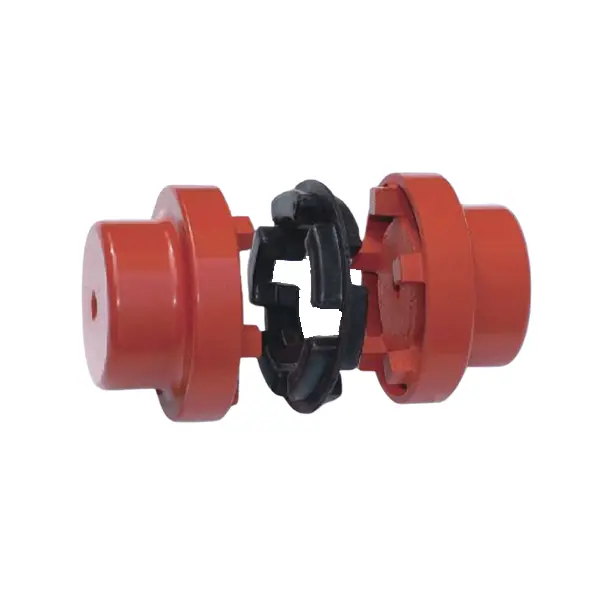
Flexible Cast Iron Forged Steel Quick Release Nm Coupling with Rubber Element Water Pump motor Shaft Coupling Nm
1. Material: Cast iron, Rubber.
2. OEM and ODM are available
3. High efficient in transmission
4. Finishing: Painted.
5. High quality with competitive price
6. Different models suitable for your different demands
7. Stock for different bore size on both sides available.
8. Application in wide range of environment.
9. Quick and easy mounting and disassembly.
10. Resistant to oil and electrical insulation.
11. Identical clockwise and anticlockwise rotational characteristics.
12. Small dimension, low weight, high transmitted torque.
13. It has good performance on compensating the misalignment.
Related products
| Tiêu chuẩn hay không tiêu chuẩn: | Tiêu chuẩn |
|---|---|
| Lỗ trục: | 19-32 |
| Mô-men xoắn: | >80 hải lý |
| Đường kính lỗ khoan: | 19mm |
| Tốc độ: | 4000 vòng/phút |
| Kết cấu: | Linh hoạt |
| Mẫu: |
US$ 9999/Mảnh
1 chiếc (Số lượng tối thiểu) | |
|---|
How does a flexible coupling protect connected equipment from shock loads and vibrations?
Flexible couplings play a crucial role in protecting connected equipment from shock loads and vibrations by providing damping and isolation capabilities. When machines or mechanical systems experience sudden shock loads or vibrations, the flexible coupling acts as a buffer, absorbing and dissipating the impact, thereby reducing the transmitted forces and protecting the equipment. Here’s how flexible couplings achieve this:
- Damping of Vibrations: Flexible couplings are often made from materials that exhibit damping properties. When vibrations are transmitted through the shafts, the flexible coupling’s material can absorb a portion of the vibrational energy, converting it into heat. This dissipation of energy helps reduce the amplitude of the vibrations and prevents them from propagating further into the connected equipment.
- Vibration Isolation: In addition to damping vibrations, flexible couplings also offer a degree of vibration isolation. They are designed to decouple the two shafts, which means that vibrations occurring on one shaft are not directly transmitted to the other shaft. This isolation effect prevents vibrations from propagating across the entire system and minimizes the impact on sensitive equipment or nearby components.
- Shock Absorption: When the connected machinery experiences sudden shock loads, such as during a startup or abrupt changes in load, the flexible coupling can act as a shock absorber. The coupling’s design allows it to deform slightly under the impact, absorbing and distributing the shock energy. This prevents the shock from being directly transferred to the connected equipment, reducing the risk of damage or premature wear.
- Misalignment Compensation: Flexible couplings are capable of compensating for misalignment between the shafts. Misalignment can lead to additional stresses and vibrations in the system. By allowing for some degree of angular, parallel, and axial misalignment, the flexible coupling reduces the forces transmitted to the connected equipment and the supporting structures.
- Reduction of Resonance Effects: Resonance is a phenomenon that occurs when the natural frequency of a system matches the frequency of external vibrations, leading to amplified vibrations. Flexible couplings can help avoid resonance effects by altering the system’s natural frequency and providing some level of flexibility that damps the resonance response.
By incorporating a flexible coupling into the drivetrain or power transmission system, equipment manufacturers and operators can significantly improve the reliability and longevity of connected machinery. The coupling’s ability to dampen vibrations, isolate shocks, and compensate for misalignment contributes to a smoother and more stable operation, reducing maintenance requirements and enhancing overall system performance.
In summary, flexible couplings act as protective elements, shielding connected equipment from shock loads and vibrations. Their ability to dampen vibrations, isolate shocks, and compensate for misalignment contributes to a smoother and more reliable operation of various mechanical systems.
How does a flexible coupling impact the overall reliability of connected equipment?
A flexible coupling significantly impacts the overall reliability of connected equipment in several ways:
- Misalignment Compensation: Flexible couplings can accommodate both angular and parallel misalignment between connected shafts. By allowing for misalignment, the coupling reduces the stress and wear on bearings, seals, and other rotating components. This feature prevents premature failure of these components, contributing to improved reliability and extended equipment lifespan.
- Giảm chấn rung động: Flexible couplings possess inherent damping properties due to their elastomeric or flexible elements. These elements absorb and dissipate vibrations generated during the operation of machinery. By dampening vibrations, the coupling protects the connected equipment from excessive oscillations, reducing fatigue and preventing mechanical failures. This enhanced vibration control increases the reliability of the system.
- Shock Load Absorption: In applications with sudden load variations or shock loads, such as in heavy machinery or high-speed equipment, a flexible coupling acts as a shock absorber. It can absorb and dissipate the impact energy, protecting the machinery from damage caused by sudden loads. The ability to absorb shock loads contributes to the overall reliability of the connected equipment.
- Reduced Wear and Tear: The flexibility of the coupling minimizes stress and wear on rotating equipment. It allows for slight movements and misalignments, reducing friction and stress on bearings and other critical components. This reduction in wear and tear lowers the frequency of maintenance and replacement, increasing the overall reliability of the equipment.
- Compensation for Thermal Expansion: Temperature changes in machinery can lead to thermal expansion or contraction of shafts. A flexible coupling can compensate for these thermal effects, ensuring that the machinery remains properly aligned even as temperature conditions fluctuate. This compensation prevents binding and misalignment, promoting reliable performance.
- Protection Against Overloads: Flexible couplings help protect connected equipment from overloads and torsional vibrations. They act as a mechanical fuse, disconnecting the driveline when an overload occurs, thus preventing damage to expensive machinery. This safety feature enhances the overall reliability and reduces the risk of catastrophic failures.
- Easy Maintenance and Alignment: Flexible couplings are designed for easy installation and alignment. This feature simplifies maintenance procedures, making it easier to inspect and replace couplings when necessary. Properly aligned couplings lead to improved equipment performance and longevity, enhancing overall reliability.
By compensating for misalignment, damping vibrations, absorbing shock loads, reducing wear and tear, and providing other protective features, a flexible coupling significantly improves the reliability of connected equipment. It extends the lifespan of critical components, minimizes downtime, and ensures smooth and efficient operation, making it a valuable component in various industrial applications.
Những vật liệu nào thường được sử dụng trong sản xuất khớp nối mềm?
Các khớp nối mềm được sản xuất bằng nhiều loại vật liệu khác nhau, mỗi loại đều có những đặc tính và đặc điểm riêng phù hợp với các ứng dụng cụ thể. Việc lựa chọn vật liệu phụ thuộc vào các yếu tố như yêu cầu của ứng dụng, điều kiện môi trường, khả năng chịu momen xoắn và độ linh hoạt mong muốn. Dưới đây là một số vật liệu thường được sử dụng trong sản xuất khớp nối mềm:
- Thép: Thép là vật liệu được sử dụng rộng rãi trong các khớp nối mềm nhờ độ bền, độ chắc chắn và khả năng truyền mô-men xoắn tuyệt vời. Khớp nối thép phù hợp cho các ứng dụng công nghiệp nặng với yêu cầu mô-men xoắn cao và điều kiện hoạt động khắc nghiệt.
- Thép không gỉ: Thép không gỉ thường được sử dụng để chế tạo các khớp nối mềm trong môi trường có khả năng ăn mòn cao. Các khớp nối bằng thép không gỉ có khả năng chống gỉ và các yếu tố ăn mòn khác tuyệt vời, lý tưởng cho các ứng dụng trong ngành hàng hải, chế biến thực phẩm và công nghiệp hóa chất.
- Nhôm: Các khớp nối bằng nhôm có trọng lượng nhẹ, quán tính thấp và khả năng cân bằng tuyệt vời. Chúng thường được sử dụng trong các ứng dụng mà việc giảm trọng lượng là rất quan trọng, chẳng hạn như hàng không vũ trụ và robot.
- Thau: Các khớp nối bằng đồng thau nổi tiếng về khả năng dẫn điện và được sử dụng trong các ứng dụng yêu cầu nối đất hoặc cách điện, chẳng hạn như trong một số máy móc công nghiệp hoặc thiết bị điện tử.
- Gang đúc: Các khớp nối bằng gang có độ bền và độ chắc chắn tốt, thường được sử dụng trong các ứng dụng công nghiệp cần khả năng chịu được tải trọng va đập và rung động.
- Nhựa/Polyme: Một số khớp nối mềm sử dụng các polyme hoặc nhựa hiệu suất cao, chẳng hạn như polyurethane hoặc nylon. Những vật liệu này mang lại độ linh hoạt tốt, ma sát thấp và khả năng chống hóa chất. Khớp nối bằng nhựa phù hợp cho các ứng dụng cần khả năng chống ăn mòn và trọng lượng nhẹ.
- Chất đàn hồi: Vật liệu đàn hồi được sử dụng làm các phần tử linh hoạt trong nhiều khớp nối mềm. Các vật liệu như cao su tự nhiên, neoprene hoặc urethane thường được sử dụng làm các phần tử đàn hồi dạng mạng nhện, mang lại tính linh hoạt và khả năng giảm chấn rung động.
Việc lựa chọn vật liệu khớp nối phụ thuộc vào nhu cầu cụ thể của ứng dụng. Ví dụ, các ứng dụng hiệu suất cao và tải nặng có thể yêu cầu khớp nối bằng thép hoặc thép không gỉ vì độ bền của chúng, trong khi các ứng dụng mà việc giảm trọng lượng là rất quan trọng có thể hưởng lợi từ khớp nối bằng nhôm hoặc polyme. Ngoài ra, việc lựa chọn vật liệu còn bị ảnh hưởng bởi các yếu tố như phạm vi nhiệt độ, tiếp xúc với hóa chất và các yêu cầu về điện trong môi trường hoạt động của ứng dụng.
Các nhà sản xuất thường cung cấp thông số kỹ thuật vật liệu cho các khớp nối của họ, giúp người dùng đưa ra quyết định sáng suốt dựa trên các yêu cầu cụ thể của ứng dụng.


editor by CX 2023-09-06