Описание продукта
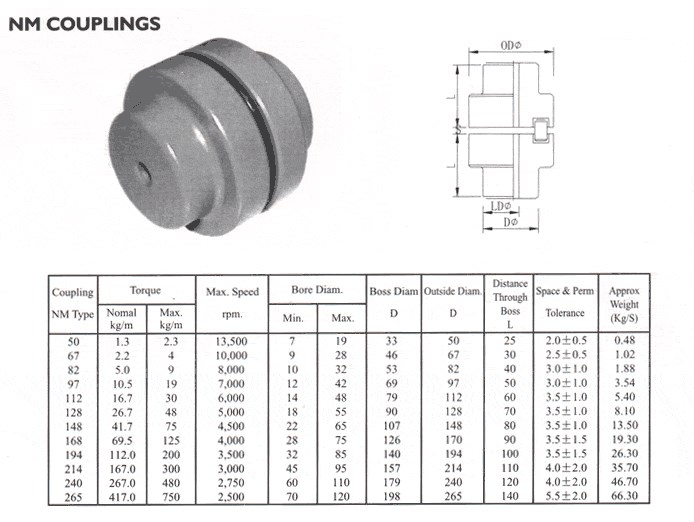
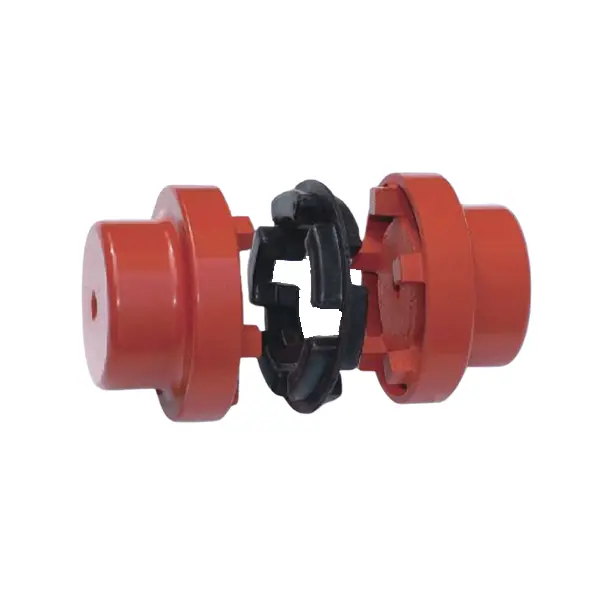
Flexible Cast Iron Forged Steel Quick Release Nm Coupling with Rubber Element Water Pump motor Shaft Coupling Nm
1. Material: Cast iron, Rubber.
2. OEM and ODM are available
3. High efficient in transmission
4. Finishing: Painted.
5. High quality with competitive price
6. Different models suitable for your different demands
7. Stock for different bore size on both sides available.
8. Application in wide range of environment.
9. Quick and easy mounting and disassembly.
10. Resistant to oil and electrical insulation.
11. Identical clockwise and anticlockwise rotational characteristics.
12. Small dimension, low weight, high transmitted torque.
13. It has good performance on compensating the misalignment.
Related products
| Стандартный или нестандартный: | Стандарт |
|---|---|
| Отверстие для вала: | 19-32 |
| Torque: | >80N.M |
| Bore Diameter: | 19mm |
| Speed: | 4000r/M |
| Структура: | Гибкий |
| Образцы: |
US$ 9999/Piece
1 штука (минимальный заказ) | |
|---|
How does a flexible coupling protect connected equipment from shock loads and vibrations?
Flexible couplings play a crucial role in protecting connected equipment from shock loads and vibrations by providing damping and isolation capabilities. When machines or mechanical systems experience sudden shock loads or vibrations, the flexible coupling acts as a buffer, absorbing and dissipating the impact, thereby reducing the transmitted forces and protecting the equipment. Here’s how flexible couplings achieve this:
- Damping of Vibrations: Flexible couplings are often made from materials that exhibit damping properties. When vibrations are transmitted through the shafts, the flexible coupling’s material can absorb a portion of the vibrational energy, converting it into heat. This dissipation of energy helps reduce the amplitude of the vibrations and prevents them from propagating further into the connected equipment.
- Vibration Isolation: In addition to damping vibrations, flexible couplings also offer a degree of vibration isolation. They are designed to decouple the two shafts, which means that vibrations occurring on one shaft are not directly transmitted to the other shaft. This isolation effect prevents vibrations from propagating across the entire system and minimizes the impact on sensitive equipment or nearby components.
- Shock Absorption: When the connected machinery experiences sudden shock loads, such as during a startup or abrupt changes in load, the flexible coupling can act as a shock absorber. The coupling’s design allows it to deform slightly under the impact, absorbing and distributing the shock energy. This prevents the shock from being directly transferred to the connected equipment, reducing the risk of damage or premature wear.
- Компенсация несоосности: Flexible couplings are capable of compensating for misalignment between the shafts. Misalignment can lead to additional stresses and vibrations in the system. By allowing for some degree of angular, parallel, and axial misalignment, the flexible coupling reduces the forces transmitted to the connected equipment and the supporting structures.
- Reduction of Resonance Effects: Resonance is a phenomenon that occurs when the natural frequency of a system matches the frequency of external vibrations, leading to amplified vibrations. Flexible couplings can help avoid resonance effects by altering the system’s natural frequency and providing some level of flexibility that damps the resonance response.
By incorporating a flexible coupling into the drivetrain or power transmission system, equipment manufacturers and operators can significantly improve the reliability and longevity of connected machinery. The coupling’s ability to dampen vibrations, isolate shocks, and compensate for misalignment contributes to a smoother and more stable operation, reducing maintenance requirements and enhancing overall system performance.
In summary, flexible couplings act as protective elements, shielding connected equipment from shock loads and vibrations. Their ability to dampen vibrations, isolate shocks, and compensate for misalignment contributes to a smoother and more reliable operation of various mechanical systems.
Как гибкое соединение влияет на общую надежность подключенного оборудования?
Гибкое соединение существенно влияет на общую надежность подключенного оборудования несколькими способами:
- Компенсация несоосности: Гибкие муфты позволяют компенсировать как угловое, так и параллельное смещение соединенных валов. Благодаря компенсации смещения, муфта снижает нагрузку и износ подшипников, уплотнений и других вращающихся компонентов. Эта особенность предотвращает преждевременный выход из строя этих компонентов, способствуя повышению надежности и увеличению срока службы оборудования.
- Виброгашение: Гибкие муфты обладают присущими им демпфирующими свойствами благодаря своим эластомерным или гибким элементам. Эти элементы поглощают и рассеивают вибрации, возникающие во время работы оборудования. Демпфируя вибрации, муфта защищает подключенное оборудование от чрезмерных колебаний, снижая усталость и предотвращая механические поломки. Такой улучшенный контроль вибрации повышает надежность системы.
- Амортизация ударных нагрузок: В системах с внезапными изменениями нагрузки или ударными нагрузками, например, в тяжелой технике или высокоскоростном оборудовании, гибкая муфта действует как амортизатор. Она способна поглощать и рассеивать энергию удара, защищая оборудование от повреждений, вызванных внезапными нагрузками. Способность поглощать ударные нагрузки способствует повышению общей надежности подключенного оборудования.
- Снижение износа: Гибкость муфты минимизирует нагрузку и износ вращающегося оборудования. Она допускает незначительные перемещения и смещения, снижая трение и нагрузку на подшипники и другие важные компоненты. Такое снижение износа уменьшает частоту технического обслуживания и замены, повышая общую надежность оборудования.
- Компенсация теплового расширения: Изменения температуры в механизмах могут приводить к тепловому расширению или сжатию валов. Гибкая муфта может компенсировать эти тепловые эффекты, обеспечивая правильное выравнивание механизмов даже при колебаниях температуры. Такая компенсация предотвращает заедание и смещение, способствуя надежной работе.
- Защита от перегрузок: Гибкие муфты помогают защитить подключенное оборудование от перегрузок и крутильных колебаний. Они действуют как механический предохранитель, отключая привод при возникновении перегрузки, тем самым предотвращая повреждение дорогостоящего оборудования. Эта функция безопасности повышает общую надежность и снижает риск катастрофических отказов.
- Простота в обслуживании и регулировке: Гибкие муфты разработаны для легкой установки и выравнивания. Эта особенность упрощает процедуры технического обслуживания, облегчая осмотр и замену муфт при необходимости. Правильно выровненные муфты приводят к улучшению производительности и срока службы оборудования, повышая общую надежность.
Компенсируя несоосность, гася вибрации, поглощая ударные нагрузки, снижая износ и обеспечивая другие защитные функции, гибкая муфта значительно повышает надежность подключенного оборудования. Она продлевает срок службы важных компонентов, минимизирует время простоя и обеспечивает плавную и эффективную работу, что делает ее ценным компонентом в различных промышленных приложениях.
What materials are commonly used in manufacturing flexible couplings?
Flexible couplings are manufactured using a variety of materials, each offering different properties and characteristics suited for specific applications. The choice of material depends on factors such as the application’s requirements, environmental conditions, torque capacity, and desired flexibility. Here are some of the commonly used materials in manufacturing flexible couplings:
- Steel: Steel is a widely used material in flexible couplings due to its strength, durability, and excellent torque transmission capabilities. Steel couplings are suitable for heavy-duty industrial applications with high torque requirements and harsh operating conditions.
- Stainless Steel: Stainless steel is often used to manufacture flexible couplings in environments with high corrosion potential. Stainless steel couplings offer excellent resistance to rust and other corrosive elements, making them ideal for marine, food processing, and chemical industry applications.
- Aluminum: Aluminum couplings are lightweight, have low inertia, and provide excellent balance. They are commonly used in applications where reducing weight is critical, such as aerospace and robotics.
- Brass: Brass couplings are known for their electrical conductivity and are used in applications where electrical grounding or electrical isolation is required, such as in certain industrial machinery or electronics equipment.
- Cast Iron: Cast iron couplings offer good strength and durability and are often used in industrial applications where resistance to shock loads and vibrations is necessary.
- Plastic/Polymer: Some flexible couplings use high-performance polymers or plastics, such as polyurethane or nylon. These materials provide good flexibility, low friction, and resistance to chemicals. Plastic couplings are suitable for applications where corrosion resistance and lightweight are essential.
- Elastomers: Elastomers are used as the flexible elements in many flexible couplings. Materials like natural rubber, neoprene, or urethane are commonly used as elastomer spider elements, providing flexibility and vibration damping properties.
The selection of the coupling material depends on the specific needs of the application. For instance, high-performance and heavy-duty applications may require steel or stainless steel couplings for their robustness, while applications where weight reduction is crucial may benefit from aluminum or polymer couplings. Additionally, the choice of material is influenced by factors such as temperature range, chemical exposure, and electrical requirements in the application’s operating environment.
Manufacturers typically provide material specifications for their couplings, helping users make informed decisions based on the specific demands of their applications.


editor by CX 2023-09-06