Description du produit
Best Quality Rigid Coupling NM-97 NM-112 NM-128 Couplings
Shaft/Flexible/Rigid couplings
The chain coupling, composed of two-strand chains and 2 sprockets, features simple and compact structure, and high flexibility, power transmission capability and durability.
What’s more, the chain coupling allows simple connection/disconnection, and the use of the housing enhances safety and durability.
Type number: 3012, 4012, 4014, 4016, 5014, 5016, 5018,6018, 6571, 6571, 8018, 8571, 1571, 12571.
Principaux produits :
1. Timing Belt Pulley (Synchronous Pulley), Timing Bar, Clamping Plate;
2. Forging, Casting, Stampling Part;
3. V Belt Pulley and Taper Lock Bush; Sprocket, Idler and Plate Wheel;Spur Gear, Bevel Gear, Rack;
4. Shaft Locking Device: could be alternative for Ringfeder, Sati, Chiaravalli, Tollok, etc.;
5. Shaft Coupling: including Miniature couplings, Curved tooth coupling, Chain coupling, HRC coupling,
Normex coupling, Type coupling, GE Coupling, torque limiter, Universal Joint;
6. Shaft Collars: including Setscrew Type, Single Split and Double Splits;
7. Gear & Rack: Spur gear/rack, bevel gear, helical gear/rack.
8. Other customized Machining Parts according to drawings (OEM) Forging, Casting, Stamping Parts.
Packaging & Shipping:
All the products can be packed in cartons,or,you can choose the pallet packing.
MADE IN CHINA can be pressed on wooden cases.Land,air,sea transportation are available.UPS,DHL,TNT,
FedEx and EMS are all supported.
Company Introduction:
Factory View:
Exhibition:
FAQ :
1. Quantité minimale de commande
A: Generally, 1 pc for standard parts; contact for nonstandard parts.
2. Delivery Time
A: In stock: within 5 working days. Out of stock: depends on your order quantity.
3. Comment sélectionner
A: part number or drawing, catalogue. If no, you can send us your sample, so we can make the drawing and sample accordingly.
4: What is the Warranty for your products?
A:Normally our warranty is 1 year.
Contacts:
| Standard ou non standard : | Standard & Nonstandard |
|---|---|
| Diamètre d'alésage : | Disponible |
| Vitesse: | 4000 tr/min |
| Structure: | Flexible/Rigid/Shaft/Tyre/Chain Type etc. |
| Matériel: | Steel/Cast Iron/Aluminum |
| Taper: | Rigid Coupling |
| Exemples : |
US$ 0.1/Set
1 Set(Min.Order) | |
|---|
| Personnalisation : |
Disponible
| Demande personnalisée |
|---|
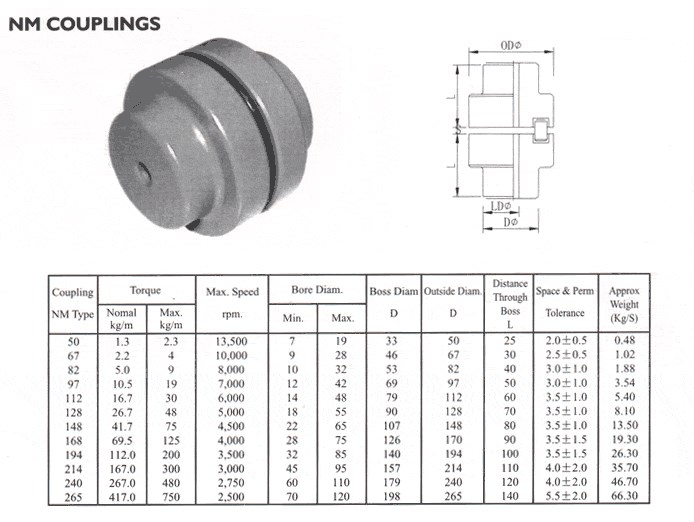
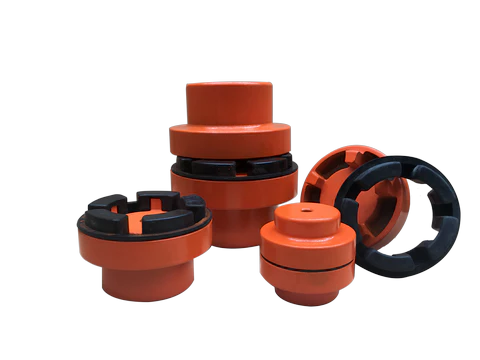
How do flexible couplings compare to other types of couplings in terms of performance?
Flexible couplings offer distinct advantages and disadvantages compared to other types of couplings, making them suitable for specific applications. Here is a comparison of flexible couplings with other commonly used coupling types in terms of performance:
- Rigid Couplings:
Rigid couplings are simple in design and provide a solid connection between two shafts, allowing for precise torque transmission. They do not offer any flexibility and are unable to compensate for misalignment. As a result, rigid couplings require accurate shaft alignment during installation, and any misalignment can lead to premature wear and increased stress on connected equipment. Rigid couplings are best suited for applications where shaft alignment is precise, and misalignment is minimal, such as in well-aligned systems with short shaft spans.
- Flexible Couplings:
Flexible couplings, as discussed previously, excel at compensating for misalignment between shafts. They offer angular, parallel, and axial misalignment compensation, reducing stress on connected components and ensuring smooth power transmission. Flexible couplings are versatile and can handle various applications, from light-duty to heavy-duty, where misalignment, vibration damping, or shock absorption is a concern. They provide a cost-effective solution for many industrial, automotive, and machinery applications.
- Oldham Couplings:
Oldham couplings are effective at compensating for angular misalignment while maintaining constant velocity transmission. They offer low backlash and electrical isolation between shafts, making them suitable for precision motion control and applications where electrical interference must be minimized. However, Oldham couplings have limited capacity to handle parallel or axial misalignment, and they may not be suitable for applications with high torque requirements.
- Gear Couplings:
Gear couplings are robust and can handle high torque levels, making them suitable for heavy-duty applications such as mining and steel mills. They offer good misalignment compensation and have a compact design. However, gear couplings are relatively more expensive and complex than some other coupling types, and they may generate more noise during operation.
- Disc Couplings:
Disc couplings provide excellent misalignment compensation, including angular, parallel, and axial misalignment. They have high torsional stiffness, making them ideal for applications where accurate torque transmission is critical. Disc couplings offer low inertia and are suitable for high-speed applications. However, they may be more sensitive to shaft misalignment during installation, requiring precise alignment for optimal performance.
- Conclusion:
The choice of coupling type depends on the specific requirements of the application. Flexible couplings excel in compensating for misalignment and vibration damping, making them versatile and cost-effective solutions for many applications. However, in situations where high torque, precision, or specific electrical isolation is necessary, other coupling types such as gear couplings, disc couplings, or Oldham couplings may be more suitable. Proper selection, installation, and maintenance of the coupling are essential to ensure optimal performance and reliability in any mechanical system.
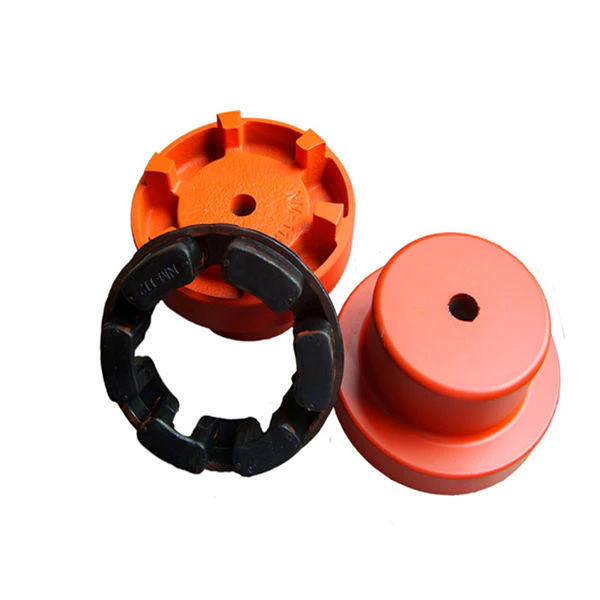
Quelles sont les différences entre les conceptions d'accouplements flexibles élastomères et métalliques ?
Les accouplements flexibles élastomères et métalliques sont deux conceptions distinctes utilisées pour transmettre le couple et compenser les défauts d'alignement dans les systèmes mécaniques. Chaque type présente des caractéristiques et des avantages uniques, ce qui les rend adaptés à des applications différentes.
Accouplements flexibles élastomères :
Les accouplements flexibles élastomères, également appelés accouplements à mâchoires, utilisent un matériau élastomère (caoutchouc ou similaire) comme élément flexible. Cet élastomère est généralement moulé entre deux moyeux et assure la liaison entre l'arbre moteur et l'arbre mené. Les principales différences et caractéristiques des accouplements élastomères sont les suivantes :
- Compensation du désalignement : Les accouplements élastomères sont conçus pour supporter des niveaux modérés de désalignement angulaire, parallèle et axial. Le matériau élastomère se déforme pour compenser le désalignement tout en transmettant le couple entre les arbres.
- Amortissement des vibrations : Le matériau élastomère de ces accouplements offre d'excellentes propriétés d'amortissement des vibrations, réduisant ainsi la transmission des vibrations d'un arbre à l'autre. Cette caractéristique contribue à protéger les équipements connectés contre les vibrations excessives et améliore la fiabilité du système.
- Absorption des chocs : Les accouplements élastomères peuvent absorber et amortir les chocs, protégeant ainsi le système des impacts soudains ou des surcharges.
- Rentable : Les accouplements élastomères sont généralement plus économiques que les accouplements métalliques, ce qui en fait un choix populaire pour diverses applications industrielles.
- Conception et installation simples : Les raccords élastomères présentent souvent une conception simple, ce qui facilite leur installation et leur entretien.
- Capacité de couple inférieure : Ces accouplements ont une capacité de couple inférieure à celle des accouplements métalliques, ce qui les rend adaptés aux applications nécessitant un couple modéré.
- Applications courantes : Les accouplements élastomères sont couramment utilisés dans les pompes, les compresseurs, les ventilateurs, les convoyeurs et autres applications nécessitant une transmission de couple modérée et une compensation du désalignement.
Accouplements métalliques flexibles :
Les accouplements métalliques flexibles utilisent des composants métalliques (acier, acier inoxydable ou aluminium, par exemple) pour relier les arbres moteur et mené. Leur conception varie considérablement selon le type d'accouplement, mais on peut citer comme caractéristiques générales :
- Capacité de couple élevée : Les accouplements métalliques présentent une capacité de transmission de couple supérieure à celle des accouplements élastomères. Ils sont parfaitement adaptés aux applications exigeant une capacité de transmission de couple élevée.
- Compensation du désalignement : Selon leur conception, certains accouplements métalliques peuvent tolérer un léger désalignement, mais ils ne sont généralement pas aussi flexibles que les accouplements élastomères à cet égard.
- Construction plus rigide : Les accouplements métalliques sont généralement plus rigides que les accouplements élastomères, offrant un amortissement des vibrations moindre mais une rigidité torsionnelle plus élevée.
- Conception compacte : Les raccords métalliques peuvent avoir une conception plus compacte, ce qui les rend adaptés aux applications où l'espace est limité.
- Précision accrue : Les accouplements métalliques offrent souvent une précision et une concentricité supérieures, ce qui permet un meilleur alignement des arbres.
- Coût plus élevé : Les accouplements métalliques sont généralement plus chers que les accouplements élastomères en raison de leur construction et de leur capacité de couple plus élevée.
- Applications courantes : Les accouplements métalliques sont couramment utilisés dans les machines à grande vitesse, les équipements de précision, la robotique et les applications nécessitant un couple élevé.
Résumé:
En résumé, les principales différences entre les accouplements flexibles élastomères et métalliques résident dans leur flexibilité, leur capacité de couple, leur amortissement des vibrations, leur coût et leurs applications. Les accouplements élastomères conviennent aux applications nécessitant un couple modéré, une compensation des défauts d'alignement et un amortissement des vibrations. En revanche, les accouplements métalliques sont privilégiés pour les applications exigeant un couple et une précision plus élevés, où la flexibilité et l'amortissement des vibrations sont moins critiques.
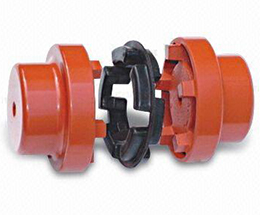
Can flexible couplings handle misalignment between shafts?
Yes, flexible couplings are specifically designed to handle misalignment between shafts in rotating machinery and mechanical systems. Misalignment can occur due to various factors, including installation errors, thermal expansion, manufacturing tolerances, or shaft deflection during operation.
Flexible couplings offer the ability to compensate for different types of misalignment, including:
- Désalignement angulaire : When the shafts are not collinear and have an angular offset, flexible couplings can accommodate this misalignment by flexing or twisting, allowing the two shafts to remain connected while transmitting torque smoothly.
- Désalignement parallèle : Parallel misalignment occurs when the two shafts are not perfectly aligned along their axes. Flexible couplings can adjust to this misalignment, ensuring that the shafts remain connected and capable of transmitting power efficiently.
- Désalignement axial : Axial misalignment, also known as end float or axial displacement, refers to the relative axial movement of the two shafts. Some flexible coupling designs can accommodate axial misalignment, allowing for slight axial movements without disengaging the coupling.
The ability of flexible couplings to handle misalignment is essential in preventing premature wear and failure of the connected equipment. By compensating for misalignment, flexible couplings reduce the stress on the shafts, bearings, and seals, extending the service life of these components and improving overall system reliability.
It is crucial to select the appropriate type of flexible coupling based on the specific misalignment requirements of the application. Different coupling designs offer varying degrees of misalignment compensation, and the choice depends on factors such as the magnitude and type of misalignment, the torque requirements, and the operating environment.
In summary, flexible couplings play a vital role in handling misalignment between shafts, ensuring efficient power transmission and protecting mechanical systems from the adverse effects of misalignment. Their ability to accommodate misalignment makes them indispensable components in various industrial, automotive, aerospace, and marine applications.


editor by CX 2023-09-01