Description du produit
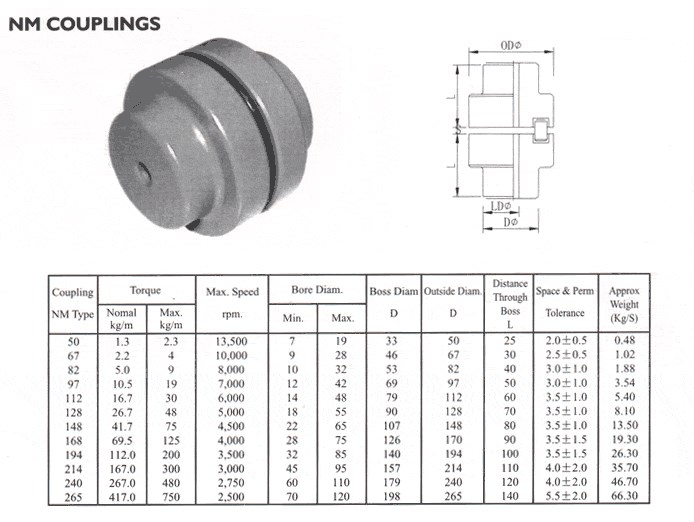
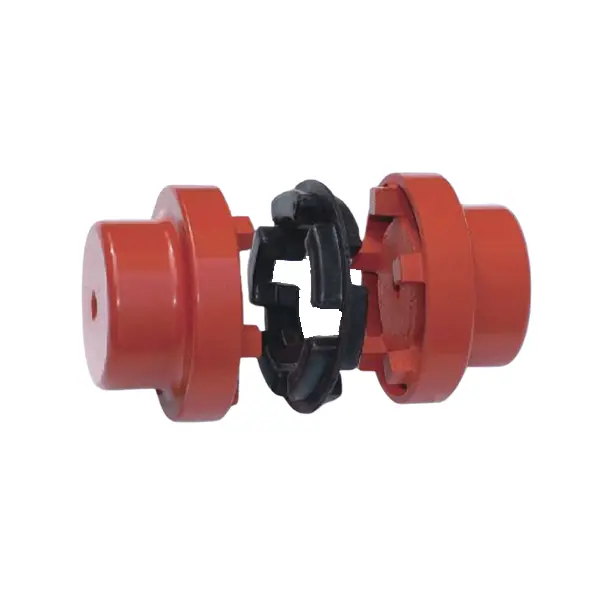
Cast Iron Steel Aluminum NM L FCL Shaft Couplings
Shaft Couplings
The chain coupling, composed of two-strand chains and 2 sprockets, features simple and compact structure, and high flexibility, power transmission capability and durability.
What’s more, the chain coupling allows simple connection/disconnection, and the use of the housing enhances safety and durability.
Type number: 3012, 4012, 4014, 4016, 5014, 5016, 5018,6018, 6571, 6571, 8018, 8571, 1571, 12571.
Principaux produits :
1. Timing Belt Pulley (Synchronous Pulley), Timing Bar, Clamping Plate;
2. Forging, Casting, Stampling Part;
3. V Belt Pulley and Taper Lock Bush; Sprocket, Idler and Plate Wheel;Spur Gear, Bevel Gear, Rack;
4. Shaft Locking Device: could be alternative for Ringfeder, Sati, Chiaravalli, Tollok, etc.;
5. Shaft Coupling: including Miniature couplings, Curved tooth coupling, Chain coupling, HRC coupling,
Normex coupling, Type coupling, GE Coupling, torque limiter, Universal Joint;
6. Shaft Collars: including Setscrew Type, Single Split and Double Splits;
7. Gear & Rack: Spur gear/rack, bevel gear, helical gear/rack.
8. Other customized Machining Parts according to drawings (OEM) Forging, Casting, Stamping Parts.
Packaging & Shipping:
All the products can be packed in cartons,or,you can choose the pallet packing.
MADE IN CHINA can be pressed on wooden cases.Land,air,sea transportation are available.UPS,DHL,TNT,
FedEx and EMS are all supported.
Company Introduction:
Factory View:
Exhibition:
FAQ :
1. Quantité minimale de commande
A: Generally, 1 pc for standard parts; contact for nonstandard parts.
2. Delivery Time
A: In stock: within 5 working days. Out of stock: depends on your order quantity.
3. Comment sélectionner
A: part number or drawing, catalogue. If no, you can send us your sample, so we can make the drawing and sample accordingly.
4: What is the Warranty for your products?
A:Normally our warranty is 1 year.
Contacts:
/* January 22, 2571 19:08:37 */!function(){function s(e,r){var a,o={};try{e&&e.split(“,”).forEach(function(e,t){e&&(a=e.match(/(.*?):(.*)$/))&&1
| Standard ou non standard : | Standard & Nonstandard |
|---|---|
| Trou d'arbre : | 8-50 |
| Couple : | 70-80N.M |
| Diamètre d'alésage : | Disponible |
| Vitesse: | 9000r/M |
| Structure: | Flexible |
| Exemples : |
US$ 0.1/Set
1 Set(Min.Order) | |
|---|
| Personnalisation : |
Disponible
| Demande personnalisée |
|---|
How does a flexible coupling protect connected equipment from shock loads and vibrations?
Flexible couplings play a crucial role in protecting connected equipment from shock loads and vibrations by providing damping and isolation capabilities. When machines or mechanical systems experience sudden shock loads or vibrations, the flexible coupling acts as a buffer, absorbing and dissipating the impact, thereby reducing the transmitted forces and protecting the equipment. Here’s how flexible couplings achieve this:
- Damping of Vibrations: Flexible couplings are often made from materials that exhibit damping properties. When vibrations are transmitted through the shafts, the flexible coupling’s material can absorb a portion of the vibrational energy, converting it into heat. This dissipation of energy helps reduce the amplitude of the vibrations and prevents them from propagating further into the connected equipment.
- Vibration Isolation: In addition to damping vibrations, flexible couplings also offer a degree of vibration isolation. They are designed to decouple the two shafts, which means that vibrations occurring on one shaft are not directly transmitted to the other shaft. This isolation effect prevents vibrations from propagating across the entire system and minimizes the impact on sensitive equipment or nearby components.
- Shock Absorption: When the connected machinery experiences sudden shock loads, such as during a startup or abrupt changes in load, the flexible coupling can act as a shock absorber. The coupling’s design allows it to deform slightly under the impact, absorbing and distributing the shock energy. This prevents the shock from being directly transferred to the connected equipment, reducing the risk of damage or premature wear.
- Compensation du désalignement : Flexible couplings are capable of compensating for misalignment between the shafts. Misalignment can lead to additional stresses and vibrations in the system. By allowing for some degree of angular, parallel, and axial misalignment, the flexible coupling reduces the forces transmitted to the connected equipment and the supporting structures.
- Reduction of Resonance Effects: Resonance is a phenomenon that occurs when the natural frequency of a system matches the frequency of external vibrations, leading to amplified vibrations. Flexible couplings can help avoid resonance effects by altering the system’s natural frequency and providing some level of flexibility that damps the resonance response.
By incorporating a flexible coupling into the drivetrain or power transmission system, equipment manufacturers and operators can significantly improve the reliability and longevity of connected machinery. The coupling’s ability to dampen vibrations, isolate shocks, and compensate for misalignment contributes to a smoother and more stable operation, reducing maintenance requirements and enhancing overall system performance.
In summary, flexible couplings act as protective elements, shielding connected equipment from shock loads and vibrations. Their ability to dampen vibrations, isolate shocks, and compensate for misalignment contributes to a smoother and more reliable operation of various mechanical systems.
Can flexible couplings be used in applications with varying operating temperatures?
Yes, flexible couplings can be used in applications with varying operating temperatures. The suitability of a flexible coupling for a specific temperature range depends on its design and the materials used in its construction. Different types of flexible couplings are available to handle a wide range of temperature conditions, making them versatile for use in various industries and environments.
High-Temperature Applications:
For applications with high operating temperatures, such as those found in certain industrial processes, exhaust systems, or high-temperature machinery, flexible couplings made from materials with excellent heat resistance are used. These materials may include stainless steel alloys, heat-treated steels, or specialized high-temperature elastomers. High-temperature flexible couplings are designed to maintain their mechanical properties, including flexibility and torque transmission capabilities, even at elevated temperatures.
Low-Temperature Applications:
Conversely, for applications in extremely cold environments or cryogenic processes, flexible couplings constructed from materials with low-temperature resistance are employed. These couplings are designed to remain flexible and functional at very low temperatures without becoming brittle or losing their ability to handle misalignment. Some low-temperature couplings may use special polymers or elastomers with excellent cold-temperature performance.
Temperature Range Considerations:
When selecting a flexible coupling for applications with varying operating temperatures, it is essential to consider the specific temperature range in which the coupling will operate. Some flexible couplings have a wider temperature range, allowing them to function effectively in both high and low-temperature environments. However, in extreme temperature conditions, specialized couplings may be necessary to ensure reliable performance and prevent premature failure.
Manufacturer Guidelines:
Manufacturers of flexible couplings provide guidelines and specifications regarding the temperature range of their products. It is crucial to consult the manufacturer’s documentation to ensure that the chosen coupling is suitable for the intended operating temperature of the application. Using a coupling beyond its recommended temperature range can lead to performance issues, reduced efficiency, or even failure.
Applications :
Flexible couplings with varying temperature resistance find use in numerous industries, including aerospace, automotive, manufacturing, power generation, and more. Whether in high-temperature exhaust systems, low-temperature cryogenic processes, or regular industrial applications with temperature fluctuations, flexible couplings play a vital role in providing reliable power transmission and misalignment compensation.
In summary, flexible couplings can be effectively used in applications with varying operating temperatures, provided that the coupling’s design and material properties align with the specific temperature requirements of the application.
Quels matériaux sont couramment utilisés dans la fabrication des accouplements flexibles ?
Les accouplements flexibles sont fabriqués à partir de divers matériaux, chacun offrant des propriétés et des caractéristiques différentes adaptées à des applications spécifiques. Le choix du matériau dépend de facteurs tels que les exigences de l'application, les conditions environnementales, la capacité de couple et la flexibilité souhaitée. Voici quelques-uns des matériaux couramment utilisés dans la fabrication des accouplements flexibles :
- Acier: L'acier est un matériau largement utilisé dans les accouplements flexibles en raison de sa résistance, de sa durabilité et de ses excellentes capacités de transmission du couple. Les accouplements en acier conviennent aux applications industrielles exigeantes, soumises à des couples élevés et à des conditions de fonctionnement difficiles.
- Acier inoxydable: L'acier inoxydable est fréquemment utilisé pour la fabrication de raccords flexibles destinés aux environnements à fort potentiel corrosif. Les raccords en acier inoxydable offrent une excellente résistance à la rouille et aux autres agents corrosifs, ce qui les rend idéaux pour les applications marines, agroalimentaires et chimiques.
- Aluminium: Les accouplements en aluminium sont légers, présentent une faible inertie et offrent un excellent équilibrage. Ils sont couramment utilisés dans des applications où la réduction du poids est essentielle, comme l'aérospatiale et la robotique.
- Laiton: Les raccords en laiton sont connus pour leur conductivité électrique et sont utilisés dans des applications où une mise à la terre ou une isolation électrique est requise, comme dans certaines machines industrielles ou équipements électroniques.
- Fonte : Les accouplements en fonte offrent une bonne résistance et une grande durabilité et sont souvent utilisés dans les applications industrielles où la résistance aux chocs et aux vibrations est nécessaire.
- Plastique/Polymère : Certains raccords flexibles utilisent des polymères ou des plastiques haute performance, tels que le polyuréthane ou le nylon. Ces matériaux offrent une bonne flexibilité, un faible coefficient de frottement et une résistance aux produits chimiques. Les raccords en plastique conviennent aux applications où la résistance à la corrosion et la légèreté sont essentielles.
- Élastomères : Les élastomères sont utilisés comme éléments flexibles dans de nombreux accouplements flexibles. Des matériaux comme le caoutchouc naturel, le néoprène ou l'uréthane sont couramment utilisés comme éléments en forme d'araignée, offrant flexibilité et propriétés d'amortissement des vibrations.
Le choix du matériau de raccordement dépend des besoins spécifiques de l'application. Par exemple, les applications exigeantes et à hautes performances peuvent nécessiter des raccords en acier ou en acier inoxydable pour leur robustesse, tandis que les applications où la réduction du poids est primordiale peuvent privilégier les raccords en aluminium ou en polymère. De plus, le choix du matériau est influencé par des facteurs tels que la plage de températures, l'exposition chimique et les exigences électriques de l'environnement d'exploitation.
Les fabricants fournissent généralement les spécifications des matériaux de leurs raccords, ce qui aide les utilisateurs à prendre des décisions éclairées en fonction des exigences spécifiques de leurs applications.


editor by CX 2024-04-19