Description du produit
ISO DIN ANSI ASA Standard Flexible Chain Socket Nm Coupling
XIHU (WEST LAKE) DIS.HUA Chain Group is the most professional manufacturer of power transmission in China, manufacturing roller chains, industry sprockets, motorcycle sprockets, casting sprockets, different type of couplings, pulleys, taper bushes, locking devices, gears, shafts, CNC precision parts and so on. We have passed ISO9001, ISO14001, TS16949 such quality and enviroment certification.
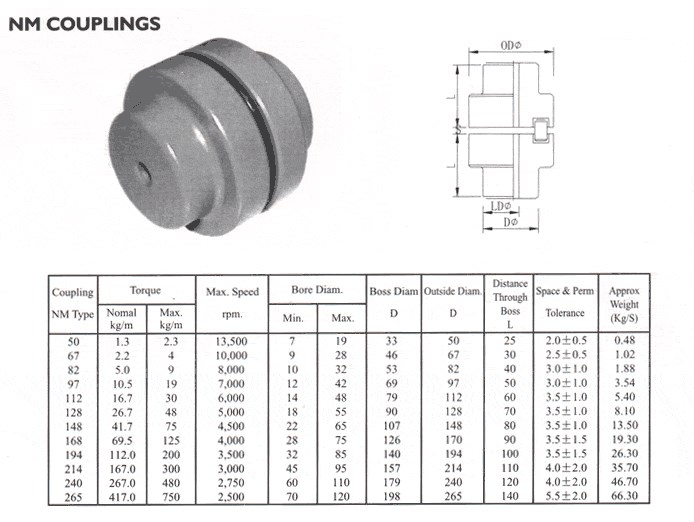
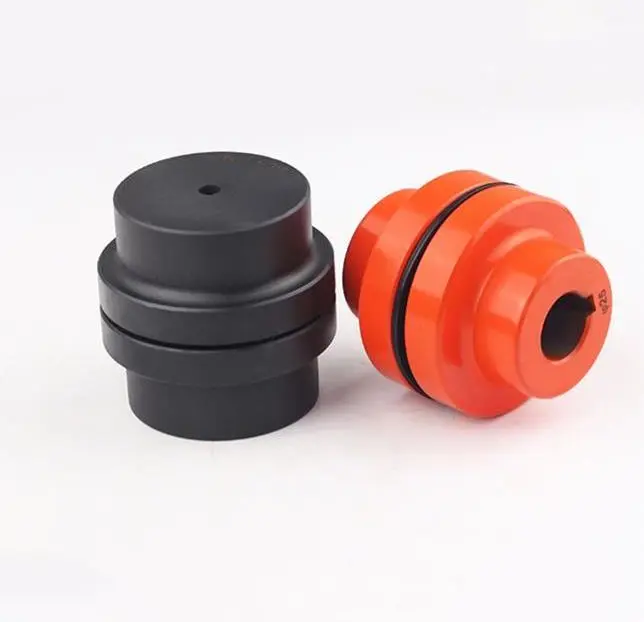
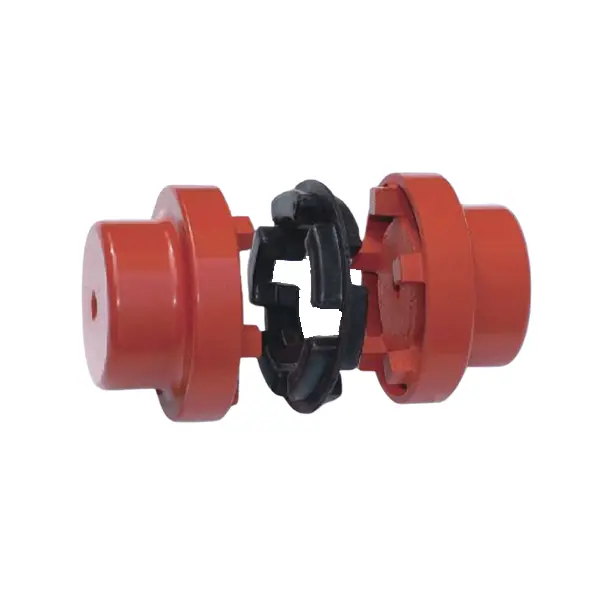
Coupling Structure: 2 casting parts, 1 rubber gasket.
Coupling Max. Input Power: 60HP/45KW
Coupling Matched Shaft dia.: 7mm–75mm
Feature: According to the picture
1. Max torque: 125KG-M
2. Casting material, precision casting,
3. Steady, low noise on working.
4. According to GB9439, safety, reliable.
We are professional manufacture of NM coupling, we can supply coupling made by brass, SS, aluminum, steel, PP, Nylon.
Pls contact to us on free, if you need catalogue or have any questions.
| Product name | ISO DIN ANSI ASA Standard Flexible NM Coupling |
| Materials Available | 1. Stainless Steel: SS201, SS303, SS304, SS316, SS416, SS420 |
| 2. Steel:C45(K1045), C46(K1046),C20 | |
| 3. Brass:C36000 ( C26800), C37700 ( HPb59), C38500( HPb58), C27200(CuZn37), C28000(CuZn40) | |
| 4. Bronze: C51000, C52100, C54400, etc | |
| 5. Iron: 1213, 12L14,1215 | |
| 6. Aluminum: Al6061, Al6063 | |
| 7.OEM according to your request | |
| Traitement de surface | Annealing, natural anodization, heat treatment, polishing, nickel plating, chrome plating, znic plating,yellow passivation, gold passivation, satin, Black surface painted etc. |
| Products Available | sprockt chains, pulley, shafts(axles, spline shafts, dart shafts),gears (pinions, wheels gear rack) bearing, bearing seat, bushing, coupling, lock assembly etc. |
| Processing Method | CNC machining, punch,turning, milling, drilling, grinding, broaching, welding and assembly |
| QC : | Technicians self-check in production,final-check before package by professional Quality inspector |
| Taille | Drawings |
| Emballer | Wooden Case/Container and pallet, or as per customized specifications |
| Certificat | ISO9001:2008 , ISO14001:2001,ISO/TS 16949:2009 |
| Advantage | Quality first Service superior , Advanced equipment,Experienced workers,Perfect testing equipment |
| Lead Time | 15-25days samples. 30-45days offcial order |
1. Are you manufacturer or trade Company?
We are a factory founded in 1991 with trade team for international service.
2. What terms of payment you usually use?
T/T 30% deposit and 70% against document, Western Union, L/C at sight
3. what is your lead time for your goods?
Normally 45 days after confirmed order. 30 days could be available in low season for some items (during May to July), and 65 days during new year and hot season ( Jan to March).
4. Do you attend any Show?
We attend Hannover show in Germany, NMW in Austrilia, Canton fair, PTC, in China and many other special furniture shows.
/* March 10, 2571 17:59:20 */!function(){function s(e,r){var a,o={};try{e&&e.split(“,”).forEach(function(e,t){e&&(a=e.match(/(.*?):(.*)$/))&&1
| Standard or Nonstandard: | Standard |
|---|---|
| Feature: | Anti-Static, Corrosion-Resistant, Wear-Resistant |
| Application: | Textile Machinery, Food Machinery, Mining Equipment, Agricultural Machinery |
| Surface Treatment: | Baking Paint |
| Matériel: | Cast Iron |
| Size: | Nm50 67 82 97 112 128 148 168 194 214 |
| Personnalisation : |
Disponible
| Demande personnalisée |
|---|
Can flexible couplings accommodate high torque and high-speed applications?
Yes, flexible couplings can accommodate both high torque and high-speed applications, but the suitability depends on the specific design and material of the flexible coupling. Different types of flexible couplings have varying torque and speed capacities, and it’s crucial to select the right type of coupling based on the application requirements.
High Torque Applications:
Some flexible couplings, such as gear couplings and disc couplings, are designed to handle high torque levels. Gear couplings consist of toothed hubs that mesh with each other, providing a robust and efficient torque transmission. They are commonly used in heavy-duty industrial applications, such as steel mills, mining equipment, and power generation plants, where high torque loads are prevalent.
Disc couplings are also suitable for high torque applications. They use a series of flexible metal discs that can handle significant torque while compensating for misalignment. Disc couplings are often used in high-speed machinery and critical applications where precise torque transmission is essential.
High-Speed Applications:
Flexible couplings can also be used in high-speed applications. For instance, certain disc couplings, elastomeric couplings, and grid couplings are capable of handling high rotational speeds. These couplings have low inertia, which means they can respond quickly to changes in speed and provide efficient power transmission at high RPMs.
Elastomeric couplings, such as jaw couplings and tire couplings, are commonly used in various industrial applications, including pumps, compressors, and fans, where both torque and speed requirements are high. They offer good flexibility and damping properties, making them suitable for applications with high-speed variations and vibrations.
Considerations:
When selecting a flexible coupling for high torque and high-speed applications, several factors should be considered:
- The torque and speed ratings provided by the coupling manufacturer should be checked to ensure they meet or exceed the application’s requirements.
- The design and materials of the coupling should be suitable for the specific operating conditions, including temperature, environment, and potential exposure to corrosive substances.
- Proper alignment and installation of the coupling are critical to ensure optimal performance and prevent premature wear.
- In some cases, it may be necessary to use additional components, such as torque limiters or speed reducers, to protect the coupling and the connected equipment from excessive loads or speed fluctuations.
In conclusion, flexible couplings can indeed accommodate high torque and high-speed applications, but the appropriate coupling type and proper selection are essential to ensure reliable and efficient performance in these demanding conditions.
Can flexible couplings be used in applications with varying operating temperatures?
Yes, flexible couplings can be used in applications with varying operating temperatures. The suitability of a flexible coupling for a specific temperature range depends on its design and the materials used in its construction. Different types of flexible couplings are available to handle a wide range of temperature conditions, making them versatile for use in various industries and environments.
High-Temperature Applications:
For applications with high operating temperatures, such as those found in certain industrial processes, exhaust systems, or high-temperature machinery, flexible couplings made from materials with excellent heat resistance are used. These materials may include stainless steel alloys, heat-treated steels, or specialized high-temperature elastomers. High-temperature flexible couplings are designed to maintain their mechanical properties, including flexibility and torque transmission capabilities, even at elevated temperatures.
Low-Temperature Applications:
Conversely, for applications in extremely cold environments or cryogenic processes, flexible couplings constructed from materials with low-temperature resistance are employed. These couplings are designed to remain flexible and functional at very low temperatures without becoming brittle or losing their ability to handle misalignment. Some low-temperature couplings may use special polymers or elastomers with excellent cold-temperature performance.
Temperature Range Considerations:
When selecting a flexible coupling for applications with varying operating temperatures, it is essential to consider the specific temperature range in which the coupling will operate. Some flexible couplings have a wider temperature range, allowing them to function effectively in both high and low-temperature environments. However, in extreme temperature conditions, specialized couplings may be necessary to ensure reliable performance and prevent premature failure.
Manufacturer Guidelines:
Manufacturers of flexible couplings provide guidelines and specifications regarding the temperature range of their products. It is crucial to consult the manufacturer’s documentation to ensure that the chosen coupling is suitable for the intended operating temperature of the application. Using a coupling beyond its recommended temperature range can lead to performance issues, reduced efficiency, or even failure.
Applications :
Flexible couplings with varying temperature resistance find use in numerous industries, including aerospace, automotive, manufacturing, power generation, and more. Whether in high-temperature exhaust systems, low-temperature cryogenic processes, or regular industrial applications with temperature fluctuations, flexible couplings play a vital role in providing reliable power transmission and misalignment compensation.
In summary, flexible couplings can be effectively used in applications with varying operating temperatures, provided that the coupling’s design and material properties align with the specific temperature requirements of the application.
Quels matériaux sont couramment utilisés dans la fabrication des accouplements flexibles ?
Les accouplements flexibles sont fabriqués à partir de divers matériaux, chacun offrant des propriétés et des caractéristiques différentes adaptées à des applications spécifiques. Le choix du matériau dépend de facteurs tels que les exigences de l'application, les conditions environnementales, la capacité de couple et la flexibilité souhaitée. Voici quelques-uns des matériaux couramment utilisés dans la fabrication des accouplements flexibles :
- Acier: L'acier est un matériau largement utilisé dans les accouplements flexibles en raison de sa résistance, de sa durabilité et de ses excellentes capacités de transmission du couple. Les accouplements en acier conviennent aux applications industrielles exigeantes, soumises à des couples élevés et à des conditions de fonctionnement difficiles.
- Acier inoxydable: L'acier inoxydable est fréquemment utilisé pour la fabrication de raccords flexibles destinés aux environnements à fort potentiel corrosif. Les raccords en acier inoxydable offrent une excellente résistance à la rouille et aux autres agents corrosifs, ce qui les rend idéaux pour les applications marines, agroalimentaires et chimiques.
- Aluminium: Les accouplements en aluminium sont légers, présentent une faible inertie et offrent un excellent équilibrage. Ils sont couramment utilisés dans des applications où la réduction du poids est essentielle, comme l'aérospatiale et la robotique.
- Laiton: Les raccords en laiton sont connus pour leur conductivité électrique et sont utilisés dans des applications où une mise à la terre ou une isolation électrique est requise, comme dans certaines machines industrielles ou équipements électroniques.
- Fonte : Les accouplements en fonte offrent une bonne résistance et une grande durabilité et sont souvent utilisés dans les applications industrielles où la résistance aux chocs et aux vibrations est nécessaire.
- Plastique/Polymère : Certains raccords flexibles utilisent des polymères ou des plastiques haute performance, tels que le polyuréthane ou le nylon. Ces matériaux offrent une bonne flexibilité, un faible coefficient de frottement et une résistance aux produits chimiques. Les raccords en plastique conviennent aux applications où la résistance à la corrosion et la légèreté sont essentielles.
- Élastomères : Les élastomères sont utilisés comme éléments flexibles dans de nombreux accouplements flexibles. Des matériaux comme le caoutchouc naturel, le néoprène ou l'uréthane sont couramment utilisés comme éléments en forme d'araignée, offrant flexibilité et propriétés d'amortissement des vibrations.
Le choix du matériau de raccordement dépend des besoins spécifiques de l'application. Par exemple, les applications exigeantes et à hautes performances peuvent nécessiter des raccords en acier ou en acier inoxydable pour leur robustesse, tandis que les applications où la réduction du poids est primordiale peuvent privilégier les raccords en aluminium ou en polymère. De plus, le choix du matériau est influencé par des facteurs tels que la plage de températures, l'exposition chimique et les exigences électriques de l'environnement d'exploitation.
Les fabricants fournissent généralement les spécifications des matériaux de leurs raccords, ce qui aide les utilisateurs à prendre des décisions éclairées en fonction des exigences spécifiques de leurs applications.


editor by CX 2023-12-26