产品描述
产品描述
| Plum Pad: Plum CHINAMFG mat, full name plum-shaped elastic coupling cushion. It is used for cushioning of various heavy machinery coupling shafts. Some areas are also known as plum CHINAMFG plates. According to the material, it can be divided into polyurethane plum mat and rubber plum mat, nylon plum mat. |
| Plum Pad Classification: Plum CHINAMFG mat is divided into MT type plum CHINAMFG mat, T-shaped hexagonal mat, GR star plum CHINAMFG mat, HRC hexagonal mat, NM type elastic ring, L-shaped hexagonal pad, NL nylon inner tooth sleeve, H-type elastic block, rubber gear, etc. |
| Plum Pad Characteristics The plum CHINAMFG pad is used for damping, insulation and buffer transmission torque in the middle of the coupling. The torque transmitted by the plum CHINAMFG pads of different materials and different hardness is also different. The higher the hardness, the greater the torque transmitted. |
详细照片
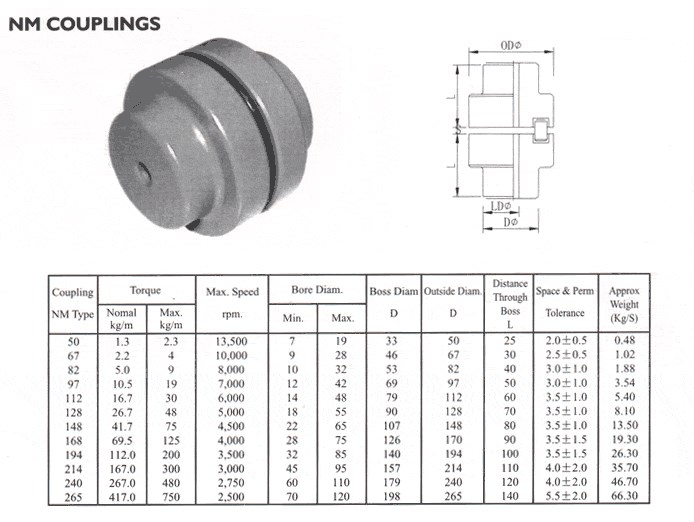
Size List
Other Seals
公司简介
Our company was founded in March 2005 and is located in HangZhou, a world-famous coastal city. We cover a total area of 20,000 square meters, including 8,000 square CHINAMFG of construction area. We have more than 110 employees, including 35 technicians and 3 senior engineers. Our company is 1 of the top 100 excellent auto parts suppliers in China. We are professional enterprise specializing in the production of seals. And we were separated from the former state-owned HangZhou Seals Factory. We have strong technical capabilities and 30 years of seal
manufacturing technology and experience. Specializing in the production of rubber products such as skeleton oil seals, sealing rings, O-rings, and rubber parts. We provide supporting services for many CHINAMFG domestic brands of engines, machinery, hydraulic press, etc.
We have the world’s most advanced automatic production lines and testing equipments, such as digital projectors, electronic tensile testing machines, computerized rotorless curemeters , high-precision life test benches, etc. The annual production capacity reaches 200 million pieces. We have also passed ISO9001:2000 quality management system, ISO9001:2008 quality management system and TS16949 international certification. Products are sold to all provinces and regions of China, and exported to the united Arab emirates, Russia, Japan, Europe, the United States and other countries.
We will continue to work hard in production, quality control, technology, research and development, management and service to achieve our business goal – – – becoming a world-class sealing enterprise.
我们的优势
/* 2571 年 1 月 22 日 19:08:37 */!function(){function s(e,r){var a,o={};try{e&&e.split(“,”).forEach(function(e,t){e&&(a=e.match(/(.*?):(.*)$/))&&1
| Material 1: | TPU PU Nr PA NBR Silicone EPDM |
|---|---|
| Material 2: | Polyurethane Rubber |
| Colour: | Red Black Yellow Blue Milk Green |
| 结构: | Gr GS Mt HRC Nm Nl T L Tgl TXT Txd |
| Use for: | High Transmission Flange |
| Name 1: | Spiders Coupling |
| 示例: |
US$ 1/Piece
1 件(最低订购量) | |
|---|
| 定制化: |
可用的
| 定制请求 |
|---|
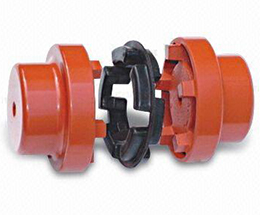
Can flexible couplings be used in both horizontal and vertical shaft arrangements?
Yes, flexible couplings can be used in both horizontal and vertical shaft arrangements. The design of flexible couplings allows them to accommodate misalignment and compensate for angular, parallel, and axial displacements between the shafts, making them suitable for various shaft orientations.
Horizontal Shaft Arrangements:
In horizontal shaft arrangements, where the shafts are parallel to the ground or horizontal plane, flexible couplings are commonly used to connect two rotating shafts. These couplings help transmit torque from one shaft to another while accommodating any misalignment that may occur during operation. Horizontal shaft arrangements are common in applications such as pumps, compressors, conveyors, and industrial machinery.
Vertical Shaft Arrangements:
In vertical shaft arrangements, where the shafts are perpendicular to the ground or vertical plane, flexible couplings are also applicable. Vertical shafts often require couplings that can handle the additional weight and forces resulting from gravity. Flexible couplings designed for vertical applications can support the weight of the rotating equipment while allowing for some axial movement to accommodate thermal expansion or other displacements. Vertical shaft arrangements are commonly found in applications such as pumps, gearboxes, turbines, and some marine propulsion systems.
Considerations for Vertical Shaft Arrangements:
When using flexible couplings in vertical shaft arrangements, there are a few additional considerations to keep in mind:
- Thrust Load: Vertical shafts can generate thrust loads, especially in upward or downward direction. The flexible coupling should be selected based on its capacity to handle both radial and axial loads to accommodate these forces.
- Lubrication: Some vertical couplings may require additional lubrication to ensure smooth operation and reduce wear, particularly if they are exposed to high axial loads or extended vertical shafts.
- Support and Bearing: Proper support and bearing arrangements for the vertical shaft are essential to prevent excessive shaft deflection and ensure the flexible coupling functions correctly.
Overall, flexible couplings are versatile and adaptable to various shaft orientations, providing efficient power transmission and misalignment compensation. Whether in horizontal or vertical arrangements, using the appropriate flexible coupling design and considering the specific application requirements will help ensure reliable and efficient operation.
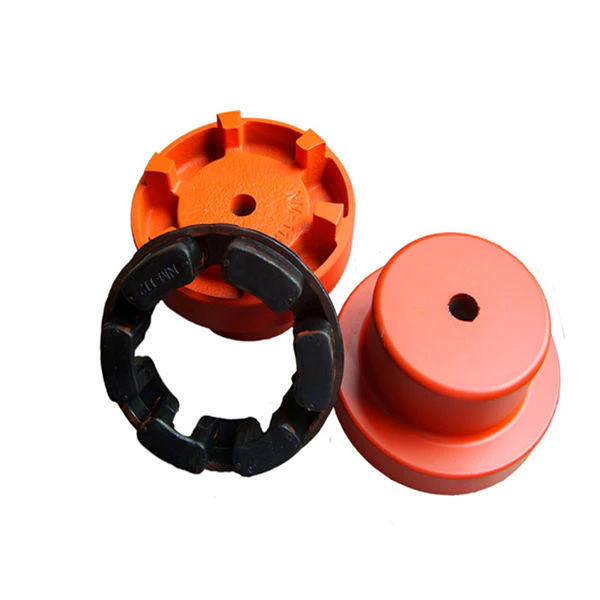
What are the differences between elastomeric and metallic flexible coupling designs?
Elastomeric and metallic flexible couplings are two distinct designs used to transmit torque and accommodate misalignment in mechanical systems. Each type offers unique characteristics and advantages, making them suitable for different applications.
Elastomeric Flexible Couplings:
Elastomeric flexible couplings, also known as flexible or jaw couplings, employ an elastomeric material (rubber or similar) as the flexible element. The elastomer is typically molded between two hubs, and it acts as the connector between the driving and driven shafts. The key differences and characteristics of elastomeric couplings include:
- Misalignment Compensation: Elastomeric couplings are designed to handle moderate levels of angular, parallel, and axial misalignment. The elastomeric material flexes to accommodate the misalignment while transmitting torque between the shafts.
- Vibration Damping: The elastomeric material in these couplings offers excellent vibration dampening properties, reducing the transmission of vibrations from one shaft to another. This feature helps protect connected equipment from excessive vibrations and enhances system reliability.
- Shock Load Absorption: Elastomeric couplings can absorb and dampen shock loads, protecting the system from sudden impacts or overloads.
- Cost-Effective: Elastomeric couplings are generally more cost-effective compared to metallic couplings, making them a popular choice for various industrial applications.
- Simple Design and Installation: Elastomeric couplings often have a straightforward design, allowing for easy installation and maintenance.
- Lower Torque Capacity: These couplings have a lower torque capacity compared to metallic couplings, making them suitable for applications with moderate torque requirements.
- Common Applications: Elastomeric couplings are commonly used in pumps, compressors, fans, conveyors, and other applications that require moderate torque transmission and misalignment compensation.
Metallic Flexible Couplings:
Metallic flexible couplings use metal components (such as steel, stainless steel, or aluminum) to connect the driving and driven shafts. The metallic designs can vary significantly depending on the type of metallic coupling, but some general characteristics include:
- High Torque Capacity: Metallic couplings have higher torque transmission capabilities compared to elastomeric couplings. They are well-suited for applications requiring high torque handling.
- Misalignment Compensation: Depending on the design, some metallic couplings can accommodate minimal misalignment, but they are generally not as flexible as elastomeric couplings in this regard.
- Stiffer Construction: Metallic couplings are generally stiffer than elastomeric couplings, offering less vibration dampening but higher torsional stiffness.
- Compact Design: Metallic couplings can have a more compact design, making them suitable for applications with limited space.
- Higher Precision: Metallic couplings often offer higher precision and concentricity, resulting in better shaft alignment.
- Higher Cost: Metallic couplings are typically more expensive than elastomeric couplings due to their construction and higher torque capacity.
- Common Applications: Metallic couplings are commonly used in high-speed machinery, precision equipment, robotics, and applications with high torque requirements.
概括:
In summary, the main differences between elastomeric and metallic flexible coupling designs lie in their flexibility, torque capacity, vibration dampening, cost, and applications. Elastomeric couplings are suitable for applications with moderate torque, misalignment compensation, and vibration dampening requirements. On the other hand, metallic couplings are chosen for applications with higher torque and precision requirements, where flexibility and vibration dampening are less critical.
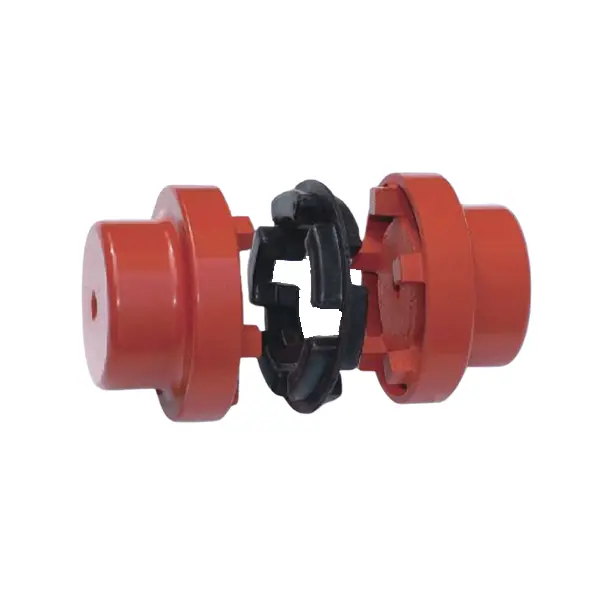
柔性联轴器制造中通常使用哪些材料?
柔性联轴器采用多种材料制造,每种材料都具有不同的性能和特性,适用于特定的应用。材料的选择取决于多种因素,例如应用要求、环境条件、扭矩容量和所需的柔性。以下是一些柔性联轴器制造中常用的材料:
- 钢: 钢材因其强度高、耐久性好以及优异的扭矩传递性能,被广泛用于柔性联轴器中。钢制联轴器适用于扭矩要求高、运行条件恶劣的重载工业应用。
- 不锈钢: 在腐蚀性较高的环境中,不锈钢常用于制造柔性联轴器。不锈钢联轴器具有优异的抗锈蚀和其他腐蚀性物质的能力,使其成为船舶、食品加工和化工行业应用的理想选择。
- 铝: 铝制联轴器重量轻、惯性小、平衡性好,常用于对重量要求极高的应用领域,例如航空航天和机器人行业。
- 黄铜: 黄铜接头因其良好的导电性而闻名,常用于需要电气接地或电气隔离的场合,例如某些工业机械或电子设备。
- 铸铁: 铸铁联轴器具有良好的强度和耐久性,常用于需要抵抗冲击载荷和振动的工业应用中。
- 塑料/聚合物: 一些柔性联轴器采用高性能聚合物或塑料,例如聚氨酯或尼龙。这些材料具有良好的柔韧性、低摩擦系数和耐化学腐蚀性。塑料联轴器适用于对耐腐蚀性和轻量化要求较高的应用场合。
- 弹性体: 弹性体被用作许多柔性联轴器中的柔性元件。天然橡胶、氯丁橡胶或聚氨酯等材料常用作弹性体连接臂,它们具有柔韧性和减振性能。
联轴器材料的选择取决于具体应用需求。例如,高性能和重载应用可能需要坚固耐用的钢或不锈钢联轴器,而对重量要求极高的应用则可能更适合使用铝或聚合物联轴器。此外,应用运行环境的温度范围、化学腐蚀和电气要求等因素也会影响材料的选择。
制造商通常会提供其联轴器的材料规格,帮助用户根据其应用的具体需求做出明智的决定。


editor by CX 2024-05-09