Описание продукта
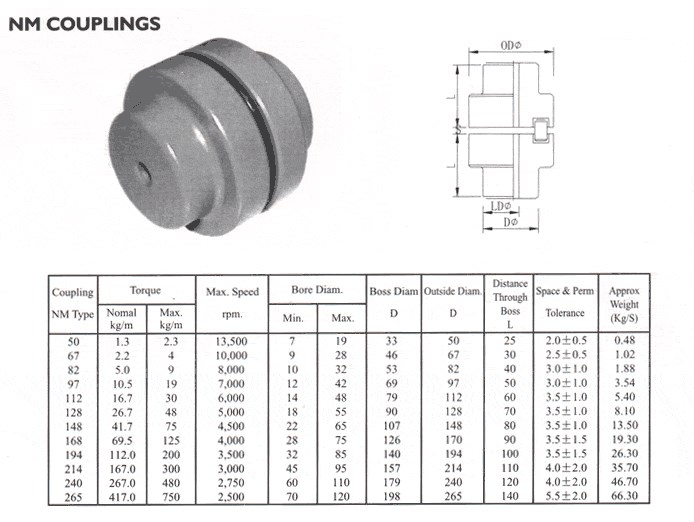
ISO DIN ANSI ASA Standard Nm50-214 Nm Cast Iron Flexible Sleeve Normex Plum CHINAMFG Type Elastic Shaft Coupling
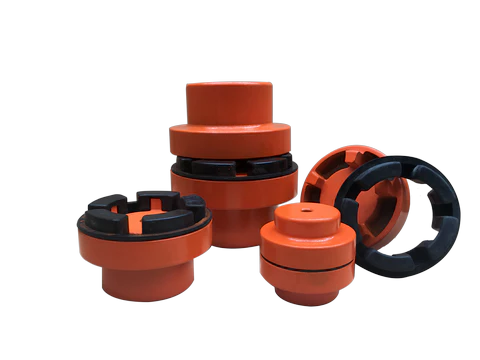
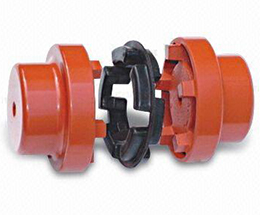
NM flexible shaft coupling is a cylindrical pin made of some non-metallic materials, which is placed between the 2 sides of the coupling and the inner surface of the outer ring, and a device to transfer the torque through the column pin to realize the connection between 2 half couplings. NM flexible shaft coupling between the slider made of bakelite cloth or polyurethane, suitable for high speed, large torque, no sharp impact of the 2 connections.
Product brand: EVER-POWER
Name of transmission part: муфта водяного насоса
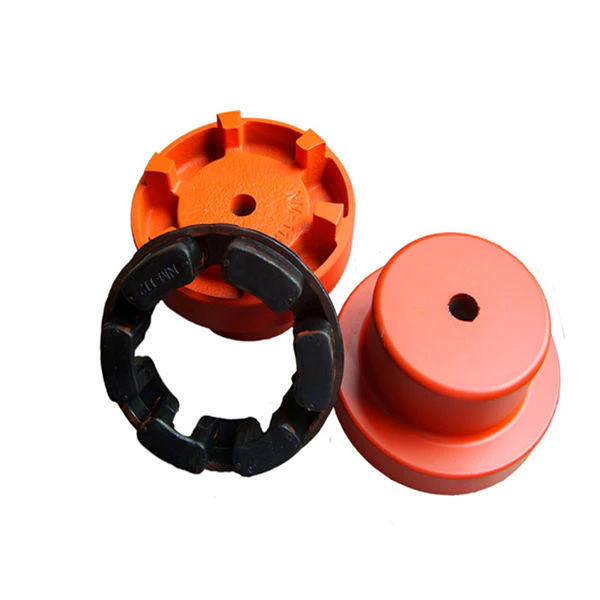
Product structure: Он состоит из двух чугунных когтей и внутреннего кольца из натурального каучука.
Suitable shaft diameter: 7 мм-75 мм
Suitable motor power: в пределах 60 л.с. / 45 кВт
Характеристики продукта:
1. The maximum torque is 125kgm 2. Stable operation and low noise 3. The product is made of cast iron and cast by precision die casting, so it is not easy to cause fracture during operation
Related products:
Production workshop:
Company information:
/* March 10, 2571 17:59:20 */!function(){function s(e,r){var a,o={};try{e&&e.split(“,”).forEach(function(e,t){e&&(a=e.match(/(.*?):(.*)$/))&&1
| Стандартный или нестандартный: | Стандарт |
|---|---|
| Отверстие для вала: | 19-32 |
| Крутящий момент: | >80 Н·м |
| Диаметр отверстия: | 19 мм |
| Скорость: | 4000 об/мин |
| Структура: | Гибкий |
| Образцы: |
US$ 9999/Piece
1 штука (минимальный заказ) | |
|---|
What industries commonly use flexible couplings for power transmission?
Flexible couplings are widely used in various industries for power transmission and motion control applications. Their ability to accommodate misalignment, dampen vibrations, and protect equipment from shock loads makes them valuable components in many industrial processes. Here are some of the industries that commonly utilize flexible couplings:
- Manufacturing: Flexible couplings are extensively used in manufacturing industries such as automotive, aerospace, electronics, and consumer goods production. They play a critical role in transmitting power between motors and various machinery, including conveyor systems, robots, and assembly lines.
- Oil and Gas: In the oil and gas industry, flexible couplings are used in pumps, compressors, turbines, and generators. They help transfer power in offshore platforms, refineries, pipelines, and drilling operations while compensating for the dynamic nature of these applications.
- Power Generation: Power plants, both conventional and renewable, rely on flexible couplings to transmit power from turbines and generators to electrical generators. They are used in coal-fired, natural gas, nuclear, hydroelectric, and wind power plants.
- Mining: In mining operations, flexible couplings are employed in various equipment, including conveyor systems, crushers, and large industrial pumps. They are designed to withstand the heavy loads and harsh conditions commonly found in mining environments.
- Marine: Flexible couplings are essential in marine propulsion systems, connecting engines to propellers or water jets. They also find use in shipboard machinery, auxiliary systems, and offshore applications.
- Pulp and Paper: The pulp and paper industry relies on flexible couplings in machinery used for wood processing, pulp production, papermaking, and printing processes.
- Chemical and Petrochemical: In chemical plants and petrochemical refineries, flexible couplings are utilized in pumps, mixers, agitators, and other rotating equipment to ensure efficient power transmission and protect sensitive machinery.
- Construction: The construction industry employs flexible couplings in various equipment, such as concrete pumps, cranes, excavators, and drilling machines.
- Water and Wastewater: Flexible couplings are used in water treatment plants, wastewater facilities, and irrigation systems to transfer power between motors and pumps.
- Agriculture: In agricultural machinery, flexible couplings are utilized in tractors, harvesters, and irrigation systems, enabling efficient power transmission and operation.
The versatility and adaptability of flexible couplings make them indispensable components in a wide range of industries, contributing to increased equipment reliability, reduced downtime, and improved overall system performance.
Как гибкое соединение влияет на общую надежность подключенного оборудования?
Гибкое соединение существенно влияет на общую надежность подключенного оборудования несколькими способами:
- Компенсация несоосности: Гибкие муфты позволяют компенсировать как угловое, так и параллельное смещение соединенных валов. Благодаря компенсации смещения, муфта снижает нагрузку и износ подшипников, уплотнений и других вращающихся компонентов. Эта особенность предотвращает преждевременный выход из строя этих компонентов, способствуя повышению надежности и увеличению срока службы оборудования.
- Виброгашение: Гибкие муфты обладают присущими им демпфирующими свойствами благодаря своим эластомерным или гибким элементам. Эти элементы поглощают и рассеивают вибрации, возникающие во время работы оборудования. Демпфируя вибрации, муфта защищает подключенное оборудование от чрезмерных колебаний, снижая усталость и предотвращая механические поломки. Такой улучшенный контроль вибрации повышает надежность системы.
- Амортизация ударных нагрузок: В системах с внезапными изменениями нагрузки или ударными нагрузками, например, в тяжелой технике или высокоскоростном оборудовании, гибкая муфта действует как амортизатор. Она способна поглощать и рассеивать энергию удара, защищая оборудование от повреждений, вызванных внезапными нагрузками. Способность поглощать ударные нагрузки способствует повышению общей надежности подключенного оборудования.
- Снижение износа: Гибкость муфты минимизирует нагрузку и износ вращающегося оборудования. Она допускает незначительные перемещения и смещения, снижая трение и нагрузку на подшипники и другие важные компоненты. Такое снижение износа уменьшает частоту технического обслуживания и замены, повышая общую надежность оборудования.
- Компенсация теплового расширения: Изменения температуры в механизмах могут приводить к тепловому расширению или сжатию валов. Гибкая муфта может компенсировать эти тепловые эффекты, обеспечивая правильное выравнивание механизмов даже при колебаниях температуры. Такая компенсация предотвращает заедание и смещение, способствуя надежной работе.
- Защита от перегрузок: Гибкие муфты помогают защитить подключенное оборудование от перегрузок и крутильных колебаний. Они действуют как механический предохранитель, отключая привод при возникновении перегрузки, тем самым предотвращая повреждение дорогостоящего оборудования. Эта функция безопасности повышает общую надежность и снижает риск катастрофических отказов.
- Простота в обслуживании и регулировке: Гибкие муфты разработаны для легкой установки и выравнивания. Эта особенность упрощает процедуры технического обслуживания, облегчая осмотр и замену муфт при необходимости. Правильно выровненные муфты приводят к улучшению производительности и срока службы оборудования, повышая общую надежность.
Компенсируя несоосность, гася вибрации, поглощая ударные нагрузки, снижая износ и обеспечивая другие защитные функции, гибкая муфта значительно повышает надежность подключенного оборудования. Она продлевает срок службы важных компонентов, минимизирует время простоя и обеспечивает плавную и эффективную работу, что делает ее ценным компонентом в различных промышленных приложениях.
Can you explain the different types of flexible coupling designs available?
There are several types of flexible coupling designs available, each with its unique construction and characteristics. These designs are tailored to meet specific application requirements and address different types of misalignment and torque transmission needs. Here are some of the most common types of flexible couplings:
- Супружинные муфты: Jaw couplings consist of two hubs with curved jaws and an elastomer spider placed between them. The spider acts as a flexible element and can compensate for angular and parallel misalignment. Jaw couplings are widely used in various industrial applications due to their simple design and effectiveness in handling misalignment and vibration damping.
- Дисковые муфты: Disc couplings use thin metallic discs with a series of alternating slits and flanges to connect the shafts. The disc coupling design allows for excellent misalignment compensation, including angular, parallel, and axial misalignment. Disc couplings are known for their high torsional stiffness and precise torque transmission capabilities.
- Зубчатые муфты: Gear couplings consist of toothed hubs connected by an external sleeve with gear teeth. They are well-suited for applications with high torque and moderate misalignment. Gear couplings offer good misalignment compensation and high torque capacity, making them popular in heavy-duty industrial applications.
- Соединение пучков: Beam couplings use a single piece of flexible material, often a metal beam, to connect the shafts. The material’s flexibility allows for angular and axial misalignment compensation. Beam couplings are compact, lightweight, and provide low inertia, making them suitable for applications with high-speed requirements.
- Сильфонные муфты: Bellows couplings consist of a bellows-like flexible structure that connects the two hubs. They can compensate for angular, parallel, and axial misalignment. Bellows couplings are known for their high torsional stiffness and ability to maintain constant velocity transmission.
- Олдхэмские пары: Oldham couplings use three discs, with the middle one having a perpendicular slot. This design allows for angular misalignment compensation while transmitting torque between the hubs. Oldham couplings are often used when electrical isolation between shafts is required.
Each flexible coupling design has its strengths and limitations, and the choice depends on factors such as the application’s torque requirements, misalignment conditions, operating environment, and speed. Proper selection of the coupling type ensures optimal performance, efficiency, and reliability in various mechanical systems and rotating machinery.


editor by CX 2024-01-09