Productbeschrijving
Productbeschrijving
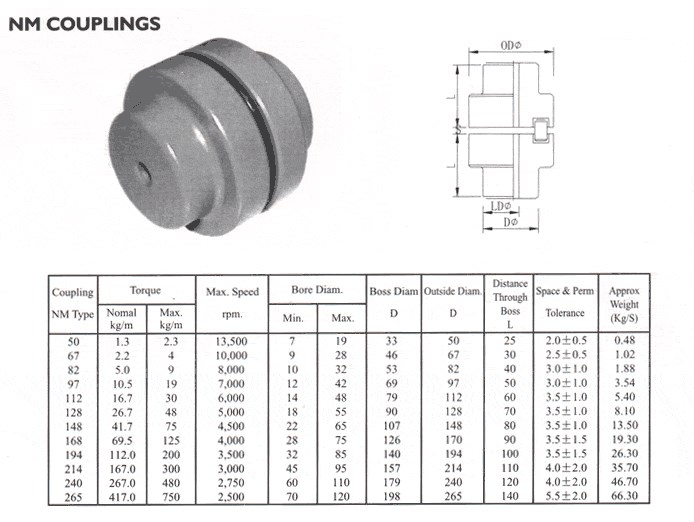
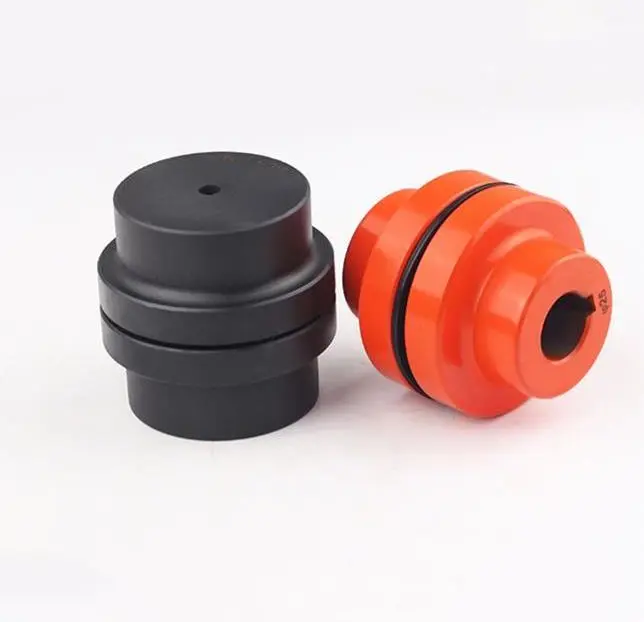
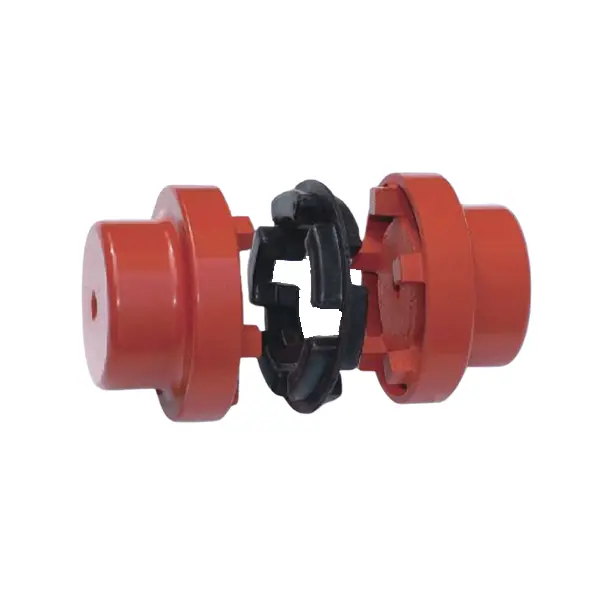
NM type shaft coupling elastic coupling
Productkenmerken:
|
Parameters of the item |
The parameter value |
The measuring unit |
Model – OUTER diameter * Length |
The length * width * height of each package |
Gross weight per item |
|
Brand |
Transfer |
PCS |
NM-50 |
|
0.48 |
|
Country of origin |
Xihu (West Lake) Dis. Guan |
PCS |
NM-67 |
|
1.02 |
|
The largest distortion |
125kg-m |
PCS |
NM-82 |
|
1.88 |
|
material |
Cast iron material |
PCS |
NM-97 |
|
3.54 |
|
Adapter trunnion |
7 mm-75 mm |
PCS |
NM-112 |
|
5.4 |
|
Adaptor power |
Within 60 HP / 45 kw |
PCS |
NM-128 |
|
8.1 |
|
|
|
PCS |
NM-148 |
|
13.5 |
|
|
|
PCS |
NM-168 |
|
19.3 |
Productparameters
Verpakking en verzending
Packaging:
Plastic Bag+ Carton+Wooden case ( If you have other requirements, we can customized according to customer requirements packaging.)
Shipping :
1.Most of the standard ones are in stock which we can send in 3-10 days after inspection and package.
2. Customized products delivery time should be determined according to the number
Bedrijfsprofiel
ZheJiang Mighty Machinery Co., Ltd. specializes in manufacturing Mechanical Power Transmission Products.
We Mighty is the division/branch of SCMC Group, which is a wholly state-owned company, established in 1980.
Over Mighty:
-3 manufacturing factories, we have 5 technical staff, our FTY have strong capacity for design and process design, and more than
70 workers and double shift eveyday.
-Large quality of various material purchase and stock in warhouse which ensure the low cost for the material and production in
time.
-Strick quality control are apply in the whole prodution. we have incoming inspection,process inspection and final production
inspection which can ensure the perfect of the goods quality.
-14 years of machining experience. Long time cooperate with the Global Buyer, make us easy to understand the csutomer and handle the export.
MIGHTY’s products are mainly exported to Europe, America and the Middle East market. With the top-ranking management, professional technical support and abundant export experience, MIGHTY has established lasting and stable business partnership with many world famous companies and has got good reputation from CHINAMFG customers in
Veelgestelde vragen
Q1: Are you trading company or manufacturer?
A: Wij zijn een fabriek.
Q2:Do you provide samples? is it free or extra?
A: : Yes, we could offer the sample but not for free.Actually we have a very good price principle, when you make the bulk order then cost of sample will be return to you.
Q3: How long is your delivery time?
A: Generally it is 10-15 days if the goods are in stock. or it is 7-25 days if the goods are not in stock, it is according to quantity.
Q4:How long is your warranty?
A: Our Warranty is 12 month.
Q5 :Do you have inspection procedures for coupling?
A:100% self-inspection before packing
Q6. What’s your payment?
A:1) 100% T/T. 2) 30% in advance, others before shipment. 3) L/C Q7:Can I have a visit to your factory before the order? A: Sure,welcome to visit our factory.
Pls feel free to contact me with no hesitation, welcome your inquiries any time.
| Standaard of niet-standaard: | Standaard |
|---|---|
| Structuur: | Kaak / Spin |
| Materiaal: | Gietijzer |
| Type: | Flexibele |
| Warranty: | 1 Year |
| Productnaam: | Normex Couplings |
| Voorbeelden: |
US$ 0.25/Piece
1 stuk (minimale bestelling) | |
|---|
| Aanpassing: |
Beschikbaar
| Aanvraag op maat |
|---|
Can flexible couplings accommodate high torque and high-speed applications?
Yes, flexible couplings can accommodate both high torque and high-speed applications, but the suitability depends on the specific design and material of the flexible coupling. Different types of flexible couplings have varying torque and speed capacities, and it’s crucial to select the right type of coupling based on the application requirements.
High Torque Applications:
Some flexible couplings, such as gear couplings and disc couplings, are designed to handle high torque levels. Gear couplings consist of toothed hubs that mesh with each other, providing a robust and efficient torque transmission. They are commonly used in heavy-duty industrial applications, such as steel mills, mining equipment, and power generation plants, where high torque loads are prevalent.
Disc couplings are also suitable for high torque applications. They use a series of flexible metal discs that can handle significant torque while compensating for misalignment. Disc couplings are often used in high-speed machinery and critical applications where precise torque transmission is essential.
High-Speed Applications:
Flexible couplings can also be used in high-speed applications. For instance, certain disc couplings, elastomeric couplings, and grid couplings are capable of handling high rotational speeds. These couplings have low inertia, which means they can respond quickly to changes in speed and provide efficient power transmission at high RPMs.
Elastomeric couplings, such as jaw couplings and tire couplings, are commonly used in various industrial applications, including pumps, compressors, and fans, where both torque and speed requirements are high. They offer good flexibility and damping properties, making them suitable for applications with high-speed variations and vibrations.
Considerations:
When selecting a flexible coupling for high torque and high-speed applications, several factors should be considered:
- The torque and speed ratings provided by the coupling manufacturer should be checked to ensure they meet or exceed the application’s requirements.
- The design and materials of the coupling should be suitable for the specific operating conditions, including temperature, environment, and potential exposure to corrosive substances.
- Proper alignment and installation of the coupling are critical to ensure optimal performance and prevent premature wear.
- In some cases, it may be necessary to use additional components, such as torque limiters or speed reducers, to protect the coupling and the connected equipment from excessive loads or speed fluctuations.
In conclusion, flexible couplings can indeed accommodate high torque and high-speed applications, but the appropriate coupling type and proper selection are essential to ensure reliable and efficient performance in these demanding conditions.
How does a flexible coupling affect the noise and vibration levels in a mechanical system?
A flexible coupling plays a crucial role in controlling noise and vibration levels in a mechanical system. It can significantly impact the overall smoothness and quietness of the system’s operation, contributing to enhanced performance and reduced wear on connected components.
Noise Reduction:
Flexible couplings help reduce noise in a mechanical system through their inherent ability to dampen vibrations. When the shafts of rotating machinery are not perfectly aligned, it can lead to vibrations that are transmitted throughout the system, resulting in noise generation. The elastomeric or flexible element of the coupling acts as a vibration dampener, absorbing and dissipating these vibrations. As a result, the noise levels in the system are reduced, creating a quieter operating environment.
Trillingsdemping:
Vibrations in a mechanical system can lead to increased wear and tear on critical components, such as bearings, seals, and gears. Excessive vibrations can also cause resonance and damage to the system over time. Flexible couplings can effectively dampen vibrations by acting as a buffer between the driving and driven shafts. The flexible element absorbs the shock and vibrations, preventing them from propagating to other parts of the system. This vibration damping capability not only reduces noise but also protects the system from potential mechanical failures, extending the lifespan of the equipment.
Alignment Compensation:
Misalignment between shafts is a common cause of vibration and noise in rotating machinery. Flexible couplings excel at compensating for both angular and parallel misalignment. By accommodating misalignment, the coupling reduces the forces acting on the shafts and minimizes the generation of vibrations and noise. Proper alignment through the use of a flexible coupling ensures that the system operates smoothly and quietly.
Effect on Equipment Reliability:
Reducing noise and vibration levels has a positive impact on the reliability of connected equipment. Lower vibrations mean less stress on bearings and other rotating components, leading to extended component life and reduced maintenance requirements. A quieter operating environment can also be essential for certain applications, such as in laboratories or precision manufacturing processes, where excessive noise can interfere with delicate tasks or measurements.
Toepassingen:
Flexible couplings find application in a wide range of industries, such as manufacturing, power generation, material handling, automotive, aerospace, and robotics. They are commonly used in pumps, compressors, fans, conveyors, and other rotating machinery where noise and vibration control are critical for smooth and reliable operation.
Samenvatting:
A flexible coupling’s ability to reduce noise and dampen vibrations makes it an essential component in mechanical systems. By compensating for misalignment and providing vibration dampening properties, the flexible coupling enhances the overall system performance, reduces noise levels, and protects connected equipment from excessive wear and mechanical failures. Choosing the right type of flexible coupling based on the specific application requirements can have a significant impact on noise reduction and vibration control in the mechanical system.
Welke materialen worden doorgaans gebruikt bij de productie van flexibele koppelingen?
Flexibele koppelingen worden vervaardigd uit diverse materialen, elk met verschillende eigenschappen en kenmerken die geschikt zijn voor specifieke toepassingen. De materiaalkeuze hangt af van factoren zoals de eisen van de toepassing, omgevingsomstandigheden, koppelcapaciteit en gewenste flexibiliteit. Hieronder vindt u enkele veelgebruikte materialen voor de productie van flexibele koppelingen:
- Staal: Staal is een veelgebruikt materiaal in flexibele koppelingen vanwege zijn sterkte, duurzaamheid en uitstekende koppeloverdrachtseigenschappen. Stalen koppelingen zijn geschikt voor zware industriële toepassingen met hoge koppelvereisten en zware bedrijfsomstandigheden.
- Roestvrij staal: Roestvrij staal wordt vaak gebruikt voor de productie van flexibele koppelingen in omgevingen met een hoog corrosiepotentieel. Roestvrijstalen koppelingen bieden een uitstekende weerstand tegen roest en andere corrosieve elementen, waardoor ze ideaal zijn voor toepassingen in de scheepvaart, de voedingsmiddelenindustrie en de chemische industrie.
- Aluminium: Aluminium koppelingen zijn licht van gewicht, hebben een lage inertie en bieden een uitstekende balans. Ze worden veel gebruikt in toepassingen waar gewichtsbesparing cruciaal is, zoals in de lucht- en ruimtevaart en robotica.
- Messing: Messing koppelingen staan bekend om hun elektrische geleidbaarheid en worden gebruikt in toepassingen waar elektrische aarding of elektrische isolatie vereist is, zoals in bepaalde industriële machines of elektronische apparatuur.
- Gietijzer: Gietijzeren koppelingen bieden een goede sterkte en duurzaamheid en worden vaak gebruikt in industriële toepassingen waar weerstand tegen schokbelastingen en trillingen vereist is.
- Kunststof/Polymeer: Sommige flexibele koppelingen maken gebruik van hoogwaardige polymeren of kunststoffen, zoals polyurethaan of nylon. Deze materialen bieden goede flexibiliteit, lage wrijving en chemische bestendigheid. Kunststof koppelingen zijn geschikt voor toepassingen waar corrosiebestendigheid en een laag gewicht essentieel zijn.
- Elastomeren: Elastomeren worden in veel flexibele koppelingen gebruikt als flexibele elementen. Materialen zoals natuurrubber, neopreen of urethaan worden vaak gebruikt als elastomeer-spinnenelementen, die flexibiliteit en trillingsdempende eigenschappen bieden.
De keuze van het koppelingsmateriaal hangt af van de specifieke behoeften van de toepassing. Zo vereisen hoogwaardige en zware toepassingen mogelijk stalen of roestvrijstalen koppelingen vanwege hun robuustheid, terwijl toepassingen waarbij gewichtsbesparing cruciaal is, baat kunnen hebben bij aluminium of polymeerkoppelingen. Daarnaast wordt de materiaalkeuze beïnvloed door factoren zoals het temperatuurbereik, blootstelling aan chemicaliën en elektrische eisen in de bedrijfsomgeving van de toepassing.
Fabrikanten leveren doorgaans materiaalspecificaties voor hun koppelingen, waardoor gebruikers weloverwogen beslissingen kunnen nemen op basis van de specifieke eisen van hun toepassingen.


editor by CX 2023-10-07