제품 설명
제품 설명
COUPLINGS
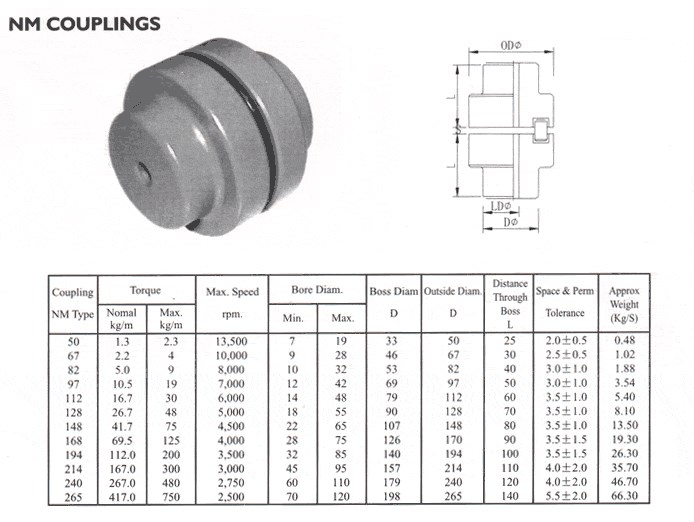
| HRC | FCL | Chain coupling | GE | 엘 | NM | MH | Torque limiter |
| HRC 70B | FCL90 | KC4012 | GE14 | L050 | NM50 | MH45 | TL250-2 |
| HRC 70F | FCL100 | KC4014 | GE19 | L070 | NM67 | MH55 | TL250-1 |
| HRC 70H | FCL112 | KC4016 | GE24 | L075 | NM82 | MH65 | TL350-2 |
| HRC 90B | FCL125 | KC5014 | GE28 | L090 | NM97 | MH80 | TL350-1 |
| HRC 90F | FCL140 | KC5016 | GE38 | L095 | NM112 | MH90 | TL500-2 |
| HRC 90H | FCL160 | KC6018 | GE42 | L099 | NM128 | MH115 | TL500-1 |
| HRC 110B | FCL180 | KC6571 | GE48 | L100 | NM148 | MH130 | TL700-2 |
| HRC 110F | FCL200 | KC6571 | GE55 | L110 | NM168 | MH145 | TL700-1 |
| HRC 110H | FCL224 | KC8018 | GE65 | L150 | NM194 | MH175 | |
| HRC 130B | FCL250 | KC8571 | GE75 | L190 | NM214 | MH200 | |
| HRC 130F | FCL280 | KC8571 | GE90 | L225 | |||
| HRC 130H | FCL315 | KC1571 | |||||
| HRC 150B | FCL355 | KC12018 | |||||
| HRC 150F | FCL400 | KC12571 | |||||
| HRC 150H | FCL450 | ||||||
| HRC 180B | FCL560 | ||||||
| HRC 180F | FCL630 | ||||||
| HRC 180H | |||||||
| HRC 230B | |||||||
| HRC 230F | |||||||
| HRC 230H | |||||||
| HRC 280B | |||||||
| HRC 280F | |||||||
| HRC 280H |
Catalogue
Workshop
Lots of coupling in stock
자주 묻는 질문
Q1: Are you trading company or manufacturer ?
A: 저희는 공장입니다.
Q2: How long is your delivery time and shipment?
1.Sample Lead-times: 10-20 days.
2.Production Lead-times: 30-45 days after order confirmed.
Q3: What is your advantages?
1. The most competitive price and good quality.
2. Perfect technical engineers give you the best support.
3. OEM is available.
| 표준 또는 비표준: | 기준 |
|---|---|
| 구조: | 유연한 |
| 재료: | Steel |
| Type 7: | Nm148 |
| Type 6: | Nm128 |
| Type 9: | Nm194 |
| 맞춤 설정: |
사용 가능
| 맞춤형 요청 |
|---|
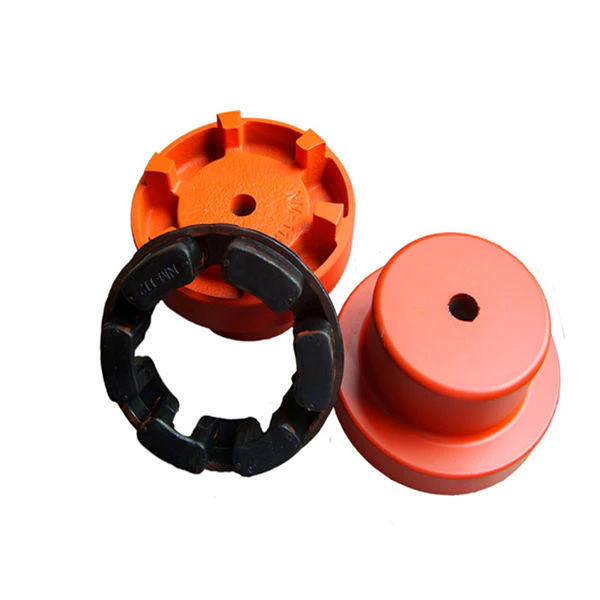
유연 커플링은 각도, 평행 및 축 방향 정렬 불량을 어떻게 처리합니까?
플렉시블 커플링은 두 회전축 사이의 다양한 유형의 정렬 불량(각도 정렬 불량, 평행 정렬 불량, 축 정렬 불량)을 보정하도록 설계되었습니다. 커플링의 유연성 덕분에 이러한 정렬 불량을 보정하면서도 축 사이의 연결을 유지할 수 있습니다. 플렉시블 커플링이 각 유형의 정렬 불량을 처리하는 방식은 다음과 같습니다.
- 각도 불일치: 각도 불일치는 두 축의 축이 일직선이 되지 않고 서로 각도를 이룰 때 발생합니다. 플렉시블 커플링은 구부러지고 휘어질 수 있는 요소를 사용하여 각도 불일치를 처리할 수 있습니다. 일반적인 설계 중 하나는 탄성 중합체로 구성된 "스파이더" 또는 "조" 요소입니다. 축이 어긋나면 탄성 중합체 요소가 약간 변형되어 커플링이 축 사이의 각도 차이를 수용하면서도 토크를 전달할 수 있게 됩니다.
- 평행 정렬 불량: 평행 정렬 불량(오프셋 정렬 불량이라고도 함)은 두 축의 축이 평행하지만 완벽하게 정렬되지 않은 경우 발생합니다. 플렉시블 커플링은 동일한 탄성 요소로 평행 정렬 불량을 처리할 수 있습니다. 이 요소의 유연한 특성 덕분에 축 사이의 오프셋에 맞춰 이동하고 조정할 수 있어 기계에 가해지는 추가적인 스트레스를 최소화하면서 지속적인 동력 전달을 보장합니다.
- 축 정렬 불량: 축 방향 정렬 불량(또는 축단 유격)은 두 축이 공통 축을 따라 서로 가까워지거나 멀어질 때 발생합니다. 플렉시블 커플링은 축 방향 움직임을 제한적으로 허용하는 특수한 설계를 통해 축 방향 정렬 불량을 처리할 수 있습니다. 예를 들어, 일부 커플링은 슬롯형 구멍이나 플로팅 부재를 사용하여 축 사이의 연결을 유지하면서 축 방향 변위를 허용합니다.
각도, 평행 및 축 방향 정렬 불량을 처리할 수 있는 기능을 제공함으로써, 유연 커플링은 동력 전달 시스템에 여러 가지 이점을 제공합니다.
- 이러한 기능은 연결된 장비의 조기 마모 및 손상을 방지하여 유지 보수 및 교체 비용을 절감하는 데 도움이 됩니다.
- 진동과 충격 하중을 최소화하여 기계의 전반적인 작동 부드러움과 신뢰성을 향상시킵니다.
- 이는 정렬 불량으로 인한 응력 때문에 장비가 고장날 위험을 줄여 시스템의 작동 수명을 향상시킵니다.
- 이러한 제품은 설치 및 정렬 조정을 더욱 쉽게 해주어 설정 및 유지 보수 과정에서 시간과 노력을 절약해 줍니다.
전반적으로, 플렉시블 커플링은 다양한 산업 분야에서 정렬 불량을 처리하고 효율적인 동력 전달을 보장하는 데 중요한 역할을 합니다.
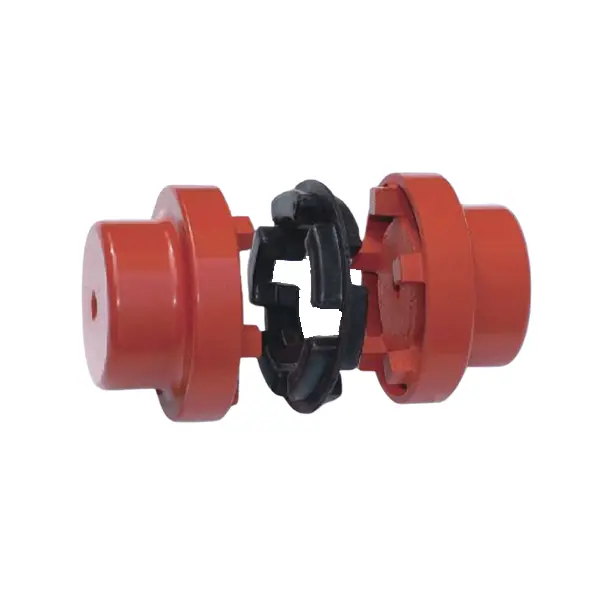
Can flexible couplings be used in applications with varying operating temperatures?
Yes, flexible couplings can be used in applications with varying operating temperatures. The suitability of a flexible coupling for a specific temperature range depends on its design and the materials used in its construction. Different types of flexible couplings are available to handle a wide range of temperature conditions, making them versatile for use in various industries and environments.
고온 응용 분야:
For applications with high operating temperatures, such as those found in certain industrial processes, exhaust systems, or high-temperature machinery, flexible couplings made from materials with excellent heat resistance are used. These materials may include stainless steel alloys, heat-treated steels, or specialized high-temperature elastomers. High-temperature flexible couplings are designed to maintain their mechanical properties, including flexibility and torque transmission capabilities, even at elevated temperatures.
Low-Temperature Applications:
Conversely, for applications in extremely cold environments or cryogenic processes, flexible couplings constructed from materials with low-temperature resistance are employed. These couplings are designed to remain flexible and functional at very low temperatures without becoming brittle or losing their ability to handle misalignment. Some low-temperature couplings may use special polymers or elastomers with excellent cold-temperature performance.
Temperature Range Considerations:
When selecting a flexible coupling for applications with varying operating temperatures, it is essential to consider the specific temperature range in which the coupling will operate. Some flexible couplings have a wider temperature range, allowing them to function effectively in both high and low-temperature environments. However, in extreme temperature conditions, specialized couplings may be necessary to ensure reliable performance and prevent premature failure.
Manufacturer Guidelines:
Manufacturers of flexible couplings provide guidelines and specifications regarding the temperature range of their products. It is crucial to consult the manufacturer’s documentation to ensure that the chosen coupling is suitable for the intended operating temperature of the application. Using a coupling beyond its recommended temperature range can lead to performance issues, reduced efficiency, or even failure.
응용 분야:
Flexible couplings with varying temperature resistance find use in numerous industries, including aerospace, automotive, manufacturing, power generation, and more. Whether in high-temperature exhaust systems, low-temperature cryogenic processes, or regular industrial applications with temperature fluctuations, flexible couplings play a vital role in providing reliable power transmission and misalignment compensation.
In summary, flexible couplings can be effectively used in applications with varying operating temperatures, provided that the coupling’s design and material properties align with the specific temperature requirements of the application.
Can you explain the different types of flexible coupling designs available?
There are several types of flexible coupling designs available, each with its unique construction and characteristics. These designs are tailored to meet specific application requirements and address different types of misalignment and torque transmission needs. Here are some of the most common types of flexible couplings:
- Jaw Couplings: Jaw couplings consist of two hubs with curved jaws and an elastomer spider placed between them. The spider acts as a flexible element and can compensate for angular and parallel misalignment. Jaw couplings are widely used in various industrial applications due to their simple design and effectiveness in handling misalignment and vibration damping.
- 디스크 커플링: Disc couplings use thin metallic discs with a series of alternating slits and flanges to connect the shafts. The disc coupling design allows for excellent misalignment compensation, including angular, parallel, and axial misalignment. Disc couplings are known for their high torsional stiffness and precise torque transmission capabilities.
- 기어 커플링: Gear couplings consist of toothed hubs connected by an external sleeve with gear teeth. They are well-suited for applications with high torque and moderate misalignment. Gear couplings offer good misalignment compensation and high torque capacity, making them popular in heavy-duty industrial applications.
- Beam Couplings: Beam couplings use a single piece of flexible material, often a metal beam, to connect the shafts. The material’s flexibility allows for angular and axial misalignment compensation. Beam couplings are compact, lightweight, and provide low inertia, making them suitable for applications with high-speed requirements.
- Bellows Couplings: Bellows couplings consist of a bellows-like flexible structure that connects the two hubs. They can compensate for angular, parallel, and axial misalignment. Bellows couplings are known for their high torsional stiffness and ability to maintain constant velocity transmission.
- 올덤 커플링: Oldham couplings use three discs, with the middle one having a perpendicular slot. This design allows for angular misalignment compensation while transmitting torque between the hubs. Oldham couplings are often used when electrical isolation between shafts is required.
Each flexible coupling design has its strengths and limitations, and the choice depends on factors such as the application’s torque requirements, misalignment conditions, operating environment, and speed. Proper selection of the coupling type ensures optimal performance, efficiency, and reliability in various mechanical systems and rotating machinery.


editor by CX 2023-08-10