Descrizione del prodotto
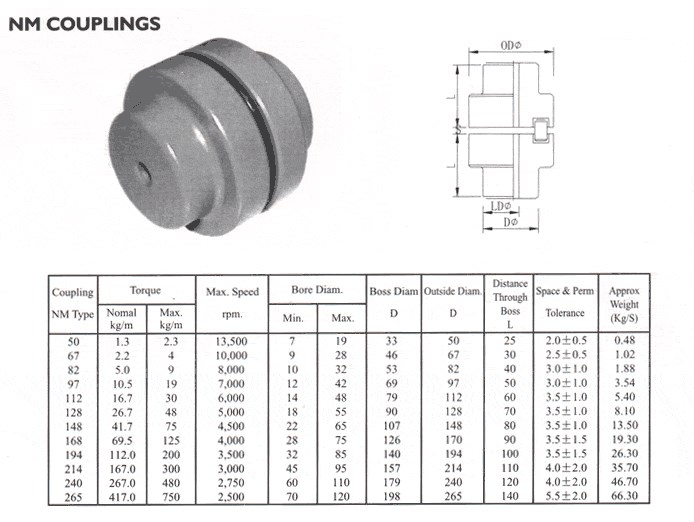
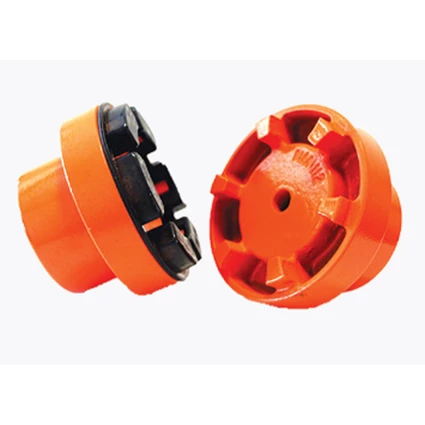
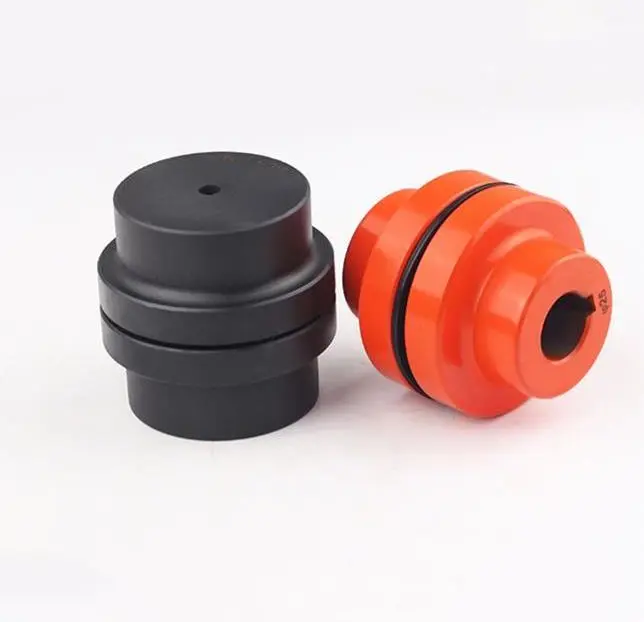
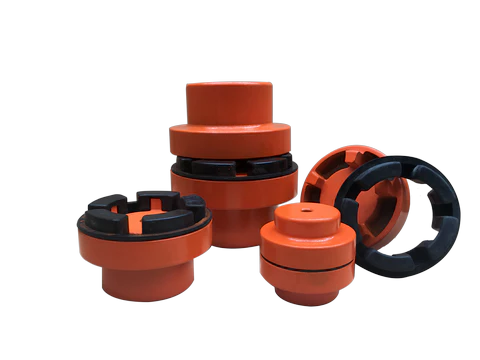
Flexible NM couplings
1. Material: 45#steel and NBR rubber
2. Easy to maintain
3. High precision
4. OEM
Flexible NM couplings advantage:
1. Construction:
1)NM type is precisely produced by a special designed synthetic rubber with 2 similar bodies of cast iron
2)Designed not only for the power transmission but also for protection of flexible rubber
3)Made of rubber and steel cores are inserted in the teeth so as to provide excellent durability and performance of coupling
2. Applications:
Pumps, fans, compressors, vehicles, transporting equipments, constructors, cement mixers, tractors, transmission machines,
Metal working machines, rollers and all other transmissions
3. Features:
1)Economical and practical using
2)Quiet and smooth operation
3)Easy installation and maintenance
4)Available to machines with high torque and intermittent operation
5)Characteristics of the synthetic rubber: Proper elasticity and resistance to damping, oil, acids and alkalies
We can also supply chain coupling, roller chain coupling, rigid couplings, flexible couplings, fcl coupling, flexible rubber fcl coupling, fcl flexible coupling, forged steel fcl coupling, flexible coupling fcl, fcl flexible shaft coupling, jaw coupling, hrc coupling, CHINAMFG coupling, cast steel coupling, aluminum coupling, stainless steel coupling, pin coupling, mh coupling, nm coupling, spacer coupling, taper lock rigid coupling, flange coupling, sleeve coupling, nylon sleeve gear coupling, gear coupling, crc coupling, js coupling
Competitive Advantage:
More than 20 years advanced technology and experience of us will give strong support for coupling you need. We will understand your need of product quickly, and give quick respond and good service. A lot of cases of our products will show you that it worth your trust.
Under the full quality control system, our products go through the precise product line and strict testing process. We have excellent working flow and standard to ensure stability, products reliable enough for using.
Take our scale economy, raw material superiority, and CHINAMFG for clients to account, our price do have a great competitiveness. They are good value and cost effective than your imagine.
We sincerely hope establishing long and friendly business relations with clients from all over the world. Our goal is not just providing product, but also providing a complete solution including product design, tooling, fabrication and service for our customers to achieve their upmost satisfaction.
| Material: | Alloy |
|---|---|
| Certification: | ISO |
| Customized: | Non-Customized |
| Model Type: | Xgq-10/120 |
| Main Material: | Stainless Steel |
| Bearing: | Imported NSK |
| Personalizzazione: |
Disponibile
| Richiesta personalizzata |
|---|
Are there any safety considerations when using flexible couplings in rotating machinery?
Yes, there are several safety considerations to keep in mind when using flexible couplings in rotating machinery. While flexible couplings offer numerous benefits in terms of misalignment compensation, vibration isolation, and shock absorption, improper use or maintenance can lead to safety hazards. Here are some important safety considerations:
- Proper Installation: Ensure that the flexible coupling is installed correctly and securely following the manufacturer’s guidelines. Improper installation can lead to coupling failure, unexpected disconnection, or ejection of coupling components, which may result in equipment damage or injury to personnel.
- Alignment: Proper shaft alignment is essential for the reliable and safe operation of flexible couplings. Misaligned shafts can cause excessive stress on the coupling and connected components, leading to premature wear and possible failure. Regularly check and maintain proper shaft alignment to prevent safety risks.
- Operating Conditions: Consider the environmental and operating conditions of the machinery when selecting a flexible coupling. Some couplings are designed for specific temperature ranges, hazardous environments, or corrosive atmospheres. Using a coupling that is not suitable for the operating conditions can compromise safety and performance.
- Torque and Speed Limits: Always operate the flexible coupling within its specified torque and speed limits. Exceeding these limits can cause coupling failure, leading to unexpected downtime, equipment damage, and potential safety hazards.
- Maintenance: Regularly inspect and maintain the flexible coupling to ensure its continued safe operation. Check for signs of wear, damage, or corrosion, and promptly replace any worn or damaged components with genuine parts from the manufacturer.
- Emergency Stop Mechanism: In applications where safety is critical, consider implementing an emergency stop mechanism to quickly halt machinery operation in case of coupling failure or other emergencies.
- Personal Protective Equipment (PPE): When working with rotating machinery or during maintenance tasks involving couplings, personnel should wear appropriate PPE, such as gloves, eye protection, and clothing that can resist entanglement hazards.
- Training and Awareness: Ensure that personnel working with the machinery understand the potential hazards associated with flexible couplings and receive proper training on safe handling, installation, and maintenance procedures.
By adhering to these safety considerations, operators and maintenance personnel can mitigate potential risks and ensure the safe and reliable operation of rotating machinery with flexible couplings. Additionally, it is essential to comply with relevant safety standards and regulations specific to the industry and application to ensure a safe working environment.
How does a flexible coupling affect the noise and vibration levels in a mechanical system?
A flexible coupling plays a crucial role in controlling noise and vibration levels in a mechanical system. It can significantly impact the overall smoothness and quietness of the system’s operation, contributing to enhanced performance and reduced wear on connected components.
Noise Reduction:
Flexible couplings help reduce noise in a mechanical system through their inherent ability to dampen vibrations. When the shafts of rotating machinery are not perfectly aligned, it can lead to vibrations that are transmitted throughout the system, resulting in noise generation. The elastomeric or flexible element of the coupling acts as a vibration dampener, absorbing and dissipating these vibrations. As a result, the noise levels in the system are reduced, creating a quieter operating environment.
Smorzamento delle vibrazioni:
Vibrations in a mechanical system can lead to increased wear and tear on critical components, such as bearings, seals, and gears. Excessive vibrations can also cause resonance and damage to the system over time. Flexible couplings can effectively dampen vibrations by acting as a buffer between the driving and driven shafts. The flexible element absorbs the shock and vibrations, preventing them from propagating to other parts of the system. This vibration damping capability not only reduces noise but also protects the system from potential mechanical failures, extending the lifespan of the equipment.
Alignment Compensation:
Misalignment between shafts is a common cause of vibration and noise in rotating machinery. Flexible couplings excel at compensating for both angular and parallel misalignment. By accommodating misalignment, the coupling reduces the forces acting on the shafts and minimizes the generation of vibrations and noise. Proper alignment through the use of a flexible coupling ensures that the system operates smoothly and quietly.
Effect on Equipment Reliability:
Reducing noise and vibration levels has a positive impact on the reliability of connected equipment. Lower vibrations mean less stress on bearings and other rotating components, leading to extended component life and reduced maintenance requirements. A quieter operating environment can also be essential for certain applications, such as in laboratories or precision manufacturing processes, where excessive noise can interfere with delicate tasks or measurements.
Applications:
Flexible couplings find application in a wide range of industries, such as manufacturing, power generation, material handling, automotive, aerospace, and robotics. They are commonly used in pumps, compressors, fans, conveyors, and other rotating machinery where noise and vibration control are critical for smooth and reliable operation.
Riepilogo:
A flexible coupling’s ability to reduce noise and dampen vibrations makes it an essential component in mechanical systems. By compensating for misalignment and providing vibration dampening properties, the flexible coupling enhances the overall system performance, reduces noise levels, and protects connected equipment from excessive wear and mechanical failures. Choosing the right type of flexible coupling based on the specific application requirements can have a significant impact on noise reduction and vibration control in the mechanical system.
Quali sono i vantaggi dell'utilizzo di giunti flessibili nei sistemi meccanici?
I giunti flessibili offrono numerosi vantaggi nei sistemi meccanici, rendendoli componenti essenziali in diverse applicazioni. Ecco i principali vantaggi derivanti dall'utilizzo di giunti flessibili:
- Compensazione del disallineamento: Uno dei principali vantaggi dei giunti flessibili è la loro capacità di compensare il disallineamento degli alberi. Nei sistemi meccanici, il disallineamento può verificarsi a causa di diversi fattori, come errori di installazione, dilatazione termica o flessione dell'albero. I giunti flessibili possono compensare disallineamenti angolari, paralleli e assiali, garantendo una trasmissione di potenza fluida e riducendo le sollecitazioni sulle apparecchiature e sugli alberi collegati.
- Smorzamento delle vibrazioni: I giunti flessibili fungono da elementi smorzanti, assorbendo e dissipando vibrazioni e urti generati durante il funzionamento. Questa caratteristica contribuisce a ridurre la rumorosità, a proteggere le apparecchiature dall'usura eccessiva e a migliorare l'affidabilità e le prestazioni complessive del sistema.
- Flessibilità torsionale: I giunti flessibili offrono flessibilità torsionale, consentendo loro di gestire lievi deflessioni angolari e assiali. Questa capacità protegge le apparecchiature da improvvise fluttuazioni di coppia, carichi d'urto e picchi di coppia, garantendo un funzionamento più fluido e prevenendo danni ai macchinari.
- Protezione da sovraccarico: In caso di sovraccarichi improvvisi o picchi di coppia, i giunti flessibili possono assorbire e distribuire la coppia in eccesso, proteggendo le apparecchiature collegate e la trasmissione da eventuali danni. Questa funzione di protezione dai sovraccarichi previene guasti imprevisti e riduce i tempi di inattività nelle applicazioni critiche.
- Riduzione dell'usura e della manutenzione: Compensando i disallineamenti e smorzando le vibrazioni, i giunti flessibili contribuiscono a ridurre l'usura delle apparecchiature, dei cuscinetti e delle guarnizioni collegate. Ciò si traduce in una maggiore durata dei componenti e in minori esigenze di manutenzione, con conseguente risparmio sui costi e miglioramento dell'affidabilità del sistema.
- Compensazione per dilatazione termica: Nei sistemi esposti a variazioni di temperatura, i giunti flessibili possono compensare la dilatazione e la contrazione termica, mantenendo il corretto allineamento e prevenendo bloccaggi o sollecitazioni eccessive sulle apparecchiature durante i cambiamenti di temperatura.
- Isolamento elettrico: Alcuni tipi di giunti flessibili, come i giunti a disco, offrono isolamento elettrico tra gli alberi. Questa caratteristica è vantaggiosa nelle applicazioni in cui è necessario ridurre al minimo la corrosione galvanica o le interferenze elettriche tra i componenti collegati.
- Risparmio di spazio e di peso: I giunti flessibili presentano spesso design compatti e bassa inerzia, il che risulta vantaggioso in applicazioni con vincoli di spazio e dove la riduzione del peso è fondamentale per le prestazioni e l'efficienza.
- Rapporto costi-efficacia: I giunti flessibili rappresentano generalmente soluzioni economiche per la trasmissione di potenza e il controllo del movimento, soprattutto se confrontati con tipologie di giunti più complesse e costose. La loro progettazione relativamente semplice e la facilità di installazione contribuiscono al risparmio sui costi.
In sintesi, i giunti flessibili svolgono un ruolo fondamentale nei sistemi meccanici, fornendo compensazione del disallineamento, smorzamento delle vibrazioni, protezione dai sovraccarichi e flessibilità torsionale. Questi vantaggi si traducono in migliori prestazioni del sistema, riduzione dell'usura e della manutenzione e maggiore affidabilità delle apparecchiature, rendendo i giunti flessibili la scelta preferita in diverse applicazioni industriali, automobilistiche, navali e aerospaziali.


editor by CX 2023-12-07