Deskripsi Produk
NM TYPE COUPLING ELEMENTS
|
item |
value |
|
Applicable Industries |
Building Material Shops, Manufacturing Plant, Machinery Repair Shops, Construction works |
|
Customized support |
OEM |
|
Struktur |
Jaw / Spider |
|
Flexible or Rigid |
Fleksibel |
|
Standard or Nonstandard |
Standar |
|
Bahan |
RUBBER |
Advantages
* Extremely resistant to wear, oil, CZPT and ageing
* Also resistant to hydrolysis (ideal for tropical climates)
* Protect the drive against dynamic overload
* Good physical properties
* Wide range of application
* Failure protection
* Easy installation
Technical Data
Operating Conditions
Temperature : -35°C ~+ 100°C
Material : Rubber
Hardness : 90 -95 Shore A
Color : Black
| Bahan: | NBR |
|---|---|
| Usage: | Shaft |
| Jenis: | Haplotype |
| Kecepatan: | Kecepatan |
| Pressure: | Pressure Type |
| Lip: | Single Lip |
| Contoh: |
US$ 1/Buah
1 Buah (Minimum Pemesanan) | |
|---|
| Kustomisasi: |
Tersedia
| Permintaan Khusus |
|---|

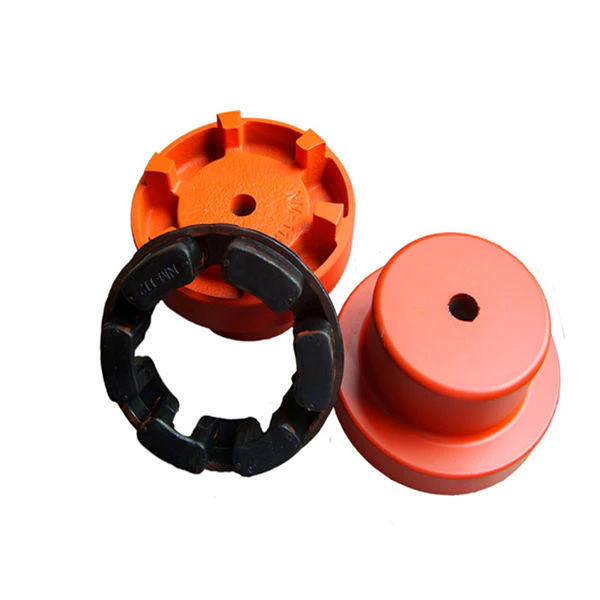
How does a flexible coupling handle angular, parallel, and axial misalignment?
A flexible coupling is designed to accommodate various types of misalignment between two rotating shafts: angular misalignment, parallel misalignment, and axial misalignment. The flexibility of the coupling allows it to maintain a connection between the shafts while compensating for these misalignment types. Here’s how a flexible coupling handles each type of misalignment:
- Angular Misalignment: Angular misalignment occurs when the axes of the two shafts are not collinear and form an angle with each other. Flexible couplings can handle angular misalignment by incorporating an element that can flex and bend. One common design is the “spider” or “jaw” element, which consists of elastomeric materials. As the shafts are misaligned, the elastomeric element can deform slightly, allowing the coupling to accommodate the angular offset between the shafts while still transmitting torque.
- Parallel Misalignment: Parallel misalignment, also known as offset misalignment, occurs when the axes of the two shafts are parallel but not perfectly aligned with each other. Flexible couplings can handle parallel misalignment through the same elastomeric element. The flexible nature of the element enables it to shift and adjust to the offset between the shafts, ensuring continuous power transmission while minimizing additional stresses on the machinery.
- Axial Misalignment: Axial misalignment, also called end-play misalignment, occurs when the two shafts move closer together or farther apart along their common axis. Flexible couplings can handle axial misalignment through specific designs that allow limited axial movement. For instance, some couplings use slotted holes or a floating member that permits axial displacement while maintaining the connection between the shafts.
By providing the capability to handle angular, parallel, and axial misalignment, flexible couplings offer several advantages for power transmission systems:
- They help to prevent premature wear and damage to the connected equipment, reducing maintenance and replacement costs.
- They minimize vibration and shock loads, enhancing the overall smoothness and reliability of the machinery.
- They reduce the risk of equipment failure due to misalignment-induced stresses, improving the system’s operational life.
- They allow for easier installation and alignment adjustments, saving time and effort during setup and maintenance.
Overall, flexible couplings play a crucial role in handling misalignment and ensuring efficient power transmission in various industrial applications.
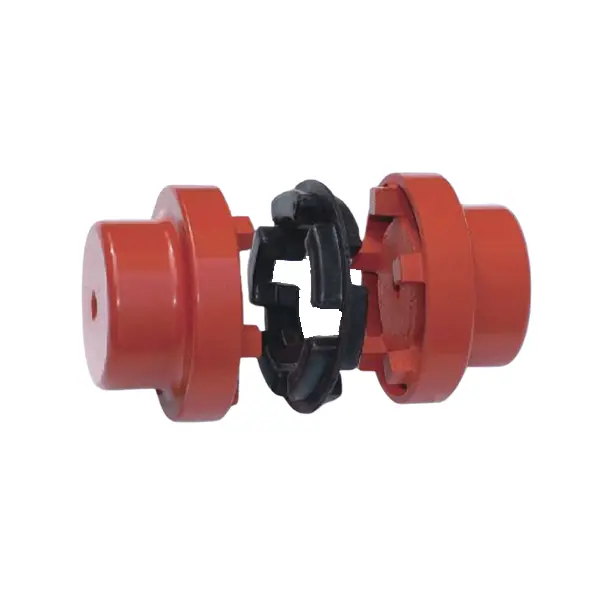
Bisakah kopling fleksibel digunakan dalam aplikasi dengan suhu operasi yang bervariasi?
Ya, kopling fleksibel dapat digunakan dalam aplikasi dengan suhu operasi yang bervariasi. Kesesuaian kopling fleksibel untuk rentang suhu tertentu bergantung pada desain dan bahan yang digunakan dalam pembuatannya. Berbagai jenis kopling fleksibel tersedia untuk menangani berbagai kondisi suhu, sehingga serbaguna untuk digunakan di berbagai industri dan lingkungan.
Aplikasi Suhu Tinggi:
Untuk aplikasi dengan suhu operasi tinggi, seperti yang ditemukan dalam proses industri tertentu, sistem pembuangan, atau mesin suhu tinggi, digunakan kopling fleksibel yang terbuat dari material dengan ketahanan panas yang sangat baik. Material ini dapat mencakup paduan baja tahan karat, baja yang diberi perlakuan panas, atau elastomer suhu tinggi khusus. Kopling fleksibel suhu tinggi dirancang untuk mempertahankan sifat mekaniknya, termasuk fleksibilitas dan kemampuan transmisi torsi, bahkan pada suhu tinggi.
Aplikasi Suhu Rendah:
Sebaliknya, untuk aplikasi di lingkungan yang sangat dingin atau proses kriogenik, digunakan sambungan fleksibel yang terbuat dari material dengan ketahanan suhu rendah. Sambungan ini dirancang agar tetap fleksibel dan berfungsi pada suhu yang sangat rendah tanpa menjadi rapuh atau kehilangan kemampuannya untuk menangani ketidaksejajaran. Beberapa sambungan suhu rendah mungkin menggunakan polimer atau elastomer khusus dengan kinerja suhu dingin yang sangat baik.
Pertimbangan Rentang Suhu:
Saat memilih kopling fleksibel untuk aplikasi dengan suhu operasi yang bervariasi, penting untuk mempertimbangkan rentang suhu spesifik di mana kopling akan beroperasi. Beberapa kopling fleksibel memiliki rentang suhu yang lebih luas, memungkinkan mereka berfungsi secara efektif baik di lingkungan suhu tinggi maupun rendah. Namun, dalam kondisi suhu ekstrem, kopling khusus mungkin diperlukan untuk memastikan kinerja yang andal dan mencegah kegagalan dini.
Pedoman Produsen:
Produsen sambungan fleksibel menyediakan panduan dan spesifikasi mengenai kisaran suhu produk mereka. Sangat penting untuk merujuk pada dokumentasi produsen untuk memastikan bahwa sambungan yang dipilih sesuai untuk suhu operasi yang dimaksudkan dari aplikasi tersebut. Menggunakan sambungan di luar kisaran suhu yang direkomendasikan dapat menyebabkan masalah kinerja, penurunan efisiensi, atau bahkan kegagalan.
Aplikasi:
Kopling fleksibel dengan ketahanan suhu yang bervariasi banyak digunakan di berbagai industri, termasuk kedirgantaraan, otomotif, manufaktur, pembangkit listrik, dan banyak lagi. Baik dalam sistem pembuangan suhu tinggi, proses kriogenik suhu rendah, atau aplikasi industri biasa dengan fluktuasi suhu, kopling fleksibel memainkan peran penting dalam menyediakan transmisi daya yang andal dan kompensasi ketidaksejajaran.
Singkatnya, kopling fleksibel dapat digunakan secara efektif dalam aplikasi dengan suhu operasi yang bervariasi, asalkan desain dan sifat material kopling sesuai dengan persyaratan suhu spesifik aplikasi tersebut.
What is a flexible coupling and how does it work?
A flexible coupling is a mechanical device used to connect two shafts while allowing for relative movement between them. It is designed to transmit torque from one shaft to another while compensating for misalignment, vibration, and shock. Flexible couplings are essential components in various rotating machinery and systems, as they help protect the connected equipment and enhance overall performance.
Types of Flexible Couplings:
There are several types of flexible couplings, each with its unique design and characteristics. Some common types include:
- Jaw Couplings: Jaw couplings feature elastomer spiders that fit between two hubs. They can accommodate angular and parallel misalignment while dampening vibrations.
- Disc Couplings: Disc couplings use thin metallic discs to connect the shafts. They are highly flexible and provide excellent misalignment compensation.
- Gear Couplings: Gear couplings use gear teeth to transmit torque. They offer high torque capacity and can handle moderate misalignment.
- Beam Couplings: Beam couplings use a single piece of flexible material, such as a metal beam, to transmit torque while compensating for misalignment.
- Bellows Couplings: Bellows couplings use a bellows-like structure to allow for axial, angular, and parallel misalignment compensation.
- Oldham Couplings: Oldham couplings use three discs, with the middle one having a perpendicular slot to allow for misalignment compensation.
How a Flexible Coupling Works:
The operation of a flexible coupling depends on its specific design, but the general principles are similar. Let’s take the example of a jaw coupling to explain how a flexible coupling works:
- Two shafts are connected to the coupling hubs on either side, with an elastomer spider placed between them.
- When torque is applied to one shaft, it causes the spider to compress and deform slightly, transmitting the torque to the other shaft.
- In case of misalignment between the shafts, the elastomer spider flexes and compensates for the misalignment, ensuring smooth torque transmission without imposing excessive loads on the shafts or connected equipment.
- The elastomer spider also acts as a damping element, absorbing vibrations and shocks during operation, which reduces wear on the equipment and enhances system stability.
Overall, the flexibility and ability to compensate for misalignment are the key features that allow a flexible coupling to function effectively. The choice of a specific flexible coupling type depends on the application’s requirements, such as torque capacity, misalignment compensation, and environmental conditions.


editor by CX 2023-09-04