Descripción del Producto
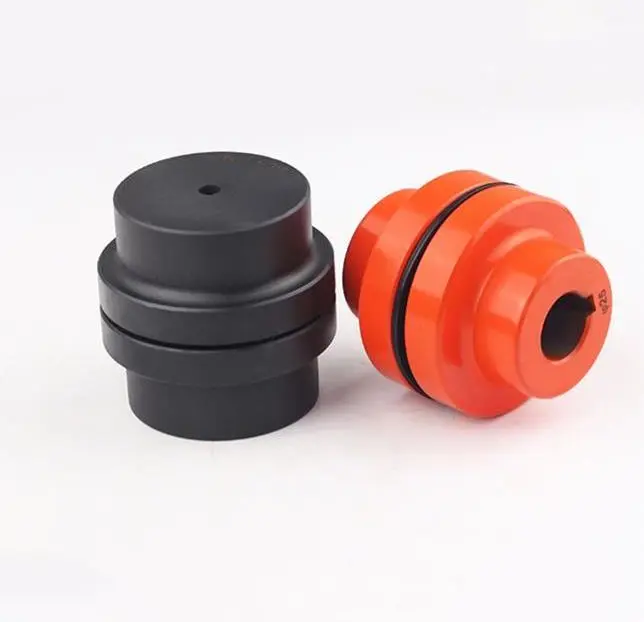
NM Coupling, NM Rubber Coupling Elements, NM Rubber Spider
| Material: | NBR, CSM/SBR | Color: | Black |
| Tensile Strength: | 12Mpa | Hardness: | 80shore A |
| Elongation: | 350% | Density: | 1.25g/cm3 |
| Size: | NM50, NM67, NM82, NM97, NM112, NM128, NM148, NM168, NM194, NM214, NM240, NM265 |
Acoplamiento NM
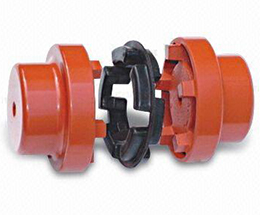
NM type is precisely produced by a special designed synthetic rubber with 2 similar bodies of cast iron
Cast iron flanges:
Designed not only for the power transmission but also for protection of flexible rubber
Flexible rubber:Applications for pumps, fans, compressors, vehicles, transporting equipments, constructors, cement mixers, tractors, transmission machines, metal working machines, rollers and all other transmissions
Made of rubber and steel cores are inserted in the teeth so as to provide excellent durability and performance of coupling
Features:
Economical and practical using
Funcionamiento silencioso y suave
Easy installation and maintenance
Available to machines with high torque and intermittent operation
Characteristics of the synthetic rubber: proper elasticity and resistance to damping, oil, acids and alkalie
Specifications:
1: with CE certificate
2: full detection of quality before delivery
3: OEM is welcomed
4: rich experience in precision casting
material: CSM/SBR, NBR
color: black.
surface: smooth
tensile strength: 12Mpa
hardness: 80Shore A
elongation: 400%
density: 1.25g/cm3
elasticity impact: >25%
tear strength: 35KN/m
working temperature: 100oC
standard size:
NM50, NM67, NM82, NM97, NM112, NM128, NM148, NM168, NM194, NM214, NM240, NM265
Physical character: made by injection with high quality polyester or mould CSM/SBR. It is designing and special for all kinds of metal shaft coupling with very good performance of high tensile strength, high wear resistant, high elastic resilience, water resistant, oil resistant and excellent fatigue resilience, high impact resistant etc. We have full sets moulds and supply full range of GR, GS, MT, Hb, HRC, L, NM and Gear J series couplings with high quality and excellent experience. Apply to all kinds of industrial metal shaft coupling.
Specifications:
material: polyester, CSM/SBR
color: yellow, red, purple, green, black etc.
surface: smooth
tensile strength: 12-55Mpa
hardness: 80-98Shore A
elongation: 400%-650%
density: 1.25g/cm3
elasticity impact: >25%
tear strength: 35-155KN/m
CHINAMFG abrasion loss: <0.05cm3/1.61km
compression set (22h*70oC): <10%
working temperature: 120oC
standard size for polyurethane coupling:
GR14, GR19, GR24, GR28, GR38, GR42, GR48, GR55, GR65, GR75, GR90, GR100, GR110, GR125, GR140, GR160, GR180
MT1, MT2, MT3, MT4, MT5, MT6, MT7, MT8, MT9, MT10, MT11, MT12, MT13
HRC70, HRC90, HRC110, HRC130, HRC150, HRC180, HRC230, HRC280
L35, L50, L70, L75, L90/95, L99/100, L110, L150, L190, L225, L276
FALK-R 10R, 20R, 30R, 40R, 50R, 60R, 70R, 80R
standard size for rubber coupling:
Hb80, Hb95, Hb110, Hb125, Hb140, Hb160, Hb180, Hb200, Hb240, Hb280, Hb315
HRC70, HRC90, HRC110, HRC130, HRC150, HRC180, HRC230, HRC280
L35, L50, L70, L75, L90/95, L99/100, L110, L150, L190, L225
NM50, NM67, NM82, NM97, NM112, NM128, NM148, NM168, NM194, NM214, NM240, NM265
Gear 3J, 4J, 5J, 6J, 7J, 8J, 9J, 10J, 11J
special size build molding according to the buyer’s drawings
***when you enquiry, pls confirm product’s number and quantity***
/* January 22, 2571 19:08:37 */!function(){function s(e,r){var a,o={};try{e&&e.split(“,”).forEach(function(e,t){e&&(a=e.match(/(.*?):(.*)$/))&&1
| Estándar: | DIN, ANSI, GB |
|---|---|
| Material: | Nr+SBR |
| Connection: | Flange |
| Surface Treatment: | Nothing |
| Head Type: | Round |
| Tipo: | Nm Type |
| Muestras: |
US$ 10/unidad
1 unidad (pedido mínimo) | |
|---|
| Personalización: |
Disponible
| Solicitud personalizada |
|---|

¿Pueden los acoplamientos flexibles adaptarse a aplicaciones de alto par y alta velocidad?
Sí, los acoplamientos flexibles pueden soportar aplicaciones de alto par y alta velocidad, pero su idoneidad depende del diseño y el material específicos del acoplamiento. Los distintos tipos de acoplamientos flexibles tienen capacidades de par y velocidad variables, por lo que es fundamental seleccionar el tipo adecuado según los requisitos de la aplicación.
Aplicaciones de alto par:
Algunos acoplamientos flexibles, como los de engranajes y los de discos, están diseñados para soportar altos niveles de torsión. Los acoplamientos de engranajes constan de cubos dentados que engranan entre sí, proporcionando una transmisión de torsión robusta y eficiente. Se utilizan comúnmente en aplicaciones industriales de alta exigencia, como acerías, equipos de minería y centrales eléctricas, donde predominan las cargas de torsión elevadas.
Los acoplamientos de disco también son adecuados para aplicaciones de alto par. Utilizan una serie de discos metálicos flexibles que pueden soportar un par considerable a la vez que compensan la desalineación. Los acoplamientos de disco se utilizan con frecuencia en maquinaria de alta velocidad y aplicaciones críticas donde la transmisión precisa del par es fundamental.
Aplicaciones de alta velocidad:
Los acoplamientos flexibles también se pueden utilizar en aplicaciones de alta velocidad. Por ejemplo, ciertos acoplamientos de disco, elastoméricos y de rejilla son capaces de soportar altas velocidades de rotación. Estos acoplamientos tienen baja inercia, lo que significa que pueden responder rápidamente a los cambios de velocidad y proporcionar una transmisión de potencia eficiente a altas revoluciones por minuto.
Los acoplamientos elastoméricos, como los de mandíbula y los de neumático, se utilizan habitualmente en diversas aplicaciones industriales, como bombas, compresores y ventiladores, donde se requieren altos niveles de par y velocidad. Ofrecen buena flexibilidad y propiedades de amortiguación, lo que los hace idóneos para aplicaciones con variaciones de velocidad y vibraciones elevadas.
Consideraciones:
Al seleccionar un acoplamiento flexible para aplicaciones de alto par y alta velocidad, se deben considerar varios factores:
- Se deben comprobar los valores de par y velocidad proporcionados por el fabricante del acoplamiento para garantizar que cumplen o superan los requisitos de la aplicación.
- El diseño y los materiales del acoplamiento deben ser adecuados para las condiciones de funcionamiento específicas, incluyendo la temperatura, el entorno y la posible exposición a sustancias corrosivas.
- La correcta alineación e instalación del acoplamiento son fundamentales para garantizar un rendimiento óptimo y evitar el desgaste prematuro.
- En algunos casos, puede ser necesario utilizar componentes adicionales, como limitadores de par o reductores de velocidad, para proteger el acoplamiento y el equipo conectado de cargas excesivas o fluctuaciones de velocidad.
En conclusión, los acoplamientos flexibles pueden, en efecto, soportar aplicaciones de alto par y alta velocidad, pero el tipo de acoplamiento adecuado y la selección correcta son esenciales para garantizar un rendimiento fiable y eficiente en estas exigentes condiciones.
How does a flexible coupling impact the overall reliability of connected equipment?
A flexible coupling significantly impacts the overall reliability of connected equipment in several ways:
- Compensación por desalineación: Flexible couplings can accommodate both angular and parallel misalignment between connected shafts. By allowing for misalignment, the coupling reduces the stress and wear on bearings, seals, and other rotating components. This feature prevents premature failure of these components, contributing to improved reliability and extended equipment lifespan.
- Amortiguación de vibraciones: Flexible couplings possess inherent damping properties due to their elastomeric or flexible elements. These elements absorb and dissipate vibrations generated during the operation of machinery. By dampening vibrations, the coupling protects the connected equipment from excessive oscillations, reducing fatigue and preventing mechanical failures. This enhanced vibration control increases the reliability of the system.
- Shock Load Absorption: In applications with sudden load variations or shock loads, such as in heavy machinery or high-speed equipment, a flexible coupling acts as a shock absorber. It can absorb and dissipate the impact energy, protecting the machinery from damage caused by sudden loads. The ability to absorb shock loads contributes to the overall reliability of the connected equipment.
- Reduced Wear and Tear: The flexibility of the coupling minimizes stress and wear on rotating equipment. It allows for slight movements and misalignments, reducing friction and stress on bearings and other critical components. This reduction in wear and tear lowers the frequency of maintenance and replacement, increasing the overall reliability of the equipment.
- Compensación por dilatación térmica: Temperature changes in machinery can lead to thermal expansion or contraction of shafts. A flexible coupling can compensate for these thermal effects, ensuring that the machinery remains properly aligned even as temperature conditions fluctuate. This compensation prevents binding and misalignment, promoting reliable performance.
- Protection Against Overloads: Flexible couplings help protect connected equipment from overloads and torsional vibrations. They act as a mechanical fuse, disconnecting the driveline when an overload occurs, thus preventing damage to expensive machinery. This safety feature enhances the overall reliability and reduces the risk of catastrophic failures.
- Easy Maintenance and Alignment: Flexible couplings are designed for easy installation and alignment. This feature simplifies maintenance procedures, making it easier to inspect and replace couplings when necessary. Properly aligned couplings lead to improved equipment performance and longevity, enhancing overall reliability.
By compensating for misalignment, damping vibrations, absorbing shock loads, reducing wear and tear, and providing other protective features, a flexible coupling significantly improves the reliability of connected equipment. It extends the lifespan of critical components, minimizes downtime, and ensures smooth and efficient operation, making it a valuable component in various industrial applications.
How do you select the appropriate flexible coupling for a specific application?
Choosing the right flexible coupling for a specific application requires careful consideration of various factors to ensure optimal performance, reliability, and longevity. Here are the key steps to select the appropriate flexible coupling:
- Application Requirements: Understand the specific requirements of the application, including torque and speed specifications, misalignment conditions, operating environment (e.g., temperature, humidity, and presence of corrosive substances), and space limitations.
- Torque Capacity: Determine the maximum torque that the coupling needs to transmit. Choose a flexible coupling with a torque rating that exceeds the application’s requirements to ensure a safety margin and prevent premature failure.
- Compensación por desalineación: Consider the type and magnitude of misalignment that the coupling needs to accommodate. Different coupling designs offer varying degrees of misalignment compensation. Select a coupling that can handle the expected misalignment in the system.
- Amortiguación de vibraciones: If the application involves significant vibrations, choose a flexible coupling with good damping properties to reduce vibration transmission to connected equipment and improve system stability.
- Environmental Factors: Take into account the environmental conditions in which the coupling will operate. For harsh environments, consider couplings made from corrosion-resistant materials.
- Torsional Stiffness: Depending on the application’s requirements, decide on the desired torsional stiffness of the coupling. Some applications may require high torsional stiffness for precise motion control, while others may benefit from a more flexible coupling for shock absorption.
- Cost and Life-Cycle Considerations: Evaluate the overall cost-effectiveness of the coupling over its expected life cycle. Consider factors such as initial cost, maintenance requirements, and potential downtime costs associated with coupling replacement.
- Manufacturer Recommendations: Consult coupling manufacturers and their technical specifications to ensure the selected coupling is suitable for the intended application.
- Installation and Maintenance: Ensure that the selected flexible coupling is compatible with the equipment and shaft sizes. Follow the manufacturer’s installation guidelines and recommended maintenance practices to maximize the coupling’s performance and longevity.
By following these steps and carefully evaluating the application’s requirements, you can select the most appropriate flexible coupling for your specific needs. The right coupling choice will lead to improved system performance, reduced wear on equipment, and enhanced overall reliability in various mechanical systems and rotating machinery.


editor by CX 2024-04-13