Produktbeschreibung
How do We Work with Our Clients?
1. For a design expert or a big company with your own engineering team: we prefer to receive a fully RFQ pack from you including drawing, 3D model, quantity, pictures;
2. For a start-up company owner or green hand for engineering: just send an idea that you want to try, you don’t even need to know what casting is;
3. Our sales will reply you within 24 hours to confirm further details and give the estimated quote time;
4. Our engineering team will evaluate your inquiry and provide our offer within next 1~3 working days.;
5. We can arrange a technical communication meeting with you and our engineers together anytime if required.
Customized water pump Casting Service
Please note:
1.The case of gravity casting products is for reference only
2.Our company supports customization, complete specifications, and factory direct sales
3.The prices of all products in this shop are for reference only, and the specific prices need to be quoted according to the specific requirements of customers for die castings.
Casting process: receiving drawings or samples—- quotation—trial mold production—mold making—mold design—sample confirmation—batch production—mass production
/* January 22, 2571 19:08:37 */!function(){function s(e,r){var a,o={};try{e&&e.split(“,”).forEach(function(e,t){e&&(a=e.match(/(.*?):(.*)$/))&&1
| After-sales Service: | OEM\ODM |
|---|---|
| Warranty: | 20 Years |
| Max.Head: | 110m-150m |
| Max.Capacity: | Customized |
| Driving Type: | Motor |
| Material: | Gusseisen |
| Proben: |
US$ 4.65/Piece
1 Stück (Mindestbestellmenge) | |
|---|
| Anpassung: |
Verfügbar
| Kundenspezifische Anfrage |
|---|

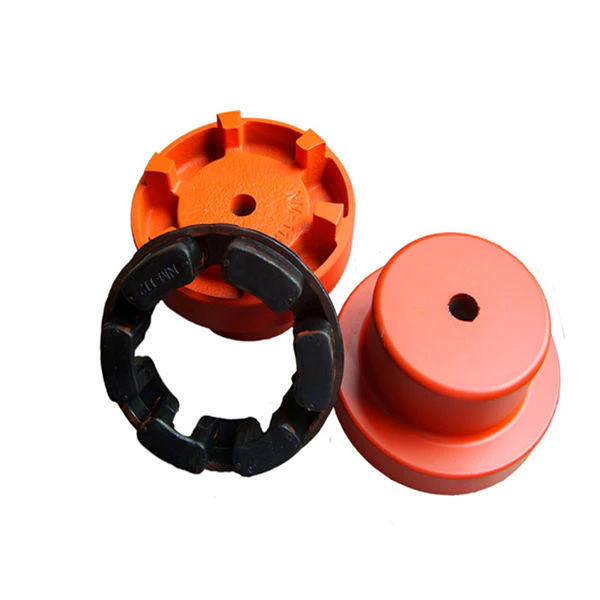
How does a flexible coupling handle angular, parallel, and axial misalignment?
A flexible coupling is designed to accommodate various types of misalignment between two rotating shafts: angular misalignment, parallel misalignment, and axial misalignment. The flexibility of the coupling allows it to maintain a connection between the shafts while compensating for these misalignment types. Here’s how a flexible coupling handles each type of misalignment:
- Angular Misalignment: Angular misalignment occurs when the axes of the two shafts are not collinear and form an angle with each other. Flexible couplings can handle angular misalignment by incorporating an element that can flex and bend. One common design is the “spider” or “jaw” element, which consists of elastomeric materials. As the shafts are misaligned, the elastomeric element can deform slightly, allowing the coupling to accommodate the angular offset between the shafts while still transmitting torque.
- Parallel Misalignment: Parallel misalignment, also known as offset misalignment, occurs when the axes of the two shafts are parallel but not perfectly aligned with each other. Flexible couplings can handle parallel misalignment through the same elastomeric element. The flexible nature of the element enables it to shift and adjust to the offset between the shafts, ensuring continuous power transmission while minimizing additional stresses on the machinery.
- Axial Misalignment: Axial misalignment, also called end-play misalignment, occurs when the two shafts move closer together or farther apart along their common axis. Flexible couplings can handle axial misalignment through specific designs that allow limited axial movement. For instance, some couplings use slotted holes or a floating member that permits axial displacement while maintaining the connection between the shafts.
By providing the capability to handle angular, parallel, and axial misalignment, flexible couplings offer several advantages for power transmission systems:
- They help to prevent premature wear and damage to the connected equipment, reducing maintenance and replacement costs.
- They minimize vibration and shock loads, enhancing the overall smoothness and reliability of the machinery.
- They reduce the risk of equipment failure due to misalignment-induced stresses, improving the system’s operational life.
- They allow for easier installation and alignment adjustments, saving time and effort during setup and maintenance.
Overall, flexible couplings play a crucial role in handling misalignment and ensuring efficient power transmission in various industrial applications.
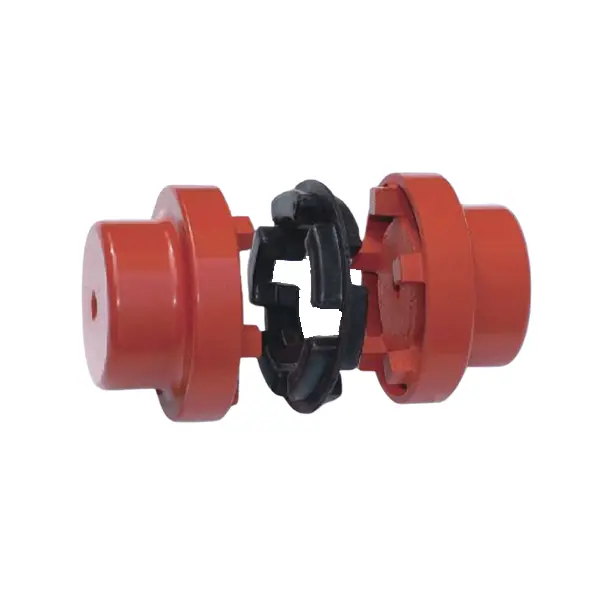
Können flexible Kupplungen in Anwendungen mit variierenden Betriebstemperaturen eingesetzt werden?
Ja, flexible Kupplungen eignen sich für Anwendungen mit unterschiedlichen Betriebstemperaturen. Die Eignung einer flexiblen Kupplung für einen bestimmten Temperaturbereich hängt von ihrer Konstruktion und den verwendeten Materialien ab. Verschiedene Arten von flexiblen Kupplungen sind für ein breites Temperaturspektrum erhältlich und daher vielseitig in unterschiedlichen Branchen und Umgebungen einsetzbar.
Hochtemperaturanwendungen:
Für Anwendungen mit hohen Betriebstemperaturen, wie sie beispielsweise in bestimmten Industrieprozessen, Abgasanlagen oder Hochtemperaturmaschinen auftreten, werden flexible Kupplungen aus hochhitzebeständigen Werkstoffen eingesetzt. Zu diesen Werkstoffen zählen Edelstahllegierungen, wärmebehandelte Stähle oder spezielle Hochtemperatur-Elastomere. Hochtemperatur-Kupplungen sind so konstruiert, dass sie ihre mechanischen Eigenschaften, einschließlich Flexibilität und Drehmomentübertragungsfähigkeit, auch bei hohen Temperaturen beibehalten.
Anwendungen bei niedrigen Temperaturen:
Für Anwendungen in extrem kalten Umgebungen oder kryogenen Prozessen werden hingegen flexible Kupplungen aus Materialien mit hoher Kältebeständigkeit eingesetzt. Diese Kupplungen sind so konstruiert, dass sie auch bei sehr niedrigen Temperaturen flexibel und funktionsfähig bleiben, ohne zu spröde werden oder ihre Fähigkeit zum Ausgleich von Fehlausrichtungen zu verlieren. Einige Tieftemperaturkupplungen verwenden spezielle Polymere oder Elastomere mit exzellenten Kälteeigenschaften.
Berücksichtigung des Temperaturbereichs:
Bei der Auswahl einer flexiblen Kupplung für Anwendungen mit unterschiedlichen Betriebstemperaturen ist es unerlässlich, den spezifischen Temperaturbereich zu berücksichtigen, in dem die Kupplung eingesetzt wird. Einige flexible Kupplungen weisen einen breiteren Temperaturbereich auf und ermöglichen so einen effektiven Betrieb sowohl in Umgebungen mit hohen als auch mit niedrigen Temperaturen. Unter extremen Temperaturbedingungen können jedoch Spezialkupplungen erforderlich sein, um eine zuverlässige Funktion zu gewährleisten und vorzeitigen Ausfall zu verhindern.
Herstellerrichtlinien:
Hersteller flexibler Kupplungen geben Richtlinien und Spezifikationen zum Temperaturbereich ihrer Produkte an. Es ist unerlässlich, die Herstellerdokumentation zu konsultieren, um sicherzustellen, dass die gewählte Kupplung für die vorgesehene Betriebstemperatur der Anwendung geeignet ist. Der Einsatz einer Kupplung außerhalb des empfohlenen Temperaturbereichs kann zu Leistungseinbußen, reduziertem Wirkungsgrad oder sogar zum Ausfall führen.
Anwendungsbereiche:
Flexible Kupplungen mit variabler Temperaturbeständigkeit finden in zahlreichen Branchen Anwendung, darunter Luft- und Raumfahrt, Automobilindustrie, Fertigung, Energieerzeugung und viele mehr. Ob in Hochtemperatur-Abgassystemen, Tieftemperaturprozessen oder regulären Industrieanwendungen mit Temperaturschwankungen – flexible Kupplungen spielen eine entscheidende Rolle für eine zuverlässige Kraftübertragung und den Ausgleich von Fluchtungsfehlern.
Zusammenfassend lässt sich sagen, dass flexible Kupplungen in Anwendungen mit variierenden Betriebstemperaturen effektiv eingesetzt werden können, vorausgesetzt, die Konstruktion und die Materialeigenschaften der Kupplung entsprechen den spezifischen Temperaturanforderungen der Anwendung.
Can you explain the different types of flexible coupling designs available?
There are several types of flexible coupling designs available, each with its unique construction and characteristics. These designs are tailored to meet specific application requirements and address different types of misalignment and torque transmission needs. Here are some of the most common types of flexible couplings:
- Jaw Couplings: Jaw couplings consist of two hubs with curved jaws and an elastomer spider placed between them. The spider acts as a flexible element and can compensate for angular and parallel misalignment. Jaw couplings are widely used in various industrial applications due to their simple design and effectiveness in handling misalignment and vibration damping.
- Disc Couplings: Disc couplings use thin metallic discs with a series of alternating slits and flanges to connect the shafts. The disc coupling design allows for excellent misalignment compensation, including angular, parallel, and axial misalignment. Disc couplings are known for their high torsional stiffness and precise torque transmission capabilities.
- Gear Couplings: Gear couplings consist of toothed hubs connected by an external sleeve with gear teeth. They are well-suited for applications with high torque and moderate misalignment. Gear couplings offer good misalignment compensation and high torque capacity, making them popular in heavy-duty industrial applications.
- Beam Couplings: Beam couplings use a single piece of flexible material, often a metal beam, to connect the shafts. The material’s flexibility allows for angular and axial misalignment compensation. Beam couplings are compact, lightweight, and provide low inertia, making them suitable for applications with high-speed requirements.
- Bellows Couplings: Bellows couplings consist of a bellows-like flexible structure that connects the two hubs. They can compensate for angular, parallel, and axial misalignment. Bellows couplings are known for their high torsional stiffness and ability to maintain constant velocity transmission.
- Oldham Couplings: Oldham couplings use three discs, with the middle one having a perpendicular slot. This design allows for angular misalignment compensation while transmitting torque between the hubs. Oldham couplings are often used when electrical isolation between shafts is required.
Each flexible coupling design has its strengths and limitations, and the choice depends on factors such as the application’s torque requirements, misalignment conditions, operating environment, and speed. Proper selection of the coupling type ensures optimal performance, efficiency, and reliability in various mechanical systems and rotating machinery.


editor by CX 2024-04-04