Produktbeschreibung
High Demand Custom Aluminum Precise Milling Spare Lathe Machining Cnc Machine Parts
Produktbeschreibung
1. Precision CNC machining parts strictly follow customers’ drawing, packing, and quality requirements.
2. Tolerance: between+/-0.01mm;
3. The high-tech CMM inspector to ensure the quality;
4. Full-Experienced engineers and well professional trained workers;
5. Fast delivery time;
6. Professional advice for our customers;
Detaillierte Fotos
Produktparameter
Our advantage of cnc machining:
| Business Type | Beyond the Manufacturer and strong organized ability in the industrial |
| Benefits | 1. Deeper industrial experience at CNC machining parts service for more than 10-years,our customer’s requirement is our 1st priority. 2. 2D or 3D files is available; 3. We trust the quality priority and we insist the good quality should be based on the customers’ satisfied; 4. Without any MOQ requirement; 5.Faster delivery time; 6. Customized size and specification /OEM available 7. Near ZheJiang Port |
The material
| Materials Accept |
Stainless Steel | SS201, SS303, SS304, SS316 etc. |
| Steel | Q235, 20#, 45#, | |
| Brass | C36000 ( C26800), C37700 ( HPb59), C38500( HPb58), C27200(CuZn37) , C28000(CuZn40) | |
| Iron | 1213, 12L14,1215 etc. | |
| Bronze | C51000, C52100, C54400, etc. | |
| Aluminum | Al6061, Al6063,AL7075,AL5052 etc | |
| Plastic | ABS,POM,PC(Poly-Carbonate),PC+GF,PA(nylon),PA+GF, PMMA(acrylic)PEEK,PEI etc) |
Verpackung & Versand
- We prefer DHL or TNT express or other air freight between 1kg-100kg.
- we prefer sea freight more than 100kg or more than 1CBM
- As per customized specifications.
Unternehmensprofil
About us
HangZhou CHINAMFG Technology Co.,Ltd is located in HangZhou City, ZheJiang Province, Which closed the ZheJiang .The Emitech Technology is mainly engaged in the CNC Machinery Industrial Service for 15 years. Our Parts are sold to Europe, America, Japan, South Korea and China in various kinds of industrial.At present, Our company has CNC Turning machines and CNC centers and equip with professional quality and testing instruments.We have full OEM Experience from worldwide, providing them with One-stop solutions for a broad range of applications.We look CHINAMFG to cooperating with you!
Unsere Vorteile
1. Precision CNC machining parts strictly follow customer’s drawing,packing and quality requirement.
2. Tolerance: between+/-0.01mm;
3. The high-tech CMM inspector to ensure the quality;
4. Full-Experienced engineers and well professional trained workers;
5. Fast delivery time;
6. Professional advice for our customers;
After Sales Service
High Demand Custom Aluminum Precise Milling Spare Lathe Machining Cnc Machine Parts
We usually provide 12 Months repair service. If our duty, we will respond to send the new parts.
Our Service
| Our Processing | CNC center, CNC milling, CNC turning, drilling, grinding, bending, stamping, tapping, |
| Surface finish | Polishing, sandblasting, Zinc-plated, nickel-plated, chrome-plated, silver-plated, gold-plated, imitation gold-plated, |
| Tolerance | 0.05mm~0.1mm |
| QC System | 100% inspection before shipment |
| Drawing format | CAD / PDF/ DWG/ IGS/ STEP |
| Packaging | Plastic bag/Standard package / Carton or Pallet / As per customized specifications |
| Payment Terms | 30 -50%T/T in advance, 70-50% balance before delivery; Pay Pal or Western Union is acceptable. |
| Trade terms | EXW, FOB, CIF, As per the customer’s request |
| Shipment Terms |
1)We prefer DHL or TNT express or other air freight between 1kg-100kg. 2) we prefer sea freight more than 100kg or more than 1CBM |
| Note | The CNC machining parts are usually custom-made based on the customer’s drawings and samples. So we need the Down Payment |
/* January 22, 2571 19:08:37 */!function(){function s(e,r){var a,o={};try{e&&e.split(“,”).forEach(function(e,t){e&&(a=e.match(/(.*?):(.*)$/))&&1
| After-sales Service: | Repaire |
|---|---|
| Warranty: | Half a Year |
| Condition: | New |
| Standard: | DIN, ASTM, GOST, GB, JIS, ANSI |
| Customized: | Customized |
| Material: | Alloy |
| Proben: |
US$ 10/Piece
1 Stück (Mindestbestellmenge) | |
|---|
| Anpassung: |
Verfügbar
| Kundenspezifische Anfrage |
|---|
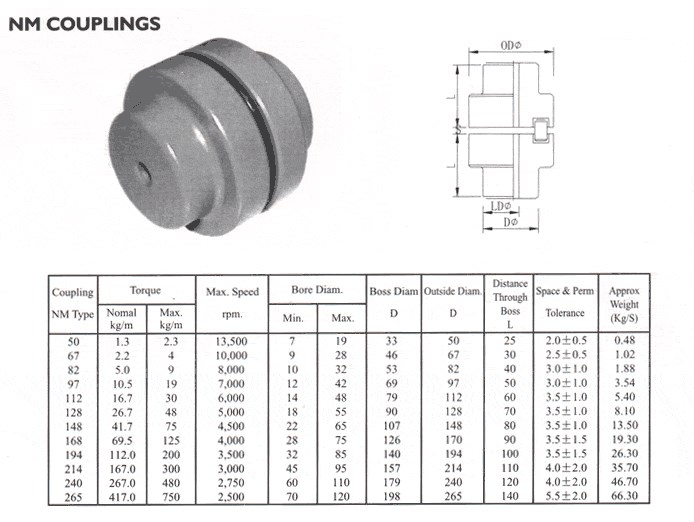
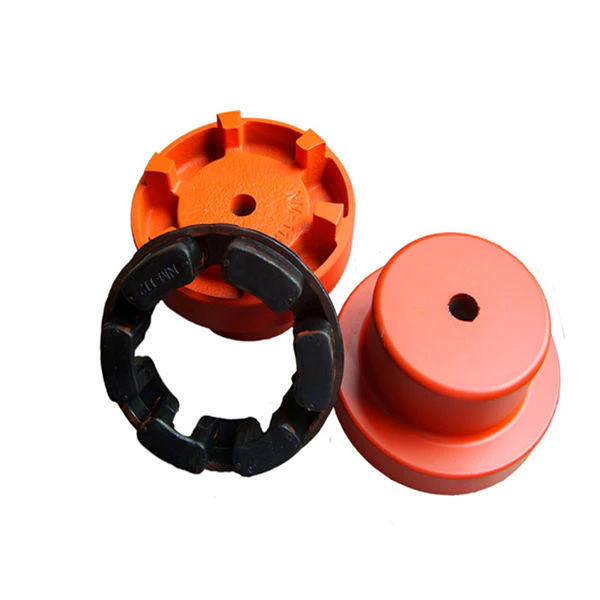
How does a flexible coupling handle angular, parallel, and axial misalignment?
A flexible coupling is designed to accommodate various types of misalignment between two rotating shafts: angular misalignment, parallel misalignment, and axial misalignment. The flexibility of the coupling allows it to maintain a connection between the shafts while compensating for these misalignment types. Here’s how a flexible coupling handles each type of misalignment:
- Angular Misalignment: Angular misalignment occurs when the axes of the two shafts are not collinear and form an angle with each other. Flexible couplings can handle angular misalignment by incorporating an element that can flex and bend. One common design is the “spider” or “jaw” element, which consists of elastomeric materials. As the shafts are misaligned, the elastomeric element can deform slightly, allowing the coupling to accommodate the angular offset between the shafts while still transmitting torque.
- Parallel Misalignment: Parallel misalignment, also known as offset misalignment, occurs when the axes of the two shafts are parallel but not perfectly aligned with each other. Flexible couplings can handle parallel misalignment through the same elastomeric element. The flexible nature of the element enables it to shift and adjust to the offset between the shafts, ensuring continuous power transmission while minimizing additional stresses on the machinery.
- Axial Misalignment: Axial misalignment, also called end-play misalignment, occurs when the two shafts move closer together or farther apart along their common axis. Flexible couplings can handle axial misalignment through specific designs that allow limited axial movement. For instance, some couplings use slotted holes or a floating member that permits axial displacement while maintaining the connection between the shafts.
By providing the capability to handle angular, parallel, and axial misalignment, flexible couplings offer several advantages for power transmission systems:
- They help to prevent premature wear and damage to the connected equipment, reducing maintenance and replacement costs.
- They minimize vibration and shock loads, enhancing the overall smoothness and reliability of the machinery.
- They reduce the risk of equipment failure due to misalignment-induced stresses, improving the system’s operational life.
- They allow for easier installation and alignment adjustments, saving time and effort during setup and maintenance.
Overall, flexible couplings play a crucial role in handling misalignment and ensuring efficient power transmission in various industrial applications.
How does a flexible coupling impact the overall reliability of connected equipment?
A flexible coupling significantly impacts the overall reliability of connected equipment in several ways:
- Fehlausrichtungskompensation: Flexible couplings can accommodate both angular and parallel misalignment between connected shafts. By allowing for misalignment, the coupling reduces the stress and wear on bearings, seals, and other rotating components. This feature prevents premature failure of these components, contributing to improved reliability and extended equipment lifespan.
- Schwingungsdämpfung: Flexible couplings possess inherent damping properties due to their elastomeric or flexible elements. These elements absorb and dissipate vibrations generated during the operation of machinery. By dampening vibrations, the coupling protects the connected equipment from excessive oscillations, reducing fatigue and preventing mechanical failures. This enhanced vibration control increases the reliability of the system.
- Shock Load Absorption: In applications with sudden load variations or shock loads, such as in heavy machinery or high-speed equipment, a flexible coupling acts as a shock absorber. It can absorb and dissipate the impact energy, protecting the machinery from damage caused by sudden loads. The ability to absorb shock loads contributes to the overall reliability of the connected equipment.
- Reduced Wear and Tear: The flexibility of the coupling minimizes stress and wear on rotating equipment. It allows for slight movements and misalignments, reducing friction and stress on bearings and other critical components. This reduction in wear and tear lowers the frequency of maintenance and replacement, increasing the overall reliability of the equipment.
- Kompensation der Wärmeausdehnung: Temperature changes in machinery can lead to thermal expansion or contraction of shafts. A flexible coupling can compensate for these thermal effects, ensuring that the machinery remains properly aligned even as temperature conditions fluctuate. This compensation prevents binding and misalignment, promoting reliable performance.
- Protection Against Overloads: Flexible couplings help protect connected equipment from overloads and torsional vibrations. They act as a mechanical fuse, disconnecting the driveline when an overload occurs, thus preventing damage to expensive machinery. This safety feature enhances the overall reliability and reduces the risk of catastrophic failures.
- Easy Maintenance and Alignment: Flexible couplings are designed for easy installation and alignment. This feature simplifies maintenance procedures, making it easier to inspect and replace couplings when necessary. Properly aligned couplings lead to improved equipment performance and longevity, enhancing overall reliability.
By compensating for misalignment, damping vibrations, absorbing shock loads, reducing wear and tear, and providing other protective features, a flexible coupling significantly improves the reliability of connected equipment. It extends the lifespan of critical components, minimizes downtime, and ensures smooth and efficient operation, making it a valuable component in various industrial applications.
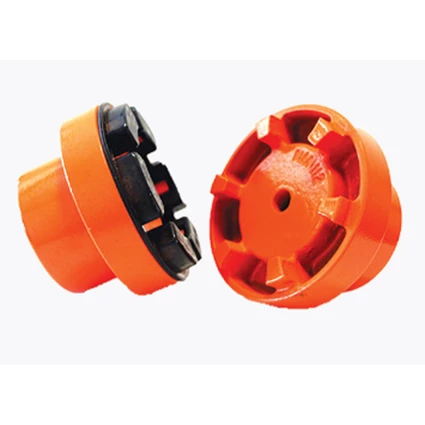
Gibt es irgendwelche Einschränkungen oder Nachteile bei der Verwendung flexibler Kupplungen?
Flexible Kupplungen bieten zwar zahlreiche Vorteile, weisen aber auch einige Einschränkungen und Nachteile auf, die bei der Auswahl für spezifische Anwendungen berücksichtigt werden sollten. Im Folgenden sind einige der häufigsten Einschränkungen und Nachteile der Verwendung flexibler Kupplungen aufgeführt:
- Torsionssteifigkeit: Flexible Kupplungen bieten eine gewisse Torsionsflexibilität, was in vielen Anwendungen von Vorteil ist. In Systemen, die hohe Präzision und minimale Winkelabweichung erfordern, ist die inhärente Flexibilität der Kupplung jedoch unter Umständen nicht geeignet. In solchen Fällen kann eine starre Kupplung die bessere Wahl sein.
- Einschränkung bei Anwendungen mit hohem Drehmoment: Während einige flexible Kupplungen mittlere bis hohe Drehmomente bewältigen können, sind sie für Anwendungen mit extrem hohen Drehmomenten möglicherweise nicht optimal geeignet. In solchen Fällen können Spezialkupplungen, wie beispielsweise Zahnkupplungen, erforderlich sein, um die hohen Drehmomentanforderungen zu erfüllen.
- Temperaturbeschränkungen: Die Leistungsfähigkeit bestimmter flexibler Kupplungsmaterialien, insbesondere von Elastomeren und Kunststoffen, kann durch extreme Temperaturbedingungen beeinträchtigt werden. Hohe Temperaturen können zu vorzeitigem Verschleiß und verkürzter Lebensdauer der Kupplung führen, während niedrige Temperaturen die Flexibilität verringern und zu Versprödung führen können.
- Chemische Kompatibilität: Bestimmte flexible Kupplungsmaterialien sind möglicherweise nicht mit bestimmten Chemikalien oder Substanzen in der Anwendungsumgebung kompatibel. Der Kontakt mit Chemikalien kann zu einer Zersetzung oder Korrosion des Kupplungsmaterials führen und dessen Leistung und Lebensdauer beeinträchtigen.
- Installation und Ausrichtung: Flexible Kupplungen erfordern für eine optimale Funktion eine korrekte Montage und Ausrichtung. Bei fehlerhafter Montage können Ausrichtungsfehler bestehen bleiben, die zu vorzeitigem Verschleiß und Leistungseinbußen führen. Die präzise Ausrichtung der Wellen kann zeitaufwändig sein und erfordert unter Umständen Spezialausrüstung und Fachkenntnisse.
- Kosten: In manchen Fällen können flexible Kupplungen aufgrund ihrer komplexeren Konstruktion und der Verwendung spezieller Materialien teurer sein als starre Kupplungen. Der Kostenunterschied wird jedoch häufig durch die Vorteile gerechtfertigt, die sie hinsichtlich Fluchtungsfehlerkompensation und Schwingungsdämpfung bieten.
- Nutzungsdauer: Die Lebensdauer einer flexiblen Kupplung kann je nach Einsatzbedingungen und Qualität der Kupplung variieren. Regelmäßige Wartung und der rechtzeitige Austausch verschlissener oder beschädigter Teile sind unerlässlich, um die Langlebigkeit der Kupplung zu gewährleisten und unerwartete Ausfälle zu vermeiden.
Trotz dieser Einschränkungen sind flexible Kupplungen in vielen Anwendungen nach wie vor wertvolle Bauteile, da sie eine effiziente Drehmomentübertragung ermöglichen und Fluchtungsfehler ausgleichen. Die richtige Auswahl, Installation und Wartung tragen dazu bei, viele der mit flexiblen Kupplungen verbundenen Nachteile zu minimieren und ihren zuverlässigen und langlebigen Betrieb in verschiedenen mechanischen Systemen zu gewährleisten.


editor by CX 2024-03-26